The Admirable Crichton Play by James Matthew Barrie
THE ADMIRABLE CRICHTON PLAY
From The Plays Of J. M. Barrie
A COMEDY
By J. M. Barrie
The Admirable Crichton Play Contents
THE ADMIRABLE CRICHTON PLAY ACT I. AT LOAM HOUSE, MAYFAIR
THE ADMIRABLE CRICHTON PLAY ACT II. THE ISLAND
THE ADMIRABLE CRICHTON PLAY ACT III. THE HAPPY HOME
THE ADMIRABLE CRICHTON PLAY ACT IV. THE OTHER ISLAND
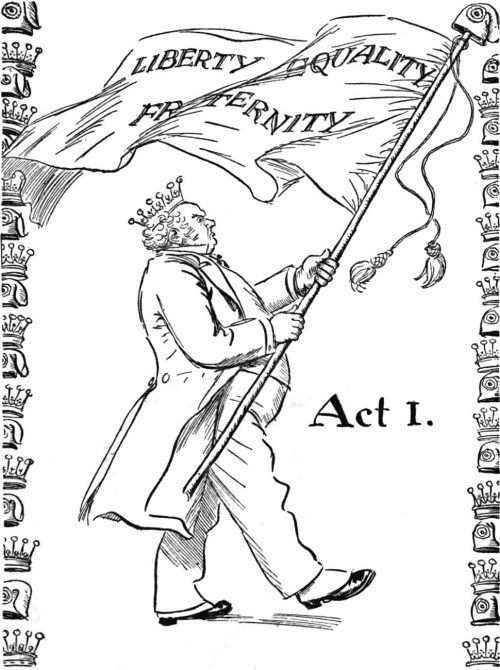
THE ADMIRABLE CRICHTON PLAY ACT I. AT LOAM HOUSE, MAYFAIR
A moment before the curtain rises, the Hon. Ernest Woolley drives up to the door of Loam House in Mayfair. There is a happy smile on his pleasant, insignificant face, and this presumably means that he is thinking of himself. He is too busy over nothing, this man about town, to be always thinking of himself, but, on the other hand, he almost never thinks of any other person. Probably Ernest’s great moment is when he wakes of a morning and realises that he really is Ernest, for we must all wish to be that which is our ideal. We can conceive him springing out of bed light-heartedly and waiting for his man to do the rest. He is dressed in excellent taste, with just the little bit more which shows that he is not without a sense of humour: the dandiacal are often saved by carrying a smile at the whole thing in their spats, let us say. Ernest left Cambridge the other day, a member of The Athenaeum (which he would be sorry to have you confound with a club in London of the same name). He is a bachelor, but not of arts, no mean epigrammatist (as you shall see), and a favourite of the ladies. He is almost a celebrity in restaurants, where he dines frequently, returning to sup; and during this last year he has probably paid as much in them for the privilege of handing his hat to an attendant as the rent of a working-man’s flat. He complains brightly that he is hard up, and that if somebody or other at Westminster does not look out the country will go to the dogs. He is no fool. He has the shrewdness to float with the current because it is a labour-saving process, but he has sufficient pluck to fight, if fight he must (a brief contest, for he would soon be toppled over). He has a light nature, which would enable him to bob up cheerily in new conditions and return unaltered to the old ones. His selfishness is his most endearing quality. If he has his way he will spend his life like a cat in pushing his betters out of the soft places, and until he is old he will be fondled in the process.
He gives his hat to one footman and his cane to another, and mounts the great staircase unassisted and undirected. As a nephew of the house he need show no credentials even to Crichton, who is guarding a door above.
It would not be good taste to describe Crichton, who is only a servant; if to the scandal of all good houses he is to stand out as a figure in the play, he must do it on his own, as they say in the pantry and the boudoir.
We are not going to help him. We have had misgivings ever since we found his name in the title, and we shall keep him out of his rights as long as we can. Even though we softened to him he would not be a hero in these clothes of servitude; and he loves his clothes. How to get him out of them? It would require a cataclysm. To be an indoor servant at all is to Crichton a badge of honour; to be a butler at thirty is the realisation of his proudest ambitions. He is devotedly attached to his master, who, in his opinion, has but one fault, he is not sufficiently contemptuous of his inferiors. We are immediately to be introduced to this solitary failing of a great English peer.
This perfect butler, then, opens a door, and ushers Ernest into a certain room. At the same moment the curtain rises on this room, and the play begins.
It is one of several reception-rooms in Loam House, not the most magnificent but quite the softest; and of a warm afternoon all that those who are anybody crave for is the softest. The larger rooms are magnificent and bare, carpetless, so that it is an accomplishment to keep one’s feet on them; they are sometimes lent for charitable purposes; they are also all in use on the night of a dinner-party, when you may find yourself alone in one, having taken a wrong turning; or alone, save for two others who are within hailing distance.
This room, however, is comparatively small and very soft. There are so many cushions in it that you wonder why, if you are an outsider and don’t know that, it needs six cushions to make one fair head comfy. The couches themselves are cushions as large as beds, and there is an art of sinking into them and of waiting to be helped out of them. There are several famous paintings on the walls, of which you may say ‘Jolly thing that,’ without losing caste as knowing too much; and in cases there are glorious miniatures, but the daughters of the house cannot tell you of whom; ‘there is a catalogue somewhere.’ There are a thousand or so of roses in basins, several library novels, and a row of weekly illustrated newspapers lying against each other like fallen soldiers. If any one disturbs this row Crichton seems to know of it from afar and appears noiselessly and replaces the wanderer. One thing unexpected in such a room is a great array of tea things. Ernest spots them with a twinkle, and has his epigram at once unsheathed. He dallies, however, before delivering the thrust.
ERNEST. I perceive, from the tea cups, Crichton, that the great function is to take place here.
CRICHTON (with a respectful sigh). Yes, sir.
ERNEST (chuckling heartlessly). The servants’ hall coming up to have tea in the drawing-room! (With terrible sarcasm.) No wonder you look happy, Crichton.
CRICHTON (under the knife). No, sir.
ERNEST. Do you know, Crichton, I think that with an effort you might look even happier. (CRICHTON smiles wanly.) You don’t approve of his lordship’s compelling his servants to be his equals—once a month?
CRICHTON. It is not for me, sir, to disapprove of his lordship’s radical views.
ERNEST. Certainly not. And, after all, it is only once a month that he is affable to you.
CRICHTON. On all other days of the month, sir, his lordship’s treatment of us is everything that could be desired.
ERNEST. (This is the epigram.) Tea cups! Life, Crichton, is like a cup of tea; the more heartily we drink, the sooner we reach the dregs.
CRICHTON (obediently). Thank you, sir.
ERNEST (becoming confidential, as we do when we have need of an ally). Crichton, in case I should be asked to say a few words to the servants, I have strung together a little speech. (His hand strays to his pocket.) I was wondering where I should stand.
(He tries various places and postures, and comes to rest leaning over a high chair, whence, in dumb show, he addresses a gathering. CRICHTON, with the best intentions, gives him a footstool to stand on, and departs, happily unconscious that ERNEST in some dudgeon has kicked the footstool across the room.)
ERNEST (addressing an imaginary audience, and desirous of startling them at once). Suppose you were all little fishes at the bottom of the sea—
(He is not quite satisfied with his position, though sure that the fault must lie with the chair for being too high, not with him for being too short. CRICHTON’S suggestion was not perhaps a bad one after all. He lifts the stool, but hastily conceals it behind him on the entrance of the LADIES CATHERINE and AGATHA, two daughters of the house. CATHERINE is twenty, and AGATHA two years younger. They are very fashionable young women indeed, who might wake up for a dance, but they are very lazy, CATHERINE being two years lazier than AGATHA.)
ERNEST (uneasily jocular, because he is concealing the footstool). And how are my little friends to-day?
AGATHA (contriving to reach a settee). Don’t be silly, Ernest. If you want to know how we are, we are dead. Even to think of entertaining the servants is so exhausting.
CATHERINE (subsiding nearer the door). Besides which, we have had to decide what frocks to take with us on the yacht, and that is such a mental strain.
ERNEST. You poor over-worked things. (Evidently AGATHA is his favourite, for he helps her to put her feet on the settee, while CATHERINE has to dispose of her own feet.) Rest your weary limbs.
CATHERINE (perhaps in revenge). But why have you a footstool in your hand?
AGATHA. Yes?
ERNEST. Why? (Brilliantly; but to be sure he has had time to think it out.) You see, as the servants are to be the guests I must be butler. I was practising. This is a tray, observe.
(Holding the footstool as a tray, he minces across the room like an accomplished footman. The gods favour him, for just here LADY MARY enters, and he holds out the footstool to her.)
Tea, my lady?
(LADY MARY is a beautiful creature of twenty-two, and is of a natural hauteur which is at once the fury and the envy of her sisters. If she chooses she can make you seem so insignificant that you feel you might be swept away with the crumb-brush. She seldom chooses, because of the trouble of preening herself as she does it; she is usually content to show that you merely tire her eyes. She often seems to be about to go to sleep in the middle of a remark: there is quite a long and anxious pause, and then she continues, like a clock that hesitates, bored in the middle of its strike.)
LADY MARY (arching her brows). It is only you, Ernest; I thought there was some one here (and she also bestows herself on cushions).
ERNEST (a little piqued, and deserting the footstool). Had a very tiring day also, Mary?
LADY MARY (yawning). Dreadfully. Been trying on engagement-rings all the morning.
ERNEST (who is as fond of gossip as the oldest club member). What’s that? (To AGATHA.) Is it Brocklehurst?
(The energetic AGATHA nods.)
You have given your warm young heart to Brocky?
(LADY MARY is impervious to his humour, but he continues bravely.)
I don’t wish to fatigue you, Mary, by insisting on a verbal answer, but if, without straining yourself, you can signify Yes or No, won’t you make the effort?
(She indolently flashes a ring on her most important finger, and he starts back melodramatically.)
The ring! Then I am too late, too late! (Fixing LADY MARY sternly, like a prosecuting counsel.) May I ask, Mary, does Brocky know? Of course, it was that terrible mother of his who pulled this through. Mother does everything for Brocky. Still, in the eyes of the law you will be, not her wife, but his, and, therefore, I hold that Brocky ought to be informed. Now—
(He discovers that their languorous eyes have closed.)
If you girls are shamming sleep in the expectation that I shall awaken you in the manner beloved of ladies, abandon all such hopes.
(CATHERINE and AGATHA look up without speaking.)
LADY MARY (speaking without looking up). You impertinent boy.
ERNEST (eagerly plucking another epigram from his quiver). I knew that was it, though I don’t know everything. Agatha, I’m not young enough to know everything.
(He looks hopefully from one to another, but though they try to grasp this, his brilliance baffles them.)
AGATHA (his secret admirer). Young enough?
ERNEST (encouragingly). Don’t you see? I’m not young enough to know everything.
AGATHA. I’m sure it’s awfully clever, but it’s so puzzling.
(Here CRICHTON ushers in an athletic, pleasant-faced young clergyman, MR. TREHERNE, who greets the company.)
CATHERINE. Ernest, say it to Mr. Treherne.
ERNEST. Look here, Treherne, I’m not young enough to know everything.
TREHERNE. How do you mean, Ernest?
ERNEST. (a little nettled). I mean what I say.
LADY MARY. Say it again; say it more slowly.
ERNEST. I’m—not—young—enough—to—know—everything.
TREHERNE. I see. What you really mean, my boy, is that you are not old enough to know everything.
ERNEST. No, I don’t.
TREHERNE. I assure you that’s it.
LADY MARY. Of course it is.
CATHERINE. Yes, Ernest, that’s it.
(ERNEST, in desperation, appeals to CRICHTON.)
ERNEST. I am not young enough, Crichton, to know everything.
(It is an anxious moment, but a smile is at length extorted from CRICHTON as with a corkscrew.)
CRICHTON. Thank you, sir. (He goes.)
ERNEST (relieved). Ah, if you had that fellow’s head, Treherne, you would find something better to do with it than play cricket. I hear you bowl with your head.
TREHERNE (with proper humility). I’m afraid cricket is all I’m good for, Ernest.
CATHERINE (who thinks he has a heavenly nose). Indeed, it isn’t. You are sure to get on, Mr. Treherne.
TREHERNE. Thank you, Lady Catherine.
CATHERINE. But it was the bishop who told me so. He said a clergyman who breaks both ways is sure to get on in England.
TREHERNE. I’m jolly glad.
(The master of the house comes in, accompanied by LORD BROCKLEHURST. The EARL OF LOAM is a widower, a philanthropist, and a peer of advanced ideas. As a widower he is at least able to interfere in the domestic concerns of his house—to rummage in the drawers, so to speak, for which he has felt an itching all his blameless life; his philanthropy has opened quite a number of other drawers to him; and his advanced ideas have blown out his figure. He takes in all the weightiest monthly reviews, and prefers those that are uncut, because he perhaps never looks better than when cutting them; but he does not read them, and save for the cutting it would suit him as well merely to take in the covers. He writes letters to the papers, which are printed in a type to scale with himself, and he is very jealous of those other correspondents who get his type. Let laws and learning, art and commerce die, but leave the big type to an intellectual aristocracy. He is really the reformed House of Lords which will come some day.
Young LORD BROCKLEHURST is nothing save for his rank. You could pick him up by the handful any day in Piccadilly or Holborn, buying socks—or selling them.)
LORD LOAM (expansively). You are here, Ernest. Feeling fit for the voyage, Treherne?
TREHERNE. Looking forward to it enormously.
LORD LOAM. That’s right. (He chases his children about as if they were chickens.) Now then, Mary, up and doing, up and doing. Time we had the servants in. They enjoy it so much.
LADY MARY. They hate it.
LORD LOAM. Mary, to your duties. (And he points severely to the tea-table.)
ERNEST (twinkling). Congratulations, Brocky.
LORD BROCKLEHURST (who detests humour). Thanks.
ERNEST. Mother pleased?
LORD BROCKLEHURST (with dignity). Mother is very pleased.
ERNEST. That’s good. Do you go on the yacht with us?
LORD BROCKLEHURST. Sorry I can’t. And look here, Ernest, I will not be called Brocky.
ERNEST. Mother don’t like it?
LORD BROCKLEHURST. She does not. (He leaves ERNEST, who forgives him and begins to think about his speech. CRICHTON enters.)
LORD LOAM (speaking as one man to another). We are quite ready, Crichton. (CRICHTON is distressed.)
LADY MARY (sarcastically). How Crichton enjoys it!
LORD LOAM (frowning). He is the only one who doesn’t; pitiful creature.
CRICHTON (shuddering under his lord’s displeasure). I can’t help being a Conservative, my lord.
LORD LOAM. Be a man, Crichton. You are the same flesh and blood as myself.
CRICHTON (in pain). Oh, my lord!
LORD LOAM (sharply). Show them in; and, by the way, they were not all here last time.
CRICHTON. All, my lord, except the merest trifles.
LORD LOAM. It must be every one. (Lowering.) And remember this, Crichton, for the time being you are my equal. (Testily.) I shall soon show you whether you are not my equal. Do as you are told.
(CRICHTON departs to obey, and his lordship is now a general. He has no pity for his daughters, and uses a terrible threat.)
And girls, remember, no condescension. The first who condescends recites. (This sends them skurrying to their labours.)
By the way, Brocklehurst, can you do anything?
LORD BROCKLEHURST. How do you mean?
LORD LOAM. Can you do anything—with a penny or a handkerchief, make them disappear, for instance?
LORD BROCKLEHURST. Good heavens, no.
LORD LOAM. It’s a pity. Every one in our position ought to be able to do something. Ernest, I shall probably ask you to say a few words; something bright and sparkling.
ERNEST. But, my dear uncle, I have prepared nothing.
LORD LOAM. Anything impromptu will do.
ERNEST. Oh—well—if anything strikes me on the spur of the moment.
(He unostentatiously gets the footstool into position behind the chair. CRICHTON reappears to announce the guests, of whom the first is the housekeeper.)
CRICHTON (reluctantly). Mrs. Perkins.
LORD LOAM (shaking hands). Very delighted, Mrs. Perkins. Mary, our friend, Mrs. Perkins.
LADY MARY. How do you do, Mrs. Perkins? Won’t you sit here?
LORD LOAM (threateningly). Agatha!
AGATHA (hastily). How do you do? Won’t you sit down?
LORD LOAM (introducing). Lord Brocklehurst—my valued friend, Mrs. Perkins.
(LORD BROCKLEHURST bows and escapes. He has to fall back on ERNEST.)
LORD BROCKLEHURST. For heaven’s sake, Ernest, don’t leave me for a moment; this sort of thing is utterly opposed to all my principles.
ERNEST (airily). You stick to me, Brocky, and I’ll pull you through.
CRICHTON. Monsieur Fleury.
ERNEST. The chef.
LORD LOAM (shaking hands with the chef). Very charmed to see you, Monsieur Fleury.
FLEURY. Thank you very much.
(FLEURY bows to AGATHA, who is not effusive.)
LORD LOAM (warningly). Agatha—recitation!
(She tosses her head, but immediately finds a seat and tea for M. FLEURY. TREHERNE and ERNEST move about, making themselves amiable. LADY MARY is presiding at the tea-tray.)
CRICHTON. Mr. Rolleston.
LORD LOAM (shaking hands with his valet). How do you do, Rolleston?
(CATHERINE looks after the wants of ROLLESTON.)
CRICHTON. Mr. Tompsett.
(TOMPSETT, the coachman, is received with honours, from which he shrinks.)
CRICHTON. Miss Fisher.
(This superb creature is no less than LADY MARY’S maid, and even LORD LOAM is a little nervous.)
LORD LOAM. This is a pleasure, Miss Fisher.
ERNEST (unabashed). If I might venture, Miss Fisher (and he takes her unto himself).
CRICHTON. Miss Simmons.
LORD LOAM (to CATHERINE’S maid). You are always welcome, Miss Simmons.
ERNEST (perhaps to kindle jealousy in Miss FISHER). At last we meet. Won’t you sit down?
CRICHTON. Mademoiselle Jeanne.
LORD LOAM. Charmed to see you, Mademoiselle Jeanne.
(A place is found for AGATHA’S maid, and the scene is now an animated one; but still our host thinks his girls are not sufficiently sociable. He frowns on LADY MARY.)
LADY MARY (in alarm). Mr. Treherne, this is Fisher, my maid.
LORD LOAM (sharply). Your what, Mary?
LADY MARY. My friend.
CRICHTON. Thomas.
LORD LOAM. How do you do, Thomas?
(The first footman gives him a reluctant hand.)
CRICHTON. John.
LORD LOAM. How do you do, John?
(ERNEST signs to LORD BROCKLEHURST, who hastens to him.)
ERNEST (introducing). Brocklehurst, this is John. I think you have already met on the door-step.
CRICHTON. Jane.
(She comes, wrapping her hands miserably in her apron.)
LORD LOAM (doggedly). Give me your hand, Jane.
CRICHTON. Gladys.
ERNEST. How do you do, Gladys. You know my uncle?
LORD LOAM. Your hand, Gladys.
(He bestows her on AGATHA.)
CRICHTON. Tweeny.
(She is a very humble and frightened kitchenmaid, of whom we are to see more.)
LORD LOAM. So happy to see you.
FISHER. John, I saw you talking to Lord Brocklehurst just now; introduce me.
LORD BROCKLEHURST (at the same moment to ERNEST). That’s an uncommon pretty girl; if I must feed one of them, Ernest, that’s the one.
(But ERNEST tries to part him and FISHER as they are about to shake hands.)
ERNEST. No you don’t, it won’t do, Brocky. (To Miss FISHER.) You are too pretty, my dear. Mother wouldn’t like it. (Discovering TWEENY.) Here’s something safer. Charming girl, Brocky, dying to know you; let me introduce you. Tweeny, Lord Brocklehurst—Lord Brocklehurst, Tweeny.
(BROCKLEHURST accepts his fate; but he still has an eye for FISHER, and something may come of this.)
LORD LOAM (severely). They are not all here, Crichton.
CRICHTON (with a sigh). Odds and ends.
(A STABLE-BOY and a PAGE are shown in, and for a moment no daughter of the house advances to them.)
LORD LOAM (with a roving eye on his children). Which is to recite?
(The last of the company are, so to say, embraced.)
LORD LOAM (to TOMPSETT, as they partake of tea together). And how are all at home?
TOMPSETT. Fairish, my lord, if ’tis the horses you are inquiring for?
LORD LOAM. No, no, the family. How’s the baby?
TOMPSETT. Blooming, your lordship.
LORD LOAM. A very fine boy. I remember saying so when I saw him; nice little fellow.
TOMPSETT (not quite knowing whether to let it pass). Beg pardon, my lord, it’s a girl.
LORD LOAM. A girl? Aha! ha! ha! exactly what I said. I distinctly remember saying, If it’s spared it will be a girl.
(CRICHTON now comes down.)
LORD LOAM. Very delighted to see you, Crichton.
(CRICHTON has to shake hands.)
Mary, you know Mr. Crichton?
(He wanders off in search of other prey.)
LADY MARY. Milk and sugar, Crichton?
CRICHTON. I’m ashamed to be seen talking to you, my lady.
LADY MARY. To such a perfect servant as you all this must be most distasteful. (CRICHTON is too respectful to answer.) Oh, please do speak, or I shall have to recite. You do hate it, don’t you?
CRICHTON. It pains me, your ladyship. It disturbs the etiquette of the servants’ hall. After last month’s meeting the pageboy, in a burst of equality, called me Crichton. He was dismissed.
LADY MARY. I wonder—I really do—how you can remain with us.
CRICHTON. I should have felt compelled to give notice, my lady, if the master had not had a seat in the Upper House. I cling to that.
LADY MARY. Do go on speaking. Tell me, what did Mr. Ernest mean by saying he was not young enough to know everything?
CRICHTON. I have no idea, my lady.
LADY MARY. But you laughed.
CRICHTON. My lady, he is the second son of a peer.
LADY MARY. Very proper sentiments. You are a good soul, Crichton.
LORD BROCKLEHURST (desperately to TWEENY). And now tell me, have you been to the Opera? What sort of weather have you been having in the kitchen? (TWEENY gurgles.) For Heaven’s sake, woman, be articulate.
CRICHTON (still talking to LADY MARY). No, my lady; his lordship may compel us to be equal upstairs, but there will never be equality in the servants’ hall.
LORD LOAM (overhearing this). What’s that? No equality? Can’t you see, Crichton, that our divisions into classes are artificial, that if we were to return to nature, which is the aspiration of my life, all would be equal?
CRICHTON. If I may make so bold as to contradict your lordship—
LORD LOAM (with an effort). Go on.
CRICHTON. The divisions into classes, my lord, are not artificial. They are the natural outcome of a civilised society. (To LADY MARY.) There must always be a master and servants in all civilised communities, my lady, for it is natural, and whatever is natural is right.
LORD LOAM (wincing). It is very unnatural for me to stand here and allow you to talk such nonsense.
CRICHTON (eagerly). Yes, my lord, it is. That is what I have been striving to point out to your lordship.
AGATHA (to CATHERINE). What is the matter with Fisher? She is looking daggers.
CATHERINE. The tedious creature; some question of etiquette, I suppose.
(She sails across to FISHER.)
How are you, Fisher?
FISHER (with a toss of her head). I am nothing, my lady, I am nothing at all.
AGATHA. Oh dear, who says so?
FISHER (affronted). His lordship has asked that kitchen wench to have a second cup of tea.
CATHERINE. But why not?
FISHER. If it pleases his lordship to offer it to her before offering it to me—
AGATHA. So that is it. Do you want another cup of tea, Fisher?
FISHER. No, my lady—but my position—I should have been asked first.
AGATHA. Oh dear.
(All this has taken some time, and by now the feeble appetites of the uncomfortable guests have been satiated. But they know there is still another ordeal to face—his lordship’s monthly speech. Every one awaits it with misgiving—the servants lest they should applaud, as last time, in the wrong place, and the daughters because he may be personal about them, as the time before. ERNEST is annoyed that there should be this speech at all when there is such a much better one coming, and BROCKLEHURST foresees the degradation of the peerage. All are thinking of themselves alone save CRICHTON, who knows his master’s weakness, and fears he may stick in the middle. LORD LOAM, however, advances cheerfully to his doom. He sees ERNEST’S stool, and artfully stands on it, to his nephew’s natural indignation. The three ladies knit their lips, the servants look down their noses, and the address begins.)
LORD LOAM. My friends, I am glad to see you all looking so happy. It used to be predicted by the scoffer that these meetings would prove distasteful to you. Are they distasteful? I hear you laughing at the question.
(He has not heard them, but he hears them now, the watchful CRICHTON giving them a lead.)
No harm in saying that among us to-day is one who was formerly hostile to the movement, but who to-day has been won over. I refer to Lord Brocklehurst, who, I am sure, will presently say to me that if the charming lady now by his side has derived as much pleasure from his company as he has derived from hers, he will be more than satisfied.
(All look at TWEENY, who trembles.)
For the time being the artificial and unnatural—I say unnatural (glaring at CRICHTON, who bows slightly)—barriers of society are swept away. Would that they could be swept away for ever.
(The PAGEBOY cheers, and has the one moment of prominence in his life. He grows up, marries and has children, but is never really heard of again.)
But that is entirely and utterly out of the question. And now for a few months we are to be separated. As you know, my daughters and Mr. Ernest and Mr. Treherne are to accompany me on my yacht, on a voyage to distant parts of the earth. In less than forty-eight hours we shall be under weigh.
(But for CRICHTON’S eye the reckless PAGEBOY would repeat his success.)
Do not think our life on the yacht is to be one long idle holiday. My views on the excessive luxury of the day are well known, and what I preach I am resolved to practise. I have therefore decided that my daughters, instead of having one maid each as at present, shall on this voyage have but one maid between them.
(Three maids rise; also three mistresses.)
CRICHTON. My lord!
LORD LOAM. My mind is made up.
ERNEST. I cordially agree.
LORD LOAM. And now, my friends, I should like to think that there is some piece of advice I might give you, some thought, some noble saying over which you might ponder in my absence. In this connection I remember a proverb, which has had a great effect on my own life. I first heard it many years ago. I have never forgotten it. It constantly cheers and guides me. That proverb is—that proverb was—the proverb I speak of—
(He grows pale and taps his forehead.)
LADY MARY. Oh dear, I believe he has forgotten it.
LORD LOAM (desperately). The proverb—that proverb to which I refer—
(Alas, it has gone. The distress is general. He has not even the sense to sit down. He gropes for the proverb in the air. They try applause, but it is no help.)
I have it now—(not he).
LADY MARY (with confidence). Crichton.
(He does not fail her. As quietly as if he were in goloshes, mind as well as feet, he dismisses the domestics; they go according to precedence as they entered, yet, in a moment, they are gone. Then he signs to MR. TREHERNE, and they conduct LORD LOAM with dignity from the room. His hands are still catching flies; he still mutters, ‘The proverb—that proverb’; but he continues, owing to CRICHTON’S skilful treatment, to look every inch a peer. The ladies have now an opportunity to air their indignation.)
LADY MARY. One maid among three grown women!
LORD BROCKLEHURST. Mary, I think I had better go. That dreadful kitchenmaid—
LADY MARY. I can’t blame you, George.
(He salutes her.)
LORD BROCKLEHURST. Your father’s views are shocking to me, and I am glad I am not to be one of the party on the yacht. My respect for myself, Mary, my natural anxiety as to what mother will say. I shall see you, darling, before you sail.
(He bows to the others and goes.)
ERNEST. Selfish brute, only thinking of himself. What about my speech?
LADY MARY. One maid among three of us. What’s to be done?
ERNEST. Pooh! You must do for yourselves, that’s all.
LADY MARY. Do for ourselves. How can we know where our things are kept?
AGATHA. Are you aware that dresses button up the back?
CATHERINE. How are we to get into our shoes and be prepared for the carriage?
LADY MARY. Who is to put us to bed, and who is to get us up, and how shall we ever know it’s morning if there is no one to pull up the blinds?
(CRICHTON crosses on his way out.)
ERNEST. How is his lordship now?
CRICHTON. A little easier, sir.
LADY MARY. Crichton, send Fisher to me.
(He goes.)
ERNEST. I have no pity for you girls, I—
LADY MARY. Ernest, go away, and don’t insult the broken-hearted.
ERNEST. And uncommon glad I am to go. Ta-ta, all of you. He asked me to say a few words. I came here to say a few words, and I’m not at all sure that I couldn’t bring an action against him.
(He departs, feeling that he has left a dart behind him. The girls are alone with their tragic thoughts.)
LADY MARY (becomes a mother to the younger ones at last). My poor sisters, come here. (They go to her doubtfully.) We must make this draw us closer together. I shall do my best to help you in every way. Just now I cannot think of myself at all.
AGATHA. But how unlike you, Mary.
LADY MARY. It is my duty to protect my sisters.
CATHERINE. I never knew her so sweet before, Agatha. (Cautiously.) What do you propose to do, Mary?
LADY MARY. I propose when we are on the yacht to lend Fisher to you when I don’t need her myself.
AGATHA. Fisher?
LADY MARY (who has the most character of the three). Of course, as the eldest, I have decided that it is my maid we shall take with us.
CATHERINE (speaking also for AGATHA). Mary, you toad.
AGATHA. Nothing on earth would induce Fisher to lift her hand for either me or Catherine.
LADY MARY. I was afraid of it, Agatha. That is why I am so sorry for you.
(The further exchange of pleasantries is interrupted by the arrival of FISHER.)
LADY MARY. Fisher, you heard what his lordship said?
FISHER. Yes, my lady.
LADY MARY (coldly, though the others would have tried blandishment). You have given me some satisfaction of late, Fisher, and to mark my approval I have decided that you shall be the maid who accompanies us.
FISHER (acidly). I thank you, my lady.
LADY MARY. That is all; you may go.
FISHER (rapping it out). If you please, my lady, I wish to give notice.
(CATHERINE and AGATHA gleam, but LADY MARY is of sterner stuff.)
LADY MARY (taking up a book). Oh, certainly—you may go.
CATHERINE. But why, Fisher?
FISHER. I could not undertake, my lady, to wait upon three. We don’t do it. (In an indignant outburst to LADY MARY.) Oh, my lady, to think that this affront—
LADY MARY (looking up). I thought I told you to go, Fisher.
(FISHER stands for a moment irresolute; then goes. As soon as she has gone LADY MARY puts down her book and weeps. She is a pretty woman, but this is the only pretty thing we have seen her do yet.)
AGATHA (succinctly). Serves you right.
(CRICHTON comes.)
CATHERINE. It will be Simmons after all. Send Simmons to me.
CRICHTON (after hesitating). My lady, might I venture to speak?
CATHERINE. What is it?
CRICHTON. I happen to know, your ladyship, that Simmons desires to give notice for the same reason as Fisher.
CATHERINE. Oh!
AGATHA (triumphant). Then, Catherine, we take Jeanne.
CRICHTON. And Jeanne also, my lady.
(LADY MARY is reading, indifferent though the heavens fall, but her sisters are not ashamed to show their despair to CRICHTON.)
AGATHA. We can’t blame them. Could any maid who respected herself be got to wait upon three?
LADY MARY (with languid interest). I suppose there are such persons, Crichton?
CRICHTON (guardedly). I have heard, my lady, that there are such.
LADY MARY (a little desperate). Crichton, what’s to be done? We sail in two days; could one be discovered in the time?
AGATHA (frankly a supplicant). Surely you can think of some one?
CRICHTON (after hesitating). There is in this establishment, your ladyship, a young woman—
LADY MARY. Yes?
CRICHTON. A young woman, on whom I have for some time cast an eye.
CATHERINE (eagerly). Do you mean as a possible lady’s-maid?
CRICHTON. I had thought of her, my lady, in another connection.
LADY MARY. Ah!
CRICHTON. But I believe she is quite the young person you require. Perhaps if you could see her, my lady—
LADY MARY. I shall certainly see her. Bring her to me. (He goes.) You two needn’t wait.
CATHERINE. Needn’t we? We see your little game, Mary.
AGATHA. We shall certainly remain and have our two-thirds of her.
(They sit there doggedly until CRICHTON returns with TWEENY, who looks scared.)
CRICHTON. This, my lady, is the young person.
CATHERINE (frankly). Oh dear!
(It is evident that all three consider her quite unsuitable.)
LADY MARY. Come here, girl. Don’t be afraid.
(TWEENY looks imploringly at her idol.)
CRICHTON. Her appearance, my lady, is homely, and her manners, as you may have observed, deplorable, but she has a heart of gold.
LADY MARY. What is your position downstairs?
TWEENY (bobbing). I’m a tweeny, your ladyship.
CATHERINE. A what?
CRICHTON. A tweeny; that is to say, my lady, she is not at present, strictly speaking, anything; a between maid; she helps the vegetable maid. It is she, my lady, who conveys the dishes from the one end of the kitchen table, where they are placed by the cook, to the other end, where they enter into the charge of Thomas and John.
LADY MARY. I see. And you and Crichton are—ah—keeping company?
(CRICHTON draws himself up.)
TWEENY (aghast). A butler don’t keep company, my lady.
LADY MARY (indifferently). Does he not?
CRICHTON. No, your ladyship, we butlers may—(he makes a gesture with his arms)—but we do not keep company.
AGATHA. I know what it is; you are engaged?
(TWEENY looks longingly at CRICHTON.)
CRICHTON. Certainly not, my lady. The utmost I can say at present is that I have cast a favourable eye.
(Even this is much to TWEENY.)
LADY MARY. As you choose. But I am afraid, Crichton, she will not suit us.
CRICHTON. My lady, beneath this simple exterior are concealed a very sweet nature and rare womanly gifts.
AGATHA. Unfortunately, that is not what we want.
CRICHTON. And it is she, my lady, who dresses the hair of the ladies’-maids for our evening meals.
(The ladies are interested at last.)
LADY MARY. She dresses Fisher’s hair?
TWEENY. Yes, my lady, and I does them up when they goes to parties.
CRICHTON (pained, but not scolding). Does!
TWEENY. Doos. And it’s me what alters your gowns to fit them.
CRICHTON. What alters!
TWEENY. Which alters.
AGATHA. Mary?
LADY MARY. I shall certainly have her.
CATHERINE. We shall certainly have her. Tweeny, we have decided to make a lady’s-maid of you.
TWEENY. Oh lawks!
AGATHA. We are doing this for you so that your position socially may be more nearly akin to that of Crichton.
CRICHTON (gravely). It will undoubtedly increase the young person’s chances.
LADY MARY. Then if I get a good character for you from Mrs. Perkins, she will make the necessary arrangements.
(She resumes reading.)
TWEENY (elated). My lady!
LADY MARY. By the way, I hope you are a good sailor.
TWEENY (startled). You don’t mean, my lady, I’m to go on the ship?
LADY MARY. Certainly.
TWEENY. But—(To CRICHTON.) You ain’t going, sir?
CRICHTON. No.
TWEENY (firm at last). Then neither ain’t I.
AGATHA. YOU must.
TWEENY. Leave him! Not me.
LADY MARY. Girl, don’t be silly. Crichton will be—considered in your wages.
TWEENY. I ain’t going.
CRICHTON. I feared this, my lady.
TWEENY. Nothing’ll budge me.
LADY MARY. Leave the room.
(CRICHTON shows TWEENY out with marked politeness.)
AGATHA. Crichton, I think you might have shown more displeasure with her.
CRICHTON (contrite). I was touched, my lady. I see, my lady, that to part from her would be a wrench to me, though I could not well say so in her presence, not having yet decided how far I shall go with her.
(He is about to go when LORD LOAM returns, fuming.)
LORD LOAM. The ingrate! The smug! The fop!
CATHERINE. What is it now, father?
LORD LOAM. That man of mine, Rolleston, refuses to accompany us because you are to have but one maid.
AGATHA. Hurrah!
LADY MARY (in better taste). Darling father, rather than you should lose Rolleston, we will consent to take all the three of them.
LORD LOAM. Pooh, nonsense! Crichton, find me a valet who can do without three maids.
CRICHTON. Yes, my lord. (Troubled.) In the time—the more suitable the party, my lord, the less willing will he be to come without the—the usual perquisites.
LORD LOAM. Any one will do.
CRICHTON (shocked). My lord!
LORD LOAM. The ingrate! The puppy!
(AGATHA has an idea, and whispers to LADY MARY.)
LADY MARY. I ask a favour of a servant?—never!
AGATHA. Then I will. Crichton, would it not be very distressing to you to let his lordship go, attended by a valet who might prove unworthy? It is only for three months; don’t you think that you—you yourself—you—
(As CRICHTON sees what she wants he pulls himself up with noble, offended dignity, and she is appalled.)
I beg your pardon.
(He bows stiffly.)
CATHERINE (to CRICHTON). But think of the joy to Tweeny.
(CRICHTON is moved, but he shakes his head.)
LADY MARY (so much the cleverest). Crichton, do you think it safe to let the master you love go so far away without you while he has these dangerous views about equality?
(CRICHTON is profoundly stirred. After a struggle he goes to his master, who has been pacing the room.)
CRICHTON. My lord, I have found a man.
LORD LOAM. Already? Who is he?
(CRICHTON presents himself with a gesture.)
Yourself?
CATHERINE. Father, how good of him.
LORD LOAM (pleased, but thinking it a small thing). Uncommon good. Thank you, Crichton. This helps me nicely out of a hole; and how it will annoy Rolleston! Come with me, and we shall tell him. Not that I think you have lowered yourself in any way. Come along.
(He goes, and CRICHTON is to follow him, but is stopped by AGATHA impulsively offering him her hand.)
CRICHTON (who is much shaken). My lady—a valet’s hand!
AGATHA. I had no idea you would feel it so deeply; why did you do it?
(CRICHTON is too respectful to reply.)
LADY MARY (regarding him). Crichton, I am curious. I insist upon an answer.
CRICHTON. My lady, I am the son of a butler and a lady’s-maid—perhaps the happiest of all combinations, and to me the most beautiful thing in the world is a haughty, aristocratic English house, with every one kept in his place. Though I were equal to your ladyship, where would be the pleasure to me? It would be counterbalanced by the pain of feeling that Thomas and John were equal to me.
CATHERINE. But father says if we were to return to nature—
CRICHTON. If we did, my lady, the first thing we should do would be to elect a head. Circumstances might alter cases; the same person might not be master; the same persons might not be servants. I can’t say as to that, nor should we have the deciding of it. Nature would decide for us.
LADY MARY. You seem to have thought it all out carefully, Crichton.
CRICHTON. Yes, my lady.
CATHERINE. And you have done this for us, Crichton, because you thought that—that father needed to be kept in his place?
CRICHTON. I should prefer you to say, my lady, that I have done it for the house.
AGATHA. Thank you, Crichton. Mary, be nicer to him. (But LADY MARY has begun to read again.) If there was any way in which we could show our gratitude.
CRICHTON. If I might venture, my lady, would you kindly show it by becoming more like Lady Mary. That disdain is what we like from our superiors. Even so do we, the upper servants, disdain the lower servants, while they take it out of the odds and ends.
(He goes, and they bury themselves in cushions.)
AGATHA. Oh dear, what a tiring day.
CATHERINE. I feel dead. Tuck in your feet, you selfish thing.
(LADY MARY is lying reading on another couch.)
LADY MARY. I wonder what he meant by circumstances might alter cases.
AGATHA (yawning). Don’t talk, Mary, I was nearly asleep.
LADY MARY. I wonder what he meant by the same person might not be master, and the same persons might not be servants.
CATHERINE. Do be quiet, Mary, and leave it to nature; he said nature would decide.
LADY MARY. I wonder—
(But she does not wonder very much. She would wonder more if she knew what was coming. Her book slips unregarded to the floor. The ladies are at rest until it is time to dress.)
End of Act I.