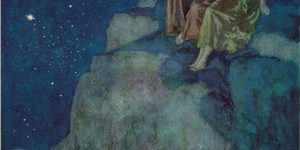
Pablo Neruda is one of the world's most popular poets, and The Book of Questions is Copper Canyon's all-time best-seller. This updated bilingual edition is entirely re-designed and features a new cover, new interior, and an introduction by translator.
In The Book of Questions, Neruda refuses to be corralled by the rational mind. Composed of 316 unanswerable questions, these poems integrate the wonder of a child with the experiences of an adult. By turns Orphic, comic, surreal, and poignant, Neruda's questions lead the reader beyond reason into realms of intuition and pure imagination.
Tell me, is the rose naked
or is that her only dress?
Why do trees conceal
the splendor of their roots?
Is there anything in the world sadder
than a train standing in the rain?
When Neruda died in 1973, The Book of Questions was one of eight unpublished poetry manuscripts that lay on his desk. In it, Neruda achieves a deeper vulnerability and vision than in his earlier work-and this unique book is a testament to everything that made Neruda an artist.
"Neruda's questions evoke pictures that make sense on a visual level before the reader can grasp them on a literal one. The effect is mildly dazzling [and] O'Daly's translations achieve a tone that is both meditative and spontaneous." -Publishers Weekly
Pablo Neruda, born in southern Chile, led a life charged with poetic and political activity. He was the recipient of the Nobel Prize in Literature, the International Peace Prize, and served as Chile's ambassador to several countries, including Burma, France, and Argentina. He died in 1973.
II.
Tell me, is the rose naked
or is that her only dress?
Why do trees conceal
the splendor of their roots?
Who hears the regrets
of the thieving automobile?
Is there anything in the world sadder
than a train standing in the rain?
XIV.
And what did the rubies say
standing before the juice of pomegranates?
Why doesn't Thursday talk itself
into coming after Friday?
Who shouted with glee
when the color blue was born?
Why doe
Customer Rating: 


Review Summary: Brief Lines That Create Nostalgia For Pablo Neruda
Review: Pablo Neruda is much missed as a poet and thinker. Since his death in 1973 there has been an even stronger growing of appreciation for his unique style of writing. During his last days he composed this strange little collection of some 300-odd questions and a number of poems all dealing with the life cycle as only one who sees his end at hand can write. The subjects are death, rebirth and nature in as complete a marriage of intention as any poet has created. They are beautifully translated by William O'Daly.
Intending his reader to be stimulated by his words to create a visual image that is personal, his questions from this volume so aptly titled 'The Book of Questions' open our eyes and our minds to some rapturously beautiful experiences. Examples:
'Why don't inanimate things
do something?
Where did a celestial body
leave something tonight?
Why don't they train helicopters
to suck honey from the sunlight?
Where did the full moon leave
its sack of flour tonight?'
Warmly humorous, touching and eventually elevating, the questions remain on the backs of our eyes awaiting reentry into our brains for relish at needy times. Neruda is a poet for all seasons. Just read this book and discover. Grady Harp, December 06
Customer Rating: 


Review Summary: There is a zen-like quality to Neruda's poems
Review: _The Book of Questions_ defies easy description. Neruda composed over 70 poems in quatrains, two questions per quatrain - yet the depth of the questions and the variety of interpretations the reader can take from the questions is limitless. That the book contains English translations of the Spanish original is an added bonus.
The images are surreal, as if a Dali painting put to words. Further thought (and the poems ARE thought provoking) yields a different answer with each reading. There is a pervading sense of sadness to them, perhaps because Neruda was dying of cancer while he wrote them; but there is hope, here, too - and a wisdom that only a master poet can communicate. For example:
Where is the child I was,
still inside me or gone?
Why did we spend so much time
growing up only to seperate?
Neruda's _Book of Questions_ haunts and provokes, much like life itself. Highly recommended.
Customer Rating: 


Review Summary: Questions for the Soul
Review: With this book, Pablo Neruda takes the universe and turns it inside out; in doing so, he brings forth questions for which there are no answers, and which, at the same moment, lead us toward the questions and vibrations of our own souls. The questions may appear as nonsense, but in truth, they are of another language, that of the poet, and they are neither meant to be answered nor translated into the realms of the logical and linear. He embraces humor: "What will they think of my hat, the Polish, in a hundred years?" and "Is there anything sillier than to be called Pablo Neruda?" Yet he also delves into mystery of life and living: "Is 4 the same 4 for everybody? Are all sevens equal?" and "In the end, won't death be an endless kitchen?" While perhaps never having read C.S. Lewis' "A Grief Observed," Neruda picks up a thread from two lines of this short memoir of grief: "Is yellow square or round? How many hours are in a mile?" But while Lewis searches for answers in a prosaic realm, Neruda remains the poet of questions. His work also brings to mind a poem by American jani johe webster, "the color of august": "what is the sound of a shadow / how do you say a hope / can you see time in a dream". For a truly amazing experience, read William O'Daly's translation of "The Book of Questions" side by side with Ben Belitt's: it is an amazing study of words, meanings, translation, and most of all, questions.
Customer Rating: 


Review Summary: Questions Without One Definitive Answer
Review: Pablo Neruda's BOOK OF QUESTIONS is one of those books that simply cannot be read just once. Though the poems are short, they are questions that make you ponder and think about through out the day. Neruda covers just about everything, such as politics, society, nature, and life in general.
The most enlightening thing about poetry, especially Neruda's style of writing poetry, is that it lends itself to much interpretation. Anyone that reads this book will have their own answer and interpretation of what they think Neruda was trying to convey. For example, Neruda has a knack for covering politics. He writes:
"How did the grapes come to know
the cluster's party line?
And do you know which is harder,
to let run to seed or to do the picking?
It is bad to live without a hell:
aren't we able to reconstruct it?
And to position sad Nixon
with his buttocks over the brazier?
Roasting him on low
with North American napalm?" (p.18)
For the most part, the book has a zen-like quality, which suggests a complexity to the poems -- the sense of not-knowing, and moving towards intuitive perceptions, beyond rehearsed patterns of thinking and feeling (viii). In a way, it appears complex, but at the same time liberating. Neruda's poetry is simple in its structure.
Beyond analysis, BOOK OF QUESTIONS is also helpful for anyone trying to refresh their memory to read and write in spanish. The translations are wonderful and practical. I recommend this book as well as other books by Neruda because of this added bonus.
Customer Rating: 


Review Summary: The World Through Questions
Review: The BOOK OF QUESTIONS was written in 1973, a few months before Neruda's death to cancer. Troubled by the knowledge of his impending death, as well as by a U.S. backed coup threatening the Allende government in Chile (Leftist regime 1970-73), Neruda wrote several small books of brief poems, comprised simply of unanswerable questions, in the koan tradition (question/statement in the form of a paradox that disciples of Zen ponder). They are enigmatic, at times surreal, leaving you lost in labyrinths of deep thought, or in abstract bewilderment.
My favorite questions include:
Why do leaves commit suicide
When they feel yellow?
and
When the convict ponders the light
is it the same light that shines on you?
--ross saciuk