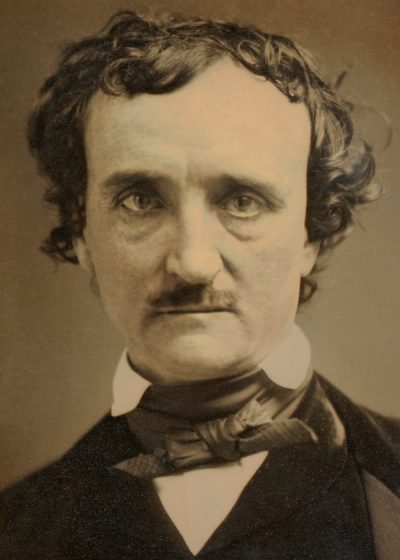
WINNER OF THE American Book Award in Translation for 1983, Richard Howard's version of this landmark work of modernist verse, published here in tandem with the French original. Embellished by a frontispiece portrait and nine floral monotypes by Michael Mazur.
Customer Rating: 


Review Summary: overdone
Review: I'd get this book for the quality of the paper and type (at least that of the version I bought back in the early 90s) and the great presentation of the French originals. People with even a high-school knowledge of French can appreciate Baudelaire's ideas and musicality. It's impossible to translate the latter into English, so why even try?
The best thing about the ideas in the poems is that they are expressed in very simple language. I would have prefered a similarly simple, immediate English translation without resorting to stuffy "poetic" language (as well as over-interpretation--many images sneak into the English that are just not there, or only suggested, in the French). The only way to really appreciate the intricately constructed meter and rhyme is to read the originals.
I know this is probably a matter of taste in translation, but reading the English translations in this volume really brings me down sometimes!
Customer Rating: 


Review Summary: Definitve translation
Review: The definitive translation of the definitive book of romantic symbolist poetry. This edition includes the originals as well, which bumps it up to 5 stars for me.
Customer Rating: 


Review Summary: A Poor Translation
Review: I've lived with these poems, in the original French, for forty years; when Howard's English translation came out twenty years ago, I read it through, but never felt that it was even worth reviewing. It doesn't rhyme, it doesn't scan, it changes the meaning of the original. Yecch, to put it bluntly.
The whole idea behind Baudelaire's verse is that it is exquisitely classical metre and rhyme, but contains feelings and images that are so advanced that we haven't really caught up with them, even 100 years later. It's the contrast between strictness of form and wildness of content that makes Baudelaire's poetry so incredible.
Enter Howard. His versification is so vague and unfocused, and his words and meaning so far from the original, that I can't recognize Baudelaire at all in this book. It's more like a riff or a sampling of the real thing, and just doesn't work - for me - either as poetry or as translation. I guess you could say that I'm deaf to Howard's music. Even if that is true, I'd stake my reputation that Howard is deaf to Baudelaire's music.
Customer Rating: 


Review Summary: creep close until you lie upon my heart
Review: Howard's translation of Baudelaire's masterpiece is not to be missed. This is the poetic decadence that began the belle epoque and influenced so much of what was to come in literature and the arts. Anyone seen reading this in public could be mobbed by attractive and intelligent members of the opposite and/or same sex: it has a libido boost that exceeds the music of Barry White. Go ahead, read "Lethe" to your sexy significant other while drinking absinthe and champagne; they'll be yours forever.
Customer Rating: 


Review Summary: Baudelaire bowdlerized?
Review: In some translations, Baudelaire creeps up and stabs you. In this one he just sits and broods, smoking a hookah.
Richard Howard reduces Baudelaire to a pleasant middle-voice from which he speaks with only occasional eloquence. The translator here is a poet who is sensitive to the meaning of each poem, but he hasn't focused his energy enough on crafting his translations to contribute much that is better than the translations already done.
His introduction reveals that he is concerned more with "articulating a sustained structure" (in which he succeeds) than with giving any poem its "individual varnish" (in which he fails). The result, of course, is that few of these poems are brilliantly presented IN THEMSELVES, and we can appreciate this translation only if we read all the poems in sequence, thinking about their relationships.
Translation of Baudelaire demands a focus on every word, every line, every cadence. This translation has an agenda; it tries to capture only a fraction of the poet.
Most of these translations do not rhyme; and yet they are not literal translations either. The popularity of this book is that Howard makes everything sound plain and sensible. It is only when you look at the French that you realize how uncanny the original poems are. This book does not convey Baudelaire's lyric intensity, mainly because it abandons the music of the original. Howard is so bent on making everything plain English that he utterly misses the thundering rhythms of a poem like "Le Vampire". He translates "Toi qui, comme un coup de couteau / Dans mon coeur plaintif es entree" as "Sudden as a knife you thrust / Into my sorry heart." Bleh! What a lazy translation! Of course you CAN translate it that way, but it destroys the music of the poem, which severely weakens the reading of Baudelaire.
N.B. It's awkward to review a whole book of translations, since certain attempts will obviously be more successful than others. Howard is quite sensitive to the poetry of the original (he never misinterprets) and certain lines in these translations are indeed wonderful moments of poetic understanding: such poems include "Sorrows of the Moon", "I spent the night..." and "L'Heautontimoroumenos" in which he writes "I am the vampire at my own veins." Such recasting of Baudelaire's phrases are the most significant contributions of this book. Unfortunately, they're the exceptions, and other translators have written stunning translations, full of Baudelaire's dark music, which are far more memorable and accomplished than the typical translation here.