Poetry Books

Poetry Books

Poetry Books Poetry Books

The Bridge (Paperback 1992)

The Bridge (Paperback 1992)
RRP: $10.95
Our Price: $8.76
You Save: $ 2.19 ( 20% )
Usually ships in 24 hours
Manufacturer: Liveright Publishing Corporation
Author: Hart Crane
Publisher: Liveright Publishing Corporation
Average Customer Rating: Average rating of 4.5/5Average rating of 4.5/5Average rating of 4.5/5Average rating of 4.5/5Average rating of 4.5/5
Buy The Bridge (Paperback 1992) now from Amazon!


Experimental feature: Order The Bridge (Paperback 1992) from the UK, Canada, Germany or France by clicking an appropriate flag below.

Buy The Bridge (Paperback 1992) now from Amazon.com     Buy The Bridge (Paperback 1992) now from Amazon.co.uk     Buy The Bridge (Paperback 1992) now from Amazon.ca     Buy The Bridge (Paperback 1992) now from Amazon.de     Buy The Bridge (Paperback 1992) now from Amazon.fr

Some items available at Amazon.com are not available in all countries.

The Bridge (Paperback 1992) Description

Binding: Paperback
Dewey Decimal Number: 809
EAN: 9780871402257
ISBN: 0871402254
Label: Liveright Publishing Corporation
Manufacturer: Liveright Publishing Corporation
Number Of Items: 1
Book Pages: 76
Publication Date: 1992-07
Publisher: Liveright Publishing Corporation
Studio: Liveright Publishing Corporation

Editorial Review of The Bridge (Paperback 1992)


Customer Reviews of The Bridge (Paperback 1992)

Customer Rating: Average rating of 5/5Average rating of 5/5Average rating of 5/5Average rating of 5/5Average rating of 5/5
Review Summary: A Visionary American Poem
Review: I have been reading the Library of America's newly-published edition of Hart Crane's (1899- 1932) complete poems. The LOA edition includes as well over 400 of Crane's letters to his family, friends, and associates. The LOA compilation of Hart Crane's writings made me want to turn again, specifically to his masterpiece, "The Bridge". I have owned the paperback edition of "The Bridge", reviewed here, for many years. It has the advantage over the LOA edition in being less bulky and in including two thoughtful introductions to help approach this difficult poem. The first introduction is by Crane's friend, the poet and critic Yvor Winters. Winters's article dates from 1932, and it is critical of "The Bridge". The second review is by Thomas Vogler. It dates from the 1970s, when this paperback was first published, and attempts to answer some of Frank's objections to the poem. The reader will need to respond to the poem for himself or herself. But I find both Winters's and Vogler's reviews suggestive and illuminating.

Crane first conceived the project of a long poem on the Brooklyn Bridge in 1923. He worked on it fitfully for six years completing in in 1929. The poem was published in 1930. Crane received financial assistance from the philanthropist Otto Kahn (1867 -- 1934) to allow him to work on "The Bridge". We are forever in Kahn's debt. Crane's work on the poem was hindered by the complexity of its themes and by severe excesses in his personal life. But Crane persevered and was able to realize his project. Crane committed suicide in 1932. A difficult and still controversial work, the Bridge has won an important place in American literature. More than that, it has long won a place in my heart.

Hart Crane wrote "The Bridge" as an answer to the pessimism and despair of T.S. Eliot's poem "The Waste Land." Crane wanted to create a vision of hope for modern life and a secular myth for the United States. He tried to do so by using the magnificent Brooklyn Bridge, engineered by Washington Roebling, as a symbol. By coincidence, Crane lived for some years in a small room in Brooklyn Heights from which he could see the Brooklyn Bridge. Roebling had also lived in this same room.

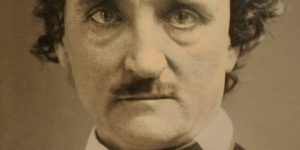
In Crane's poem, the Brooklyn Bridge is a symbol of power and industrialization and of the promise it offers to modern life. But it is infinitely more. The arch of the bride, in Crane's mythology, stretches backwards in time to the discovery of America, and further. The Bridge also stretches in space to encompass the continent in its entirety, the West, and, particularly the Mississippi River. The Brooklyn Bridge becomes, in Crane's myth, a transcendent symbol in which distinctions of time and place are oblisterated in a mystic vision of self and of the United States. The myth of the poem is also highly personal, as the poet tries to come to terms with his life. In the journey of the poem, the poet leaves his lover in bed in the morning to cross the bridge. He visits a bar at the foot of the bridge and has a conversation and a drink with an old sailor before he returns home late in the evening on the subway. The poet's refelections encompass, through meditation on the Brooklyn Bridge, Columbus, Pochahontus, Walt Whitman, Edgar Allan Poe, the machine age, and the poet's own life and attempt to overcome what he describes in the "Quaker Hill" section of "The Bridge" as "the curse of sundered parentage."

Crane's poem begins with a magnificent introduction "To Brooklyn Bridge" in which he announces his theme to "And of the curveship lend a myth to God." The poem closes with the mystic vision of "Atlantis", the first section of the work Crane composed in which he tries to bring his difficult vision to unity in what he describes as a "Swift peal of secular light, intrinsic Myth". Cranes's metaphorical Bridge exists in "Everpresence, beyond time,/Like spears ensanguined of one tolling star/ that bleeds infinity/ ...", as the Bridge "Whispers antiphonal in azure swing." As Crane develops his theme, the mythical Bridge is a call to transcendence, hope and reflection and to human love and the brotherhood of man.

The poem is written in varied styles and passages of beautiful blank verse alternate with colloquial passages and with passages that illustrate the depressed, debased character of modern life that Eliot described in "The Waste Land." Crane tried valiantly to overcome these negative elements in his poem. Crane's own vision included dark, despairing moments, expressed in the "Quaker Hill" and "The Tunnel" sections of "The Bridge" which the final vision of "Atlantis" struggles to incorporate.

Some of the sections of the "The Bridge", particularly "Indiana" and "Quaker Hill" were composed in haste as Crane struggled to complete his poem and are frequently regarded as weak links in the work's grand scheme. Some sections of "The Bridge" lack the immediacy and the sheer verbal beauty of Crane's earlier poems in the collection "White Buildings."

For all its difficulties and its mixed success, The Bridge never ceases to inspire me. It is a difficult and hard-won vision of the mythic, the secular, and the personal promise of American life. It was a noble effort. I urge readers of this review to explore Hart Crane's American poem, "The Bridge".

Robin Friedman


Customer Rating: Average rating of 4/5Average rating of 4/5Average rating of 4/5Average rating of 4/5Average rating of 4/5
Review Summary: not easy poetry, but worth the struggle
Review: I'd suggest reading Samuel R. Delany's essay (in Longer Views) and accidentally catching a program on PBS about Hart Crane after your first read of it. It helped me tremendously.

An epic poem which explores America, "modern" poetic imagery (the Brooklyn bridge as opposed to a tree), Columbus, Whitman, Poe, Pocahontas, and sea imagery. It also contains very bold (for the pre-Stonewall era) allusions to homosexuality, in the typical method of the period which is rooted in gender-neutrality.


More Reviews
Buy The Bridge (Paperback 1992) now at Amazon.com!

Poetry Books ©