The correspondence between the English poet Rupert Brooke and his close friend James Strachey here appears in print for the first time. The letters reveal much about the lives and interests of these two gifted young men, the nature of their relationship, and the activities of many illustrious friends such as Lytton Strachey (James's brother), J.M. Keynes, Virginia Woolf, and Bertrand Russell.
Customer Rating: 


Review Summary: Epistles of Unrequited Love: 'Friends and Apostles'
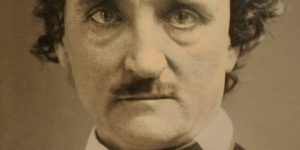
Review: Brooke's heart-stopping good looks are the essence of this epistolatory account of the romantic friendship between James Strachey and England's eternal Golden boy. He who penned the heroically mawkish yet strangely thrilling:'If I should die/ Think only this of me/That there is some corner of a foreign field/ That is forever England' is here revealed through Strachey's eyes in the guise of romantic muse, love object, sex god. Unfortunately for Strachey, his passion was unrequited.
Strachey is be-dazzled by Brooke during their first year at Cambridge, and the subsequent correspondence betrays all the hallmarks of adolescent infatuation: in turns importunate, with Strachey's 'declaration' early in 1906; adulatory:'You were so beautiful tonight';desperate: 'I suppose you know what's wrong with me...I'm in love with you'; ever hopeful: 'Why not come quietly to bed with me instead?' in response to Brooke's request for contraceptive information; finally hopeless: 'The sudden sight of him across a room made my heart...bound ... it's no use...' But it is with a start that one realises that this is no adolescent, but rather a scion of the Stracheys - long time members of the intelligentsia, darlings of the Bloomsbury set - assistant editor of 'the Spectator', putative translator of Freud.
And herein lies the fascination. Keith Hale's painstakingly edited and annotated edition of the correspondence vividly presents Strachey's personal drama of unstinting adulation of the man seemingly pursued by a host of admirers of both sexes, but also features most of England's literati and glitterati in supporting roles. Here are Vanessa and Clive Bell, Virginia Woolf, Maynard Keynes, society hostess Lady Ottoline Morrell, together with representatives of an older order - Thomas Hardy, not to mention Henry James who, for goodness sake, Brooke cycles off to call on at Lamb House as casually as if he were the man next door! And interspersed with these semi-mythical figures are the domestic details that form an integral part of Brooke and Strachey's lives. The trivia is engrossing, with its train timetables, motorbuses and postal orders: 'I'll enclose the tickets and a postal order for 10/6.'
But we never stray far from the central motif - that of Strachey's heart-sickness for Brooke. Coupled with our fascination, though, is also the uncomfortably voyeuristic sensation of being privy to Strachey's intimate yearnings and his longing makes for painful reading: 'It is You and my love that makes the universe magical....' and one finds oneself wishing that Brooke could have been kinder.
Hence it is with a start that one reads Brooke's own account of his seduction of a former university acquaintance. One wonders what the besotted Strachey could have made of his graphic and lengthy account of the physical details of his night in bed with Denham Russell-Smith. Brooke's literary executor Geoffrey Keynes vowed that the uncensored Brooke letters would be published 'over my dead body.' And such has certainly been the case as it is only since Keynes' death that the letters have been released.
Brooke's image makers certainly knew how to 'spin', and it is really only now, nearly 90 years later, that we have a clearer view of Brooke the man as opposed to the legend. Perhaps Strachey's words on Brooke , many years following his death, are the most revealing: 'He was not nearly as nice as people now believe him, but a great deal cleverer.'
Customer Rating: 


Review Summary: Extremely interesting
Review: This is simply a must-read for Brooke fans and anyone else interested in the aesthetists and their times. It's absolutely fascinating. By the time you finish the introduction, you will be hooked.
Customer Rating: 


Review Summary: Impressive
Review: This is quite an achievement in editing. Brooke and Strachey comment on so many of the prominent figures of their time that, coupled with Hale's impressive footnotes and other editorial material, the book serves as a virtual history of Edwardian England. I personally am not crazy about Brooke's poetry, but I thoroughly enjoyed reading this work.
Customer Rating: 


Review Summary: A period piece worth reading
Review: Much is being made about what this book reveals about Brooke's sexuality, but the main reason for reading it is that it is simply very interesting and educational. One learns so much one never knew about so many of the major literary and political figures in Georgian England. Hale's impressive footnotes are as enjoyable as the letters themselves.
Customer Rating: 


Review Summary: candid and erotic
Review: This is probably the closest thing to a Brooke autobiography that the world will ever see. Because of Hale's useful editorial material and his thorough annotations, the letters provide as complete a story of Brooke as most of his biographies. And because Brooke shows sides of himself to Strachey that have been hitherto suppressed by his executors, the book provides a more complex, personal view of Brooke than do his previously published letters or his travel journals. Of particular interest are his graphic description of seducing the younger brother of one of his friends; Strachey's account of a sexual rendezvous involving Duncan Grant, John Maynard Keynes, and a Cockney youth; the account of Strachey being pursued by the famous mountain climber, George Mallory; and Brooke's insane, vulgar, and disturbing ramblings following his nervous collapse in 1912. It's quite an interesting read, really.