Customer Rating: 


Review Summary: The overflow of spontaneous emotion recollected in tranquillity
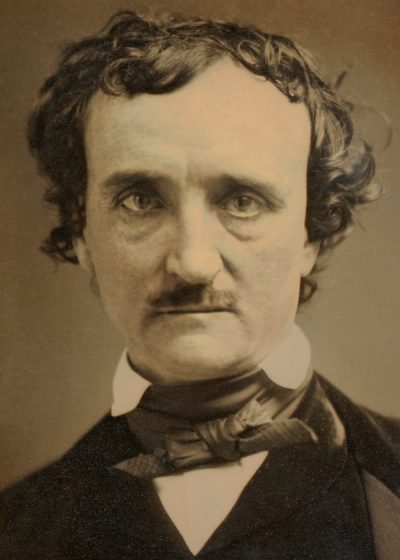
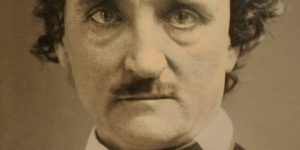
Review: The great defining moment of the Romantic movement in English poetry is generally considered the publication by Wordsworth and Coleridge of 'The Lyrical Ballads' in 1797. But the editors of this anthology take an earlier point of origin and begin with the great myth - master and singer of songs of innocence and experience, William Blake. They include in their anthology not simply English Romantic poets but also the Americans , Emerson and Thoreau( Transcendentalists) and Poe. They also include a number of minor, lesser known poets.
But what is most important is that they have most of the great definining poems of English Romantic Poetry, the great poems of Wordsworth, Coleridge, Shelley, Keats.
There are of course as many definitions of Romanticism as there are of other key intellectual-historical concepts such as 'Nature' and 'Classicism' But one clear element is a new found emphasis on self, and subjectivity , the expression of the individual's feeling of the world. Wordsworth went to everyday life and language, to nature and the world of the ' simple people' he met in his countryside wanderings. Coleridge went to the world of myth and mystery, but they both provided in deeper ways whole worlds of feeling which were at times ' deeper than tears'.
An outstanding anthology of one of the most important 'movements' or ' periods' in the world- history of poetry.
Customer Rating: 


Review Summary: A good selection, co-edited by a poet
Review: One of the annoying things about the received opinion about the Romantic poets is the statement that there were exactly six of them--Blake, Wordsworth, Coleridge, Byron, Keats, and Shelley. This pronouncement is usually delivered with equal conviction to assertions you usually hear only in the natural sciences--e.g., that there are three kinds of human muscle (cardiac, striated, and slow-flexing) and two kinds of stony drip-accreted icicles in caves (stalactites and stalagmites). Nor elsewhere in the area of literature do you quite hear that there were so many Russian realist novelists, so many French Symbolist poets, so many English medieval poets, etc. So it's something of a relief to read in the editors' introduction to the "Portable Romantic Poets" that American romantics are included as well, because poets don't just arrest their reading, as anthologizers usually arrest their selecting, at continental or national boundaries. It's also welcome to see the inclusion of poets who are sometimes left out because they might be felt to be minor or unpopular (Landor) or generically different (Burns) by anthologizers. This anthology is a welcome corrective to received wisdom about who actually qualifies as a Romantic. And the efficient introduction is a minor masterpiece of cultural exposition as well.
Customer Rating: 


Review Summary: Man can imagine states of existence other than they are.
Review: The first verse of William Blake's Auguries of Innocence appears in Bronowski, as homage to Ludwig Boltzmann: " To see a World in a Grain of Sand, And a Heaven in a Wild flower, Hold Infinity in the palm of your hand, And Eternity in an hour...." William Blake was born in London in 1757. He attended drawing school and thereafter eked out a very modest existence as an engraver and artist. He was not able to find a publisher so in 1789 he himself engraved and published Songs of Innocence and The Book of Thel. Blake died in 1827. Blake was one of many 'romantic poets' of that epoch. Auden and Pearson point out that the romantic definition of man appears towards the end of the eighteenth century. The divine element that man possesses is not power nor free will of reason, but self-consciousness. Man can see possibilities, he can imagine states of existence other than they are.
Customer Rating: 


Review Summary: nice collection, provides context with poems
Review: Far be it from me to critique these poets, but I can say something about this particular presentation. It's a handy little volume, with a several-page introduction providing historical context, and a several-page calendar of British and American poetry from 1750 to around 1850. The calendar doesn't just list poetry, it includes events like "Watt's steam engine patented" and "Lewis and Clark Expedition" as well as the publication of novels and music, so context is well established. At the back of the book is an index of poems by title and by first line, and there's a set of biographical notes on the poets.
If you want to know what romantic poetry's all about, take a look at this. I don't know how an English Lit Ph.D. would rate this book but I think it's a nice collection.