The Survey of Cornwall by Richard Carew
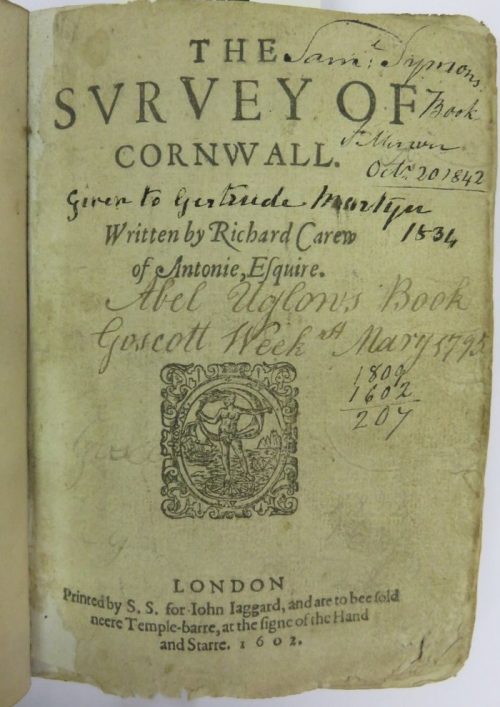
THE SVRVEY OF CORNWALL.
AND
An EPISTLE concerning the EXCELLENCIES
of the ENGLISH TONGUE.
By RICHARD CAREW, of Antonie, Esq;
WITH
The LIFE of the AUTHOR,
By H**** C***** Esq.
A NEW EDITION.
‘LONDON,
Printed for E. LAW, in Ave-Mary-Lane;
and J.HEWETT, at Penzance.
MDCCLXIX.
LIST of the SUBSCRIBERS,
A. Copies.
SIR. John St. Aubyn, of Clowance, Baronet 20
Rev. Mr. Jerveys Allen, of Helston
Thomas Saunders Allen of St. Just, Attorney at Law
Alexander Allen, Purser of the Wolf Sloop of War
John Antony, of St. Ives
John Antony, junior, of St. Ives
B.
Joseph Beard, of Penzance
John Batten, jun. of ditto, Merchant
Joseph Batten, of ditto
John Blewett, Esq. of Marazion 4
George Borlase, Attorney at Law, of Penzance
William Bastard, of Exon
Joseph Batten
John Beard, jun. of Penzance, Merchant
Capt. Barkley, of the Wolf Sloop of War
Rev. Mr. William Borlase, of Zennor
William Borlase, LL.D. of Ludgvan, F.R.S.
James Bennett
Capt. Thomas Braithwaite, of Falmouth
James Bonithon, of Penzance
Rev. Mr. Jacob Bullock, of Wendron
Francis Benallock
James Bower, of Lostwithiel
James Baron, of ditto
Thomas Bennet
Nicholas Bishop, of Bristol
Jofeph Bunney, Esq. Leicester
John Bawden, Exon
C.
Nicholas Cloak, of Penzance
Daniel Carthew, of ditto
Robert Coleman, of Bristol
George Cooney, of Penzance
Mr. Carlyl, of Marazion
Humphrey Cole, Attorney at Law, of ditto
David Cloak, Surgeon, of Penzance
William Cornish, of Marazion
Capt. Thomas Cassett, of Plymouth
Richard Carne, of Falmouth, Merchant
Coleman, Harris, and Co. Merchants at Bristol 2
Henry Coleman, Esq. of Market Harborough, Leicestershire
Henry Coleman, Esq. Leicester
D.
David Dennis, Attorney at Law, of Penzance
John Dennis, of ditto
James Donithorne, of Marazion
Thomas Daniel, of Truro, Esq.
John Dyer, of Penryn
William Dawkin, Esq. of Kilvough, near Swanzey, in Wales
Robert Dunkin, of Penzance
E.
William Ellis, Esq. of Penzance 5
Charles Streater Ellis, of ditto
James Edwards, of ditto, Merchant
Hugh Edwards, Attorney at Law, St. Ives
Thomas Ennys, of Redruth
F.
Miss C. Foley
Rev. Mr. Fisher, of Marazion
Edward Freeman, of Lostwithiel
G.
Thomas Glynn, jun. of Helston, Esq.
Charles Gwavas, of Penzance, Merchant 2
Pascoe Grenfell, of Marazion, Merchant
John Grenfell, of Penzance, Merchant
Richard Jerveys Gryles, Attorney at Law, of Helston,
Andrew Gaylard, of Bristol
Miss Jane Gilbert, of St. Ives
Thomas Glanvile, of Lostwithiel
Rev. Mr. Edward Giddy, of St. Earth
Thomas Giddy, of Truro, Surgeon
William Giddy, of ditto
H.
Richard Hichens, of Penzance, Attorney at Law 2
Capt. John Halse, of Redruth
Rev. Mr. Edward Hobbs, of Sancrete
John Hawkins, Esq. of Helston
Rev. Mr. John Hosken, of Menaccan
Thomas Hacker, of Penzance
Isaac Head, Esq. Collector of his Majesty’s Customs in the Islands of Scilly
William Holbeck, Gent. Com. of Trinity Col. Oxford, Esq.
Captain Peter Hill, of Falmouth
John Hall
John Hewett, of Plymouth-dock
John Hurd, of Birmingham
Christopher Harris, Esq. Keneggy 6
Nathanial Hicks, of St. Ives
Rev. Mr. Haydon, Liskeard
Samuel Hick, of Lostwithiel
Edward Harford, of Bristol
John Hosking, of Madron
John Howell, of Penzance
John Hall, of Stofford, Devonshire
I.
William John, of Penzance, Merchant
John James, of Newlyn, ditto
Capt. John James, of Marazion
William James, of Redruth
Thomas John, of Penzance, Merchant
John James, of St. Agnes
K.
John Knill, Esq. Collector of his Majesty’s Customs at St. Ives
John Keir, Surgeon, of Marazion 2
J. Kimber, Attorney at Law, of Fowey
L.
Thomas Love, of Newlyn
Stephen Luke, of Penzance
Maddren Legoe, of St. Just
John Ley, of St. Ives, Merchant
Rev. Mr. Lane, of St. Ives
John Luxmore, Esq. of Oakhampton, Devon.
Samuel Luly, of Penzance
Rev. Mr. Philip Lyne, Vicar of Leskard
Tobias Lanyon, Esq. Penzance
M.
Joseph Michell, of Penzance
Henry Michell, of ditto
James Michell, of Marazion
John Michell, of Chyandower
James Moore, of Penzance
Thomas Mathews, of St. Ives
Herbert Mackworth, Esq. Exon
Henry Mudge, of Truro
Robert Michell, of ditto
Mathias Michell, of Penzance
N.
Rev. Mr. Newton, of Sithney
William Nicholls, Esq. of Trereife
John Nancarrow, jun. of Marazion
Charles Newman, of Falmouth
Rev. Mr. Newton, of Bristol
Thomas Nicholls, of Penzance
B. Nankivell, of St. Agnes
P.
John Price, Esq. 6
John Pender, of Penzance, Merchant
Benjamin Pidwell, of Penzance
Rev. Mr. James Parkin, Lecturer of ditto
Thomas Pidwell, jun. of ditto
John Pearse, Surgeon, of ditto
William Penrose, ——— of ditto
Thomas Pascoe, ———, of ditto
Josias Perry, Surgeon, of Langdon, Devon
James Pascoe, Attorney at Law, of Penzance
Rev. H. Parker, D.D. Fellow of Trinity College, Oxford
William Price, Surgeon, at Redruth
Daniel Pryor, of Penzance
Henry Philips, of St. Ives, Merchant
Rev. Mr. Richard Pearce, of St. Buryan
Thomas Penrose, Attorney at Law, of Penzance
R.
Thomas Robyns, Esq. at Penzance
Thomas Rodda, of Marazion
George Rippar, of ditto
David Richard, of ditto
Charles Rashleigh, of St. Austle, Attorney at Law
Thomas Read, of Penzance
Charles Rawlinson, of Marazion
Stephen Robinson, jun. of Bridport
Samuel Rodda, of Marazion
S.
Walter Stone, of Penzance
John Stone, of ditto
George Scobell, Esq. Collector of his Majesty’s Customs at Penzance
John Stackhouse, Esq. of Pendarves
William Stackhouse, Efq. of Trehane
William Sincock, of Marazion
Edward Stevens, of St. Ives
William Stevens, of ditto
Thomas Slade, of ditto
Miss Sarah Stephens, of ditto
William Skues, of Helston
John Stott, of Ludgvan, Esq
William Stevens, of Bristol
Francis Spernon, Surgeon, in Lostwithiel
Rev. Mr. Smith, of St. Just
John Smith, Truro
T.
Thomas Trenwith, Esq. of St. Ives
John Trengrouse, Surgeon, of ditto
Richard Treeve, of Penzance
Uriah Tonkin, Esq. of ditto
William Tregurtha, of ditto
John Tonkin, Surgeon, of ditto
Joseph Tovey, of ditto
Rev. Mr. James Tonkin, of ditto
John Treluddra, of Marazion
Rev. Mr. Trevennen, of Cambron
George Treweeke, Surgeon, of Penzance
Joseph Taylor, of Bristol
J. Trevethan, Attorney at Law, of Redruth
U.
George Veale, Attorney at Law, of Penzance
William Usticke, Esq. of Nansalverne
W.
Rev. Mr. Williams, of Crowan
Dionysius Williams, of Penzance, F.R.S.
Samuel Woodis, of ditto
John Williams, Officer of Excise
Matthew Wills, Surgeon, of Helston
Richard Williams, Marazion
Rev. Mr. Anthony Williams, of St. Keverne
Philip Webber, Attorney at Law, Falmouth
George Woodis, of Penzance
John Weston, Esq. of Illuggan
Rev. Thomas Wharton, A. M. Fellow of Trinity College, Oxford.
THE SVRVEY OF CORNWALL
Written by Richard Carew, of Antonie, Esquire.
            To the Honorable, Sir Walter Ra-
             leigh Knight, Lord Warden of the
            Stannaries, Lieutenant Generall of
                     Cornwall, &c.
This mine ill-husbanded Survey, long since begun, a great while discontinued, lately reviewed, and now hastily finished, appealeth to your L. direction, whether it should passe; to your correction, if it doe passe; and to your protection, when it is passed. Neither unduely: for the same intreateth of the Province, and Persons,ouer whose bodies, and estates,you carrie a large, both Martiall, and ciuiil commaund, by your authoritie, but in whose hearts, and loues, you possesse a farre greater interest, by your kindnesse. Your eares, and mouth, haue euer beene open, to heare, and deliuer our grieuances, and your feete and hands, readie to goe, and worke their redresse, and that, not onely, alwayes, as a Magistrate, of your selfe, but also verie often,as a suiter, and solliciter to others, of the highest place. Wherefore, I, as one of the common beholden, present this token of my priuate gratitude. It is dutie, and not pre- sumption, that hath drawne me to the offering; and it must be fauour,and not desert, that shall moue your Lordship to the acceptance: and so I take humble leaue, rest- ing no lesse willing to serue you, then vnder you.
Your Lordships poore kinsman,
                     Richard Carew of
                           Antonie.
To the Reader.
When I first composed this Treatise, not minding that it should be published in Print, I caused onely certaine written copies to bee giuen to some of my friends, and put Prosopopeia into the bookes mouth. But since that time, master Camdens often-mencioning this worke, and my friends perswasions, haue caused my determination to alter, & to imbrace a pleasing hope, that charitie, & good construction resteth now generally in all Readers. Albeit, I well know, how Opere in vario, no lesse then in longo, fas est obrepere somnum. And I acknowledge, this playing work to come so farr short, of satisfying, euen myselfe (though Suus cuiq; placet partus) as I haue little reason, to expect the applause of any other.
Besides the state of our Countrie hath vndergone so manie Alterations, since I first began these scriblings, that,in the reuiewing, I was driuen, either likewise to varie my report, or else to speake against my knowledge. And no maruaile, for each succeeding time, addeth, or raueth, goods, & euils, according to the occasions, which it selfe produceth : rather a wonder it were, that in the ceaselesse reuolution of the Vniuerse, any parcell should retaine a stedfast constitution. Reckon therefore (I pray you) that this treatise plotteth downe Cornwall, as it now standeth, for the particulars, and will continue, for the generall. Mine Eulogies proceede no lesse, from the sinceritie of a witnesse, then the affection of a friend: and therefore I hope, that where my tongue hath beene good, no mans eye will bee euill: and that each wel-minded Reader will wish a merrie passage, to this my rather fancie-sporting, then gaine-fseeking voyage. Farewell.
[1]
The Prosopopeia to the Booke.
I Crave not courteous ayd of friends,
To blaze my praise in verse,
Nor, prowd of vaunt, mine authors names,
In catalogue rehearse:
I of no willing wrong complaine,
Which force or stealth hath wrought,
No fruit I promise from the tree,
Which forth this blooth hath brought.
I curry not with smoothing termes,
Ne yet rude threats I blaste:
I seeke no patrone for my faults,
I pleade no needlesse haste.
But as a child of feeble force,
I keep my fathers home,
And, bashfull at eche strangers sight,
Dare not abroad to rome,
Saue to his kinne of neerest bloud,
Or friends of dearest price,
Who, for his sake, not my desert,
With welcome me entice.
The Survey of Cornwall The First Book
The Survey of Cornwall
The Survey of Cornwall The First Book
The Survey of Cornwall The First Book Part 2
The Survey of Cornwall The Second Book
The Survey of Cornwall The Second Book Part 2
The Life of RICHARD CAREW