BOOK THREE

BOOK 3, ELEGY 1

Deliberatio poetae, utrum elegos pergat scribere an potius tragedias (The deliberation of the poet on whether he should continue writing elegies, or tragedies instead)

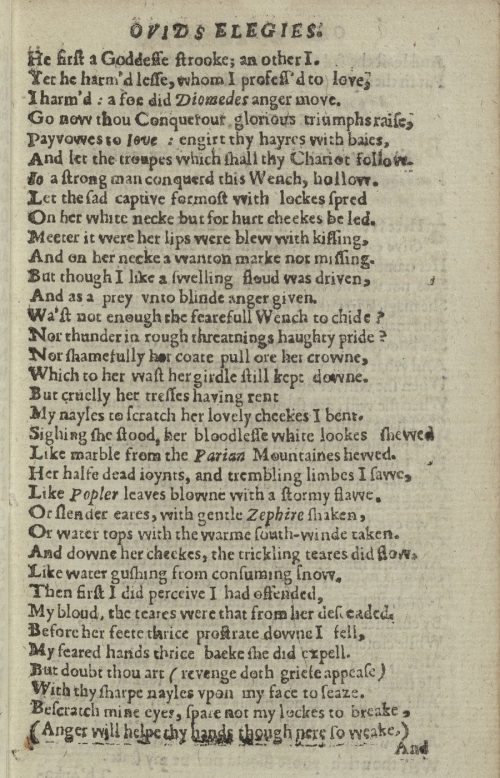
An old wood stands, uncut of long years' space, 'Tis credible some godhead haunts the place. In midst thereof a stone-pav'd sacred spring, Where round about small birds most sweetly sing. Here while I walk, hid close in shady grove, To find, what work my muse might move, I strove. Elegia came with hairs perfumed sweet, And one, I think, was longer, of her feet. A decent form, thin robe, a lover's look, By her foot's blemish greater grace she took. Then with huge steps came violent Tragedy, Stern was her front, her cloak on ground did lie. Her left hand held abroad a regal sceptre, The Lydian buskin in fit paces kept her. And first she said, 'When will thy love be spent, O poet, careless of thy argument? Wine-bibbing banquets tell thy naughtiness, Each cross-way's corner doth as much express. Oft some points at the prophet passing by, And this is he whom fierce love burns, they cry. A laughing-stock thou art to all the city, While without shame thou sing'st thy lewdness' ditty. 'Tis time to move grave things in lofty style, Long hast thou loiter'd; greater works compile. The subject hides thy wit,;men's acts resound, This thou wilt say to be a worthy ground. Thy muse hath played what may mild girls content, And by those numbers is thy first youth spent. Now give the Roman Tragedy a name, To fill my laws thy wanton spirit frame. This said, she mov'd her buskins gaily varnish'd, And sev'n times shook her head with thick locks garnish'd. The other smil'd, (I wot) with wanton eyes, Err I? Or myrtle in her right hand lies. 'With lofty words stout Tragedy', she said, 'Why tread'st me down? Art thou aye gravely play'd? Thou deign'st unequal lines should thee rehearse, Thou fight'st against me, using mine own verse. Thy lofty style with mine I not compare, Small doors unfitting for large houses are. Light am I, and with me, my care, light Love, Not stronger am I, than the thing I move. Venus without me should be rustical, This goddess' company doth to me befall. What gate thy stately words cannot unlock, My flatt'rihg speeches soon wide open knock. And I deserve more than thou canst in verity, By suff'ring much not borne by thy severity. By me Corinna learns, cozening her guard, To get the door with little noise unbarr'd. And slipp'd from bed, cloth'd in a loose night-gown, To move her feet unheard in setting down. Ah, how oft on hard doors hung I engrav'd, From no man's reading fearing to be sav'd. But till the keeper went forth, I forget not, The maid to hide me in her bosom let not. What gift with me was on her birthday sent, But cruelly by her was drown'd and rent? First of thy mind the happy seeds I knew, Thou hast my gift, which she would from thee sue.' She left; I said, 'You both I must beseech, To empty air may go my fearful speech. With sceptres, and high buskins th'one would dress me, So through the world should bright renown express me. The other gives my love a conquering name, Come therefore, and to long verse shorter frame. Grant, Tragedy, thy poet times least tittle, Thy labour ever lasts, she asks but little.' She gave me leave, soft loves in time make haste, Some greater work will urge me on at last.

BOOK 3, ELEGY 2

Ad amicam cursum equorum spectantem (To his mistress, watching horse-racing)

I sit not here the noble horse to see, Yet whom thou favour'st, pray may conqueror be. To sit, and talk with thee I hither came, That thou mayst know with love thou mak'st me flame. Thou view'st the course, I thee: let either heed What please them, and their eyes let either feed. What horse-driver thou favour'st most is best, Because on him thy care doth hap to rest. Such chance let me have: I would bravely run, On swift steeds mounted till the race were done. Now would I slack the reins, now lash their hide, With wheels bent inward now the ring-turn ride. In running if I see thee, I shall stay, And from my hands the reins will slip away. Ah Pelops from his coach was almost fell'd, Hippodamia's looks while he beheld. Yet he attain'd by her support to have her, Let us all conquer by our mistress' favour. In vain why fly'st back? Force conjoins us now: The place's laws this benefit allow. But spare my wench, thou at her right hand seated, By thy side's touching ill she is entreated. And sit thou rounder, that behind us see, For shame press not her back with thy hard knee. But on the ground thy clothes too loosely lie, Gather them up, or lift them, lo, will I. Envious garments, so good legs to hide, The more thou look'st, the more the gown envied. Swift Atalanta's flying legs, like these, Wish in his hands grasp'd did Hippomenes. Coat-tuck'd Diana's legs are painted like them, When strong wild beasts she stronger hunts to strike them. Ere these were seen, I burn'd: what will these do. Flames into flame, floods thou pour'st seas into? By these, I judge, delight me may the rest, Which lie hid under her thin veil suppressed. Yet in the meantime wilt small winds bestow, That from thy fan, mov'd by my hand may blow? Or is my heat of mind, not of the sky? Is't women's love my captive breast doth fry? While thus I speak, black dust her white robes ray: Foul dust, from her fair body, go away. Now comes the pomp; themselves let all men cheer: The shout is nigh; the golden pomp comes here. First, Victory is brought with large spread wing, Goddess come here, make my love conquering. Applaud you, Neptune, that dare trust his wave, The sea I use not: me my earth must have. Soldier applaud thy Mars: no wars we move, Peace pleaseth me, and in mid-peace is love. With augurs Phoebus, Phoebe with hunters stands, To thee, Minerva, turn the craftsmen's hands. Ceres and Bacchus countrymen adore, Champions please Pollux, Castor loves horsemen more Thee, gentle Venus, and the boy that flies, We praise: great goddess aid my enterprise. Let my new mistress grant to be beloved: She beck'd, and prosperous signs gave as she moved. What Venus promis'd, promise thou we pray, Greater than her, by her leave, th'art, I'll say. The gods and their rich pomp witness with me, For evermore thou shalt my mistress be. Thy legs hang down: thou mayst, if that be best, Awhile thy tiptoes on the foot-stool rest. Now greatest spectacles the praetor sends, Four chariot-horses from the lists' ev'n ends. I see whom thou affect'st: he shall subdue, The horses seem as thy desire they knew. Alas he runs too far about the ring, What dost? Thy wagon in less compass bring. What dost, unhappy? Her good wishes fade, Let with strong hand the rein to bend be made. One slow we favour; Romans, him revoke: And each give signs by casting up his cloak. They call him back: lest their gowns toss thy hair, To hide thee in my bosom straight repair. But now again the barriers open lie; And forth the gay troops on swift horses fly. At least now conquer, and out-run the rest: My mistress' wish confirm with my request. My mistress hath her wish, my wish remain: He holds the palm: my palm is yet to game. She smil'd, and with quick eyes behight some grace: Pay it not here, but in an other place.

Please Support the Classic Literature Library

Buy Christopher Marlowe Books from Amazon.com

Ovid's Elegies Page 16

Christopher Marlowe

16th Century Literature

Free Books in the public domain from the Classic Literature Library ©

Christopher Marlowe
Classic Literature Library
Classic Authors

All Pages of This Book
The Jew of Malta
William Shakespeare
Christ in Flanders
The Second Book of the Chronicles
London NightLife
Affiliate Marketing