BOOK 2, ELEGY 14

In amicam, quod abortivum ipsa fecerit (Against his mistress, because she has herself procured an abortion)

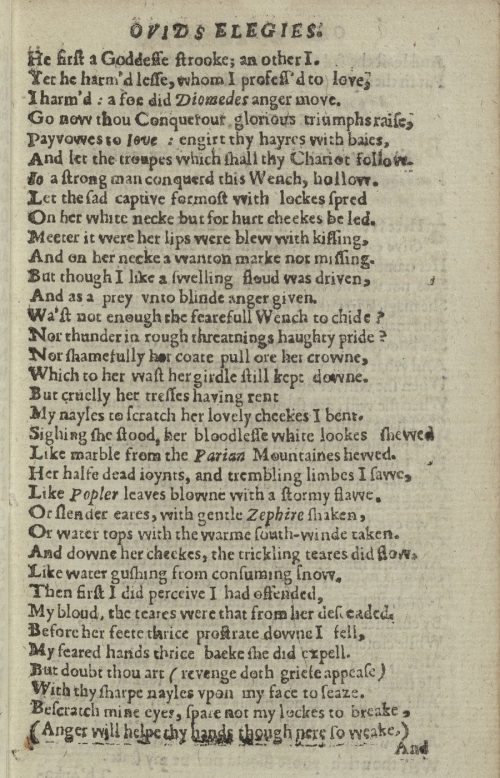
What helps it, woman, to be free from war? Nor being arrn'd fierce troops to follow far? If without battle self-wrought wounds annoy them, And their own privy-weapon'd hands destroy them. Who unborn infants first to slay invented, Deserv'd thereby with death to be tormented. Because thy belly should rough wrinkles lack, Wilt thou thy womb-enclosed offspring wrack? Had ancient mothers this vile custom cherish'd, All human kind by their default had perish'd. Or stones, our stock's original, should be hurl'd, Again by some in this unpeopled world. Who should have Priam's wealthy substance won, If wat'ry Thetis had her child fordone? In swelling womb her twins had Ilia kill'd? He had not been that conquering Rome did build. Had Venus spoil'd her belly's Troyan fruit, The earth of Caesars had been destitute. Thou also, that wert born fair, had'st decayed, If such a work thy mother had assayed. Myself that better die with loving may Had seen, my mother killing me, no day. Why tak'st increasing grapes from vine-trees full? With cruel hand why dost green apples pull? Fruits ripe will fall, let springing things increase, Life is no light price of a small surcease. Why with hid irons are your bowels tom? And why dire poison give you babes unborn? At Cholcis stain'd with children's blood men rail, And mother-murder'd Itis they bewail, Both unkind parents, but for causes sad, Their wedlocks' pledges veng'd their husbands bad. What Tereus, what Jason you provokes, To plague your bodies with such harmful strokes? Armenian tigers never did so ill, Nor dares the lioness her young whelps kill. But tender damsels do it, though with pain, Oft dies she that her paunch-wrapp'd child hath slain. She dies, and with loose hairs to grave is sent, And who e'er see her, worthily lament. But in the air let these words come to nought, And my presages of no weight be thought. Forgive her gracious gods this one delict, And on the next fault punishment inflict.

BOOK 2, ELEGY 15

Ad annulum, quem dono amicae dedit (To the ring, which he has given as a present to his mistress)

Thou ring that shalt my fair girl's finger bind, Wherein is seen the giver's loving mind: Be welcome to her, gladly let her take thee, And her small joints encircling round hoop make thee. Fit her so well, as she is fit for me: And of just compass for her knuckles be. Blest ring, thou in my mistress' hand shalt lie, Myself, poor wretch, mine own gifts now envy. O would that suddenly into my gift, I could myself by secret magic shift. Then would I wish thee touch my mistress' pap, And hide thy left hand underneath her lap. I would get off though straight, and sticking fast, And in her bosom strangely fall at last. Then I, that I may seal her privy leaves, Lest to the wax the hold-fast dry gem cleaves, Would first my beautious wench's moist lips touch, Only I'll sign nought, that may grieve me much. I would not out, might I in one place hit, But in less compass her small fingers knit. My life, that I will shame thee never fear, Or be a load thou should'st refuse to bear . Wear me, when warmest showers thy members wash, And through the gem let thy lost waters pash. But seeing thee, I think my thing will swell, And even the ring perform a man's part well. Vain things why wish I? Go, small gift, from hand, Let her my faith with thee given understand.

BOOK 2, ELEGY 16

Ad amicam, ut ad rura sua veniat (To his mistress, that she should come to his place in the country)

Sulmo, Peligny's third part me contains, A small, but wholesome soil with watery veins. Although the sun to rive the earth incline, And the Icarian froward dog-star shine, Pelignian fields with liquid rivers flow, And on the soft ground fertile green grass grow. With corn the earth abounds, with vines much more, And some few pastures Pallas' olives bore. And by the rising herbs, where clear springs slide, A grassy turf the moisten'd earth doth hide. But absent is my fire, lies I'll tell none, My heat is here, what moves my heat is gone. Pollux and Castor, might I stand betwixt, In heaven without thee would I not be fix'd. Upon the cold earth pensive let them lay, That mean to travel some long irksome way. Or else will maidens, young-men's mates, to go If they determine to persever so. Then on the rough Alps should I tread aloft, My hard way with my mistress would seem soft. With her I durst the Lybian Syrtes break through, And raging seas in boist'rous south-winds plough. No barking dogs that Scylla's entrails bear, Nor thy gulfs, crook'd Malea, would I fear. No flowing waves with drowned ships forth pour'd, By cloyed Charybdis, and again devour'd. But if stern Neptune's windy power prevail, And waters force, force helping gods to fail, With thy white arms upon my shoulders seize, So sweet a burden I will bear with ease. The youth oft swimming to his Hero kind, Had then swum over, but the way was blind. But without thee, although vine-planted ground Contains me, though the streams in fields surround, Though hinds in brooks the running waters bring, And cool gales shake the tall trees leavy spring, Healthful Peligny I esteem nought worth, Nor do I like the country of my birth. Scythia, Cilicia, Britain are as good, And rocks died crimson with Prometheus' blood. Elms love the vines, the vines with elms abide, Why doth my mistress from me oft divide? Thou swear'st, division should not 'twixt us rise, By me, and by my stars, thy radiant eyes. Maids' words more vain and light than falling leaves, Which, as it seems, hence wind and sea bereaves. If any godly care of me thou hast, Add deed unto thy promises at last. And with swift nags drawing thy little coach, (Their reins let loose) right soon my house approach. But when she comes, you swelling mounts sink down, And falling valleys be the smooth ways' crown.

Please Support the Classic Literature Library

Buy Christopher Marlowe Books from Amazon.com

Ovid's Elegies Page 14

Christopher Marlowe

16th Century Literature

Free Books in the public domain from the Classic Literature Library ©

Christopher Marlowe
Classic Literature Library
Classic Authors

All Pages of This Book
The Jew of Malta
William Shakespeare
Christ in Flanders
The Second Book of the Chronicles
London NightLife
Affiliate Marketing