BOOK 2, ELEGY 8

Ad Cypassim ancillam Corinnae (To Cypassis, Corinna's maid)

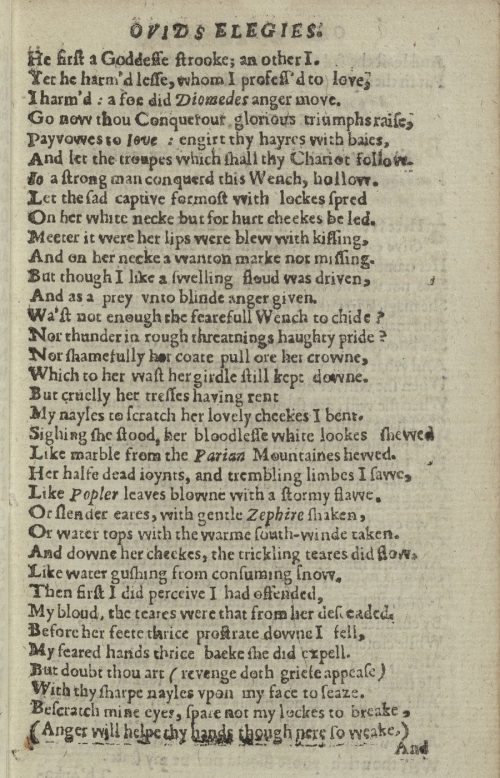
Cypassis that a thousand ways trimm'st hair, Worthy to comb none but a goddess fair, Our pleasant scapes show thee no clown to be, Apt to thy mistress, but more apt to me. Who that our bodies were compressed bewray'd? Whence knows Corinna that with thee I play'd? Yet blushed I not, nor used I any saying, That might be urg'd to witness our false playing. What if a man with bondwomen offend, To prove him foolish did I e'er contend? Achilles burnt with face of captive Briseis, Great Agamemnon lov'd his servant Chriseis. Greater then these myself I not esteem, What graced kings, in me no shame I deem. But when on thee her angry eyes did rush, In both thy cheeks she did perceive thee blush, But being present, might that work the best, By Venus' deity, how did I protest. Thou, goddess, dost command a warm south-blast, My false oaths in Carpathian seas to cast. For which good turn my sweet reward repay, Let me lie with thee brown Cypass today. Ungrate, why feign'st new fears and dost refuse? Well mayst thou one thing for thy mistress use. If thou deniest, fool, I'll our deeds express, And as a traitor mine own fault confess. Telling thy mistress, where I was with thee, How oft, and by what means we did agree.

BOOK 2, ELEGY 9

Ad Cupidinem (To Cupid)

O Cupid, that dost never cease my smart, O boy that liest so slothful in my heart. Why me that always was thy soldier found, Dost harm, and in thy tents why dost me wound? Why burns thy brand, why strikes thy bow thy friends? More glory by thy vanquish'd foes ascends. Did not Pelides whom his spear did grieve, Being required, with speedy help relieve? Hunters leave taken beasts, pursue the chase, And then things found do ever further pace. We people wholly given thee, feel thine arms, Thy dull hand stays thy striving enemies' harms. Dost joy to have thy hooked arrows shaked, In naked bones? Love hath my bones left naked. So many men and maidens without love, Hence with great laud thou mayst a triumph move. Rome, if her strength the huge world had not fill'd, With strawy cabins now her courts should build. The weary soldier hath the conquer'd fields, His sword layed by, safe, though rude places yields. The dock inharbours ships drawn from the floods, Horse freed from service range abroad the woods. And time it was for me to live in quiet, That have so oft serv'd pretty wenches' diet. Yet should I curse a god, if he but said, Live without love, so sweet ill is a maid. For when my loathing it of heat deprives me, I know not whether my mind's whirlwind drives me. Even as a headstrong courser bears away, His rider vainly striving him to stay, Or as a sudden gale thrusts into sea, The haven touching bark now near the lea, So wavering Cupid brings me back amain, And purple Love resumes his darts again. Strike boy, I offer thee my naked breast, Here thou hast strength, here thy right hand doth rest. Here of themselves thy shafts come, as if shot, Better then I their quiver knows them not. Hapless is he that all the night lies quiet And slumb'ring, thinks himself much blessed by it. Fool, what is sleep but image of cold death, Long shalt thou rest when Fates expire thy breath. But me let crafty damsels words deceive, Great joys by hope I inly shall conceive. Now let her flatter me, now chide me hard, Let me enjoy her oft, oft be debarr'd. Cupid by thee, Mars in great doubt doth trample, And thy step-father fights by thy example. Light art thou, and more windy then thy wings, Joys with uncertain faith thou tak'st and brings. Yet Love, if thou with thy fair mother hear , Within my breast no desert empire bear. Subdue the wandring wenches to thy reign, So of both people shalt thou homage gain.

BOOK 2, ELEGY 10

Ad Graecinum quod eodem tempore duas amet (To Graecinus, that he loves two at the same time)

Groecinus (well I wot) thou told'st me once, I could not be in love with two at once, By thee deceived, by thee surprised am I, For now I love two women equally: Both are well-favoured, both rich in array, Which is the loveliest it's hard to say: This seems the fairest, so doth that to me, And this doth please me most, and so doth she. Even as a boat, toss'd by contrary wind, So with this love and that, wavers my mind. Venus, why doublest thou my endless smart? Was not one wench enough to grieve my heart? Why add'st thou stars to heaven, leaves to green woods, And to the vast deep sea fresh water floods? Yet this is better far then lie alone, Let such as be mine enemies have none, Yea, let my foes sleep in an empty bed, And in the midst their bodies largely spread: But may soft love rouse up my drowsy eyes, And from my mistress' bosom let me rise: Let one wench cloy me with sweet loves' delight, If one can do't, if not, two every night, Though I am slender, I have store of pith, Nor want I strength, but weight to press her with: Pleasure adds fuel to my lustful fire, I pay them home with that they most desire: Oft have I spent the night in wantonness, And in the morn been lively ne'ertheless. He's happy who love's mutual skirmish slays, And to the gods for that death Ovid prays. Let soldier chase his enemies amain, And with his blood eternal honour gain, Let merchants seek wealth, and with perjured lips, Being wrack'd, carouse the sea tir'd by their ships: But when I die, would I might droop with doing, And in the midst thereof, set my soul going, That at my funerals some may weeping cry, Even as he led his life, so did he die.

Please Support the Classic Literature Library

Buy Christopher Marlowe Books from Amazon.com

Ovid's Elegies Page 12

Christopher Marlowe

16th Century Literature

Free Books in the public domain from the Classic Literature Library ©

Christopher Marlowe
Classic Literature Library
Classic Authors

All Pages of This Book
The Jew of Malta
William Shakespeare
Christ in Flanders
The Second Book of the Chronicles
London NightLife
Affiliate Marketing