BOOK 1, ELEGY 9

Ad Atticum, amantem non oportere desidiosum esse, sicuti nec militem (To Atticus, that a lover ought not to be lazy any more than a soldier)

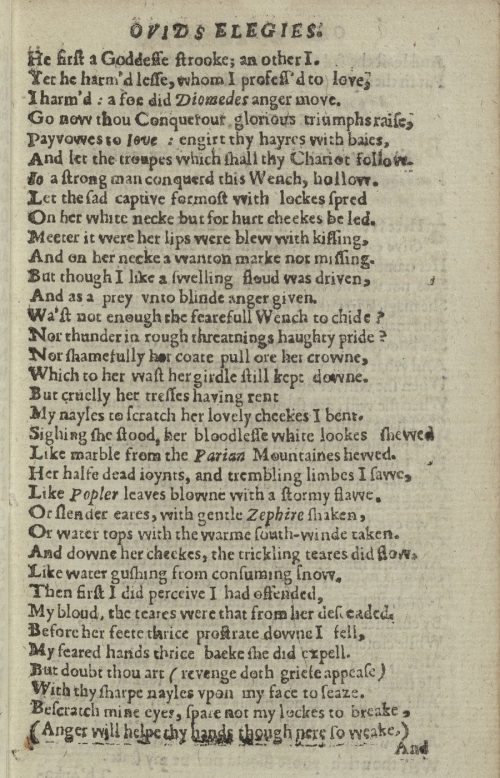
All lovers war, and Cupid hath his tent, Attic, all lovers are to war far sent. What age fits Mars, with Venus doth agree, 'Tis shame for eld in war or love to be. What years in soldiers' captains do require, Those in their lovers, pretty maids desire. Both of them watch: each on the hard earth sleeps: His mistress 'dores this; that his captain's keeps. Soldiers must travail far: the wench forth send, Her valiant lover follows without end. Mounts, and rain-doubled floods he passeth over, And treads the desert's snowy heaps do cover. Going to sea, east winds he doth not chide Nor to hoist sail attends fit time and tide. Who but a soldier or a lover is bold To suffer storm-mixed snows with night's sharp cold? One as a spy doth to his enemies go, The other eyes his rival as his foe. He cities great, this thresholds lies before: This breaks town gates, but he his mistress' door. Oft to invade the sleeping foe 'tis good And arm'd to shed unarmed peoples' blood. So the fierce troops of Thracian Rhesus fell And captive horses bade their Lord farewell. Sooth lovers watch till sleep the husband charms, Who slumb'ring, they rise up in swelling arms. The keeper's hands and corps-du-gard to pass The soldiers, and poor lovers work e'er was. Doubtful is war and love, the vanquish'd rise And who thou never think'st should fall down lies. Therefore whoe'er love slothfulness doth call, Let him surcease: love tries wit best of all. Achilles burn'd Briseis being ta'en away: Trojans destroy the Greek wealth, while you may. Hector to arms went from his wife's embraces, And on Andromache his helmet laces. Great Agamemnon was, men say, amazed, On Priam's loose-tress'd daughter when he gazed. Mars in the deed the black-smith's net did stable, In heav'n was never more notorious fable. Myself was dull, and faint, to sloth inclined, Pleasure, and ease had mollified my mind. A fair maid's care expell'd this sluggishness, And to her tents wild me myself address. Since mayst thou see me watch and night wars move: He that will not grow slothful, let him love.

BOOK 1, ELEGY 10

Ad puellam, ne pro amore praemia poscat (To a girl, not to ask for reward for love)

Such as the cause was of two husbands' war, Whom Trojan ships fech'd from Europa far. Such as was Leda, whom the God deluded In snow-white plumes of a false swan included. Such as Amimone through the dry fields strayed When on her head a water pitcher layed. Such wert thou, and I fear'd the bull and eagle And whate'er love made Jove should thee inveigle. Now all fear with my mind's hot love abates, No more this beauty mine eyes captivates. Ask'st why I change? Because thou crav'st reward: This cause hath thee from pleasing me debarr'd. While thou wert plain, I lov'd thy mind and face: Now inward faults thy outward form disgrace. Love is a naked boy, his years sans stain, And hath no clothes, but open doth remain. Will you for gain have Cupid sell himself? He hath no bosom, where to hide base pelf. Love and Love's son are with fierce arms to odds; To serve for pay beseems not wanton gods. The whore stands to be bought for each man's money And seeks vilde wealth by selling of her coney, Yet greedy bawds command she curseth still, And doth constrain'd what you do of good will. Take from irrational beasts a precedent, 'Tis shame their wits should be more excellent. The mare asks not the horse, the cow the bull, Nor the mild ewe gifts from the ram doth pull. Only a woman gets spoils from a man, Farms out herself on nights for what she can. And lets what both delight, what both desire, Making her joy according to her hire. The sport being such, as both alike sweet try it, Why should one sell it, and the other buy it? Why should I lose, and thou gain by the pleasure Which man and woman reap in equal measure? Knights of the post of perjuries make sail, The unjust judge for bribes becomes a stale. 'Tis shame sold tongues the guilty should defend Or great wealth from a judgement seat ascend. Tis shame to grow rich by bed merchandise, Or prostitute thy beauty for bad prize. Thanks worthily are due for things unbought, For beds ill-hir'd we are indebted nought. The hirer payeth all, his rent discharg'd From further duty he rests then enlarg'd. Fair dames forbear rewards for nights to crave, Ill gotten goods good end will never have. The Sabine gauntlets were too dearly won That unto death did press the holy nun. The son slew her, that forth to meet him went, And a rich necklace caus'd that punishment. Yet think no scorn to ask a wealthy churl, He wants no gifts into thy lap to hurl. Take cluster'd grapes from an o'er-laden vine, May bounteous loam Alcinous' fruit resign. Let poor men show their service, faith, and care; All for their mistress, what they have, prepare. In verse to praise kind wenches 'tis my part, And whom I like eternize by mine art. Garments do wear , jewels and gold do waste, The fame that verse gives doth for ever last. To give I love, but to be ask'd disdain, Leave asking, and I'll give what I refrain.

Please Support the Classic Literature Library

Buy Christopher Marlowe Books from Amazon.com

Ovid's Elegies Page 06

Christopher Marlowe

16th Century Literature

Free Books in the public domain from the Classic Literature Library ©

Christopher Marlowe
Classic Literature Library
Classic Authors

All Pages of This Book
The Jew of Malta
William Shakespeare
Christ in Flanders
The Second Book of the Chronicles
London NightLife
Affiliate Marketing