Hero and Leander by Christopher Marlowe and George Chapman
HERO AND LEANDER
By Christopher Marlowe and George Chapman
TO THE RIGHT WORSHIPFUL SIR THOMAS WALSINGHAM, KNIGHT.
Sir, we think not ourselves discharged of the duty we owe to our friend when we have brought the breathless body to the earth; for, albeit the eye there taketh his ever-farewell of that beloved object, yet the impression of the man that hath been dear unto us, living an after-life in our memory, there putteth us in mind of farther obsequies due unto the deceased; and namely of the performance of whatsoever we may judge shall make to his living credit and to the effecting of his determinations prevented by the stroke of death. By these meditations (as by an intellectual will) I suppose myself executor to the unhappily deceased author of this poem; upon whom knowing that in his lifetime you bestowed many kind favours, entertaining the parts of reckoning and worth which you found in him with good countenance and liberal affection, I cannot but see so far into the will of him dead, that whatsoever issue of his brain should chance to come abroad, that the first breath it should take might be the gentle air of your liking; for, since his self had been accustomed thereunto, it would prove more agreeable and thriving to his right children than any other foster counten- ance whatsoever. At this time seeing that this unfinished tragedy happens under my hands to be imprinted, of a double duty, the one to yourself, the other to the deceased, I present the same to your most favourable allowance, offering my utmost self now and ever to be ready at your worship’s disposing. EDWARD BLUNT.
Note: The first two Sestiads were written by Marlowe; the last four by
Chapman, who supplied also the Arguments for the six Sestiads.
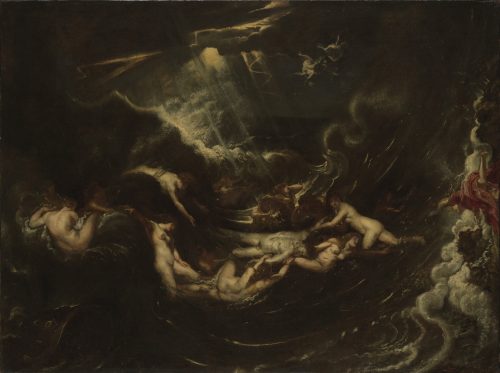
HERO AND LEANDER THE FIRST SESTIAD BY CHRISTOPHER MARLOWE
THE ARGUMENT OF THE FIRST SESTIAD
Hero’s description and her love’s;
The fane of Venus where he moves
His worthy love-suit, and attains;
Whose bliss the wrath of Fates restrains
For Cupid’s grace to Mercury:
Which tale the author doth imply.
On Hellespont, guilty of true love’s blood,
In view and opposite two cities stood,
Sea-borderers, disjoin’d by Neptune’s might;
The one Abydos, the other Sestos hight.
At Sestos Hero dwelt; Hero the fair,
Whom young Apollo courted for her hair,
And offer’d as a dower his burning throne,
Where she should sit, for men to gaze upon.
The outside of her garments were of lawn,
The lining purple silk, with gilt stars drawn;
Her wide sleeves green, and border’d with a grove,
Where Venus in her naked glory strove
To please the careless and disdainful eyes
Of proud Adonis, that before her lies;
Her kirtle blue, whereon was many a stain,
Made with the blood of wretched lovers slain.
Upon her head she ware a myrtle wreath,
From whence her veil reach’d to the ground beneath:
Her veil was artificial flowers and leaves,
Whose workmanship both man and beast deceives:
Many would praise the sweet smell as she past,
When ’twas the odour which her breath forth cast;
And there for honey bees have sought in vain,
And, beat from thence, have lighted there again.
About her neck hung chains of pebble-stone,
Which, lighten’d by her neck, like diamonds shone.
She ware no gloves; for neither sun nor wind
Would burn or parch her hands, but, to her mind,
Or warm or cool them, for they took delight
To play upon those hands, they were so white.
Buskins of shell, all silver’d, used she,
And branch’d with blushing coral to the knee;
Where sparrows perch’d, of hollow pearl and gold,
Such as the world would wonder to behold:
Those with sweet water oft her handmaid fills,
Which, as she went, would cherup through the bills.
Some say, for her the fairest Cupid pin’d,
And, looking in her face, was strooken blind.
But this is true; so like was one the other,
As he imagin’d Hero was his mother;
And oftentimes into her bosom flew,
About her naked neck his bare arms threw,
And laid his childish head upon her breast,
And, with still panting rock, there took his rest.
So lovely-fair was Hero, Venus’ nun,
As Nature wept, thinking she was undone,
Because she took more from her than she left,
And of such wondrous beauty her bereft:
Therefore, in sign her treasure suffer’d wrack,
Since Hero’s time hath half the world been black.
Amorous Leander, beautiful and young,
(Whose tragedy divine Musæus sung,)
Dwelt at Abydos; since him dwelt there none
For whom succeeding times make greater moan.
His dangling tresses, that were never shorn,
Had they been cut, and unto Colchos borne,
Would have allur’d the venturous youth of Greece
To hazard more than for the golden fleece.
Fair Cynthia wish’d his arms might be her sphere;
Grief makes her pale, because she moves not there.
His body was as straight as Circe’s wand;
Jove might have sipt out nectar from his hand.
Even as delicious meat is to the tast,
So was his neck in touching, and surpast
The white of Pelops’ shoulder: I could tell ye,
How smooth his breast was, and how white his belly;
And whose immortal fingers did imprint
That heavenly path with many a curious dint
That runs along his back; but my rude pen
Can hardly blazon forth the loves of men,
Much less of powerful gods: let it suffice
That my slack Muse sings of Leander’s eyes;
Those orient cheeks and lips, exceeding his
That leapt into the water for a kiss
Of his own shadow, and, despising many,
Died ere he could enjoy the love of any.
Had wild Hippolytus Leander seen,
Enamour’d of his beauty had he been:
His presence made the rudest peasant melt,
That in the vast uplandish country dwelt;
The barbarous Thracian soldier, mov’d with nought,
Was mov’d with him, and for his favour sought.
Some swore he was a maid in man’s attire,
For in his looks were all that men desire,—
A pleasant-smiling cheek, a speaking eye,
A brow for love to banquet royally;
And such as knew he was a man, would say,
“Leander, thou art made for amorous play:
Why art thou not in love, and lov’d of all?
Though thou be fair, yet be not thine own thrall.”
The men of wealthy Sestos every year,
For his sake whom their goddess held so dear,
Rose-cheek’d Adonis, kept a solemn feast:
Thither resorted many a wandering guest
To meet their loves: such as had none at all,
Came lovers home from this great festival;
For every street, like to a firmament,
Glister’d with breathing stars, who, where they went,
Frighted the melancholy earth, which deem’d
Eternal heaven to burn, for so it seem’d,
As if another Phaëton had got
The guidance of the sun’s rich chariot.
But, far above the loveliest, Hero shin’d,
And stole away th’ enchanted gazer’s mind;
For like sea nymphs’ inveigling harmony,
So was her beauty to the standers by;
Nor that night-wandering, pale, and watery star
(When yawning dragons draw her thirling car
From Latmus’ mount up to the gloomy sky,
Where, crown’d with blazing light and majesty,
She proudly sits) more over-rules the flood
Than she the hearts of those that near her stood.
Even as when gaudy nymphs pursue the chase,
Wretched Ixion’s shaggy-footed race,
Incens’d with savage heat, gallop amain
From steep pine-bearing mountains to the plain,
So ran the people forth to gaze upon her,
And all that view’d her were enamour’d on her:
And as in fury of a dreadful fight,
Their fellows being slain or put to flight,
Poor soldiers stand with fear of death dead-strooken,
So at her presence all surpris’d and tooken,
Await the sentence of her scornful eyes;
He whom she favours lives; the other dies:
There might you see one sigh; another rage;
And some, their violent passions to assuage
Compile sharp satires; but, alas, too late!
For faithful love will never turn to hate;
And many, seeing great princes were denied,
Pin’d as they went, and thinking on her died.
On this feast-day,—O cursed day and hour!—
Went Hero thorough Sestos, from her tower
To Venus’ temple, where unhappily,
As after chanc’d, they did each other spy.
So fair a church as this had Venus none:
The walls were of discolour’d jasper-stone,
Wherein was Proteus carv’d; and over-head
A lively vine of green sea-agate spread,
Where by one hand light-headed Bacchus hung,
And with the other wine from grapes out-wrung.
Of crystal shining fair the pavement was;
The town of Sestos call’d it Venus’ glass:
There might you see the gods, in sundry shapes,
Committing heady riots, incest, rapes;
For know, that underneath this radiant flour
Was Danäe’s statue in a brazen tower;
Jove slily stealing from his sister’s bed,
To dally with Idalian Ganymed,
And for his love Europa bellowing loud,
And tumbling with the Rainbow in a cloud;
Blood-quaffing Mars heaving the iron net
Which limping Vulcan and his Cyclops set;
Love kindling fire, to burn such towns as Troy;
Silvanus weeping for the lovely boy
That now is turn’d into a cypress-tree,
Under whose shade the wood-gods love to be.
And in the midst a silver altar stood:
There Hero, sacrificing turtle’s blood,
Vail’d to the ground, veiling her eyelids close;
And modestly they open’d as she rose:
Thence flew Love’s arrow with the golden head;
And thus Leander was enamoured.
Stone-still he stood, and evermore he gaz’d,
Till with the fire, that from his countenance blaz’d,
Relenting Hero’s gentle heart was strook:
Such force and virtue hath an amorous look.
It lies not in our power to love or hate,
For will in us is over-rul’d by fate.
When two are stript long ere the course begin,
We wish that one should lose, the other win;
And one especially do we affect
Of two gold ingots, like in each respect:
The reason no man knows; let it suffice,
What we behold is censur’d by our eyes.
Where both deliberate, the love is slight:
Who ever lov’d, that lov’d not at first sight?
He kneel’d; but unto her devoutly pray’d:
Chaste Hero to herself thus softly said,
“Were I the saint he worships, I would hear him;”
And, as she spake those words, came somewhat near him.
He started up; she blush’d as one asham’d;
Wherewith Leander much more was inflam’d.
He touch’d her hand; in touching it she trembled:
Love deeply grounded, hardly is dissembled.
These lovers parled by the touch of hands:
True love is mute, and oft amazed stands.
Thus while dumb signs their yielding hearts entangled,
The air with sparks of living fire was spangled;
And Night, deep-drench’d in misty Acheron,
Heav’d up her head, and half the world upon
Breath’d darkness forth (dark night is Cupid’s day):
And now begins Leander to display
Love’s holy fire, with words, with sighs, and tears;
Which, like sweet music, enter’d Hero’s ears;
And yet at every word she turn’d aside,
And always cut him off, as he replied.
At last, like to a bold sharp sophister,
With cheerful hope thus he accosted her.
“Fair creature, let me speak without offence:
I would my rude words had the influence
To lead thy thoughts as thy fair looks do mine!
Then shouldst thou be his prisoner, who is thine.
Be not unkind and fair; mis-shapen stuff
Are of behaviour boisterous and rough.
O, shun me not, but hear me ere you go!
God knows, I cannot force love as you do:
My words shall be as spotless as my youth,
Full of simplicity and naked truth.
This sacrifice, whose sweet perfume descending
From Venus’ altar, to your footsteps bending,
Doth testify that you exceed her far,
To whom you offer, and whose nun you are.
Why should you worship her? her you surpass
As much as sparkling diamons flaring glass.
A diamond set in lead his worth retains;
A heavenly nymph, belov’d of human swains,
Receives no blemish, but oftimes more grace;
Which makes me hope, although I am but base,
Base in respect of thee divine and pure,
Dutiful service may thy love procure;
And I in duty will excel all other,
As thou in beauty dost exceed Love’s mother.
Nor heaven nor thou were made to gaze upon:
As heaven preserves all things, so save thou one.
A stately builded ship, well rigg’d and tall,
The ocean maketh more majestical:
Why vow’st thou, then, to live in Sestos here,
Who on Love’s seas more glorious wouldst appear?
Like untun’d golden strings all women are,
Which long time lie untouch’d, will harshly jar.
Vessels of brass, oft handed, brightly shine:
What difference betwixt the richest mine
And basest mould, but use? for both, not us’d,
Are of like worth. Then treasure is abus’d,
When misers keep it: being put to loan,
In time it will return us two for one.
Rich robes themselves and others do adorn;
Neither themselves nor others, if not worn.
Who builds a palace, and rams up the gate,
Shall see it ruinous and desolate:
Ah, simple Hero, learn thyself to cherish!
Lone women, like to empty houses, perish.
Less sins the poor rich man, that starves himself
In heaping up a mass of drossy pelf,
Than such as you: his golden earth remains,
Which, after his decease, some other gains;
But this fair gem, sweet in the loss alone,
When you fleet hence, can be bequeath’d to none;
Or, if it could, down from th’ enamell’d sky
All heaven would come to claim this legacy,
And with intestine broils the world destroy,
And quite confound Nature’s sweet harmony.
Well therefore by the gods decreed it is,
We human creatures should enjoy that bliss.
One is no number; maids are nothing, then,
Without the sweet society of men.
Wilt thou live single still? one shalt thou be,
Though never singling Hymen couple thee.
Wild savages, that drink of running springs,
Think water far excels all earthly things;
But they, that daily taste neat wine, despise it:
Virginity, albeit some highly prize it,
Compar’d with marriage, had you tried them both,
Differs as much as wine and water doth.
Base bullion for the stamp’s sake we allow:
Even so for men’s impression do we you;
By which alone, our reverend fathers say,
Women receive perfection every way.
This idol, which you term virginity,
Is neither essence subject to the eye,
No, nor to any one exterior sense,
Nor hath it any place of residence,
Nor is’t of earth or mould celestial,
Or capable of any form at all.
Of that which hath no being, do not boast:
Things that are not at all, are never lost.
Men foolishly do call it virtuous:
What virtue is it, that is born with us?
Much less can honour be ascrib’d thereto:
Honour is purchas’d by the deeds we do
Believe me, Hero, honour is not won,
Until some honourable deed be done.
Seek you, for chastity, immortal fame,
And know that some have wrong’d Diana’s name?
Whose name is it, if she be false or not,
So she be fair, but some vile tongues will blot?
But you are fair, ay me! so wondrous fair,
So young, so gentle, and so debonair,
As Greece will think, if thus you live alone,
Some one or other keeps you as his own.
Then, Hero, hate me not, nor from me fly,
To follow swiftly blasting imfamy.
Perhaps thy sacred priesthood makes thee loath:
Tell me, to whom mad’st thou that heedless oath?”
“To Venus,” answer’d she; and, as she spake,
Forth from those two tralucent cisterns brake
A stream of liquid pearl, which down her face
Made milk-white paths, whereon the gods might trace
To Jove’s high court. He thus replied: “The rites
In which love’s beauteous empress most delights,
Are banquets, Doric music, midnight revel,
Plays, masks, and all that stern age counteth evil.
Thee as a holy idiot doth she scorn;
For thou, in vowing chastity, hast sworn
To rob her name and honour, and thereby
Committ’st a sin far worse than perjury,
Even sacrilege against her deity,
Through regular and formal purity.
To expiate which sin, kiss and shake hands:
Such sacrifice as this Venus demands.”
Thereat she smil’d, and did deny him so,
As put thereby, yet might he hope for mo;
Which makes him quickly reinforce his speech,
And her in humble manner thus beseech:
“Though neither gods nor men may thee deserve,
Yet for her sake, whom you have vow’d to serve,
Abandon fruitless cold virginity.
The gentle queen of love’s sole enemy.
Then shall you most resemble Venus’ nun,
When Venus’ sweet rites are perform’d and done.
Flint breasted Pallas joys in single life;
But Pallas and your mistress are at strife.
Love, Hero, then, and be not tyrannous;
But heal the heart that thou hast wounded thus;
Nor stain thy youthful years with avarice:
Fair fools delight to be accounted nice.
The richest corn dies, if it be not reapt;
Beauty alone is lost, too warily kept.”
These arguments he us’d, and many more;
Wherewith she yielded, that was won before.
Hero’s looks yielded, but her words made war:
Women are won when they begin to jar.
Thus, having swallow’d Cupid’s golden hook,
The more she striv’d, the deeper was she strook:
Yet, evilly feigning anger, strove she still,
And would be thought to grant against her will.
So having paus’d a while, at last she said,
“Who taught thee rhetoric to deceive a maid?
Ay me! such words as these should I abhor,
And yet I like them for the orator.”
With that, Leander stoop’d to have embrac’d her,
But from his spreading arms away she cast her,
And thus bespake him: “Gentle youth, forbear
To touch the sacred garments which I wear.
Upon a rock, and underneath a hill,
Far from the town, (where all is whist and still,
Save that the sea, playing on yellow sand,
Sends forth a rattling murmur to the land,
Whose sound allures the golden Morpheus
In silence of the night to visit us,)
My turret stands; and there, God knows, I play
With Venus’ swans and sparrows all the day.
A dwarfish beldam bears me company,
That hops about the chamber where I lie,
And spends the night, that might be better spent,
In vain discourse and apish merriment:—
Come thither.” As she spake this, her tongue tripp’d,
For unawares, “Come thither,” from her slipp’d;
And suddenly her former colour chang’d,
And here and there her eyes through anger rang’d;
And, like a planet moving several ways
At one self instant, she, poor soul, assays,
Loving, not to love at all, and every part
Strove to resist the motions of her heart:
And hands so pure, so innocent, nay, such
As might have made Heaven stoop to have a touch,
Did she uphold to Venus, and again
Vow’d spotless chastity; but all in vain;
Cupid beats down her prayers with his wings;
Her vows about the empty air he flings:
All deep enrag’d, his sinewy bow he bent,
And shot a shaft that burning from him went;
Wherewith she strooken, look’d so dolefully,
As made Love sigh to see his tyranny;
And, as she wept, her tears to pearl he turn’d,
And wound them on his arm, and for her mourn’d.
Then towards the palace of the Destinies,
Laden with languishment and grief, he flies,
And to those stern nymphs humbly made request,
Both might enjoy each other, and be blest.
But with a ghastly dreadful countenance,
Threatening a thousand deaths at every glance,
They answer’d Love, nor would vouchsafe so much
As one poor word, their hate to him was such:
Hearken a while, and I will tell you why.
Heaven’s winged herald, Jove-born Mercury,
The self-same day that he asleep had laid
Enchanted Argus, spied a country maid,
Whose careless hair, instead of pearl t’adorn it,
Glister’d with dew, as one that seem’d to scorn it;
Her breath as fragrant as the morning rose;
Her mind pure, and her tongue untaught to glose:
Yet proud she was (for lofty Pride that dwells
In towered courts, is oft in shepherds’ cells),
And too-too well the fair vermilion knew
And silver tincture of her cheeks, that drew
The love of every swain. On her this god
Enamour’d was, and with his snaky rod
Did charm her nimble feet, and made her stay,
The while upon a hillock down he lay,
And sweetly on his pipe began to play,
And with smooth speech her fancy to assay,
Till in his twining arms her lock’d her fast,
And then he woo’d with kisses; and at last,
As shepherds do, her on the ground he laid,
And, tumbling in the grass, he often stray’d
Beyond the bounds of shame, in being bold
To eye those parts which no eye should behold;
And, like an insolent commanding lover,
Boasting his parentage, would needs discover
The way to new Elysium. But she,
Whose only dower was her chastity,
Having striven in vain, was now about to cry,
And crave the help of shepherds that were nigh.
Herewith he stay’d his fury, and began
To give her leave to rise: away she ran;
After went Mercury, who us’d such cunning,
As she, to hear his tale, left off her running;
(Maids are not won by brutish force and might
But speeches full of pleasure, and delight;)
And, knowing Hermes courted her, was glad
That she such loveliness and beauty had
As could provoke his liking; yet was mute,
And neither would deny nor grant his suit.
Still vow’d he love: she, wanting no excuse
To feed him with delays, as women use,
Or thirsting after immortality,
(All women are ambitious naturally,)
Impos’d upon her lover such a task,
As he ought not perform, nor yet she ask;
A draught of flowing nectar she requested,
Wherewith the king of gods and men is feasted.
He, ready to accomplish what she will’d,
Stole some from Hebe (Hebe Jove’s cup fill’d),
And gave it to his simple rustic love:
Which being known,—as what is hid from Jove?—
He inly storm’d, and wax’d more furious
Than for the fire filch’d by Prometheus;
And thrusts him down from heaven. He, wandering here,
In mournful terms, with sad and heavy cheer,
Complain’d to Cupid: Cupid, for his sake,
To be reveng’d on Jove did undertake;
And those on whom heaven, earth, and hell relies,
I mean the adamantine Destinies,
He wounds with love, and forc’d them equally
To dote upon deceitful Mercury.
They offer’d him the deadly fatal knife
That shears the slender threads of human life;
At his fair feather’d feet the engines laid,
Which th’ earth from ugly Chaos’ den upweigh’d.
These he regarded not; but did entreat
That Jove, usurper of his father’s seat,
Might presently be banish’d into hell,
And aged Saturn in Olympus dwell.
They granted what he crav’d; and once again
Saturn and Ops began their golden reign:
Murder, rape, war, and lust, and treachery,
Were with Jove clos’d in Stygian empery.
But long this blessed time continu’d not:
As soon as he his wished purpose got,
He, reckless of his promise, did despise
The love of th’ everlasting Destinies.
They, seeing it, both Love and him abhorr’d,
And Jupiter unto his place restor’d:
And, but that learning, in despite of Fate,
Will amount aloft, and enter heaven-gate,
And to the seat of Jove itself advance,
Hermes had slept in hell with Ignorance.
Yet, as a punishment, they added this,
That he and Poverty should always kiss
And to this day is every scholar poor:
Gross gold from them runs headlong to the boor.
Likewise the angry Sisters, thus deluded,
To venge themselves on Hermes, have concluded
That Midas’ brood shall sit in Honour’s chair,
To which the Muses’ sons are only heir;
And fruitful wits, that inaspiring are,
Shall discontent run into regions far;
And few great lords in virtuous deeds shall joy
But be surpris’d with every garish toy,
And still enrich the lofty servile clown,
Who with encroaching guile keeps learning down.
Then muse not Cupid’s suit no better sped,
Seeing in their loves the Fates were injured.
HERO AND LEANDER THE SECOND SESTIAD BY CHRISTOPHER MARLOWE
THE ARGUMENT OF THE SECOND SESTIAD
Hero of love takes deeper sense,
And doth her love more recompense:
Their first night’s meeting, where sweet kisses
Are th’ only crowns of both their blisses.
He swims t’ Abydos, and returns:
Cold Neptune with his beauty burns;
Whose suit he shuns, and doth aspire
Hero’s fair tower and his desire.
By this, sad Hero, with love unacquainted,
Viewing Leander’s face, fell down and fainted.
He kiss’d her, and breath’d life into her lips;
Wherewith, as one displeas’d, away she trips;
Yet, as she went, full often look’d behind,
And many poor excuses did she find
To linger by the way, and once she stay’d,
And would have turn’d again, but was afraid,
In offering parley, to be counted light:
So on she goes, and, in her idle flight,
Her painted fan of curled plumes let fall,
Thinking to train Leander therewithal.
He, being a novice, knew not what she meant,
But stay’d, and after her a letter sent;
Which joyful Hero answer’d in such sort,
As he had hoped to scale the beauteous fort
Wherein the liberal Graces lock’d their wealth;
And therefore to her tower he got by stealth.
Wide-open stood the door; he need not climb;
And she herself, before the pointed time,
Had spread the board, with roses strew’d the room,
And oft look’d out, and mus’d he did not come.
At last he came: O, who can tell the greeting
These greedy lovers had at their first meeting?
He ask’d; she gave; and nothing was denied;
Both to each other quickly were affied:
Look how their hands, so were their hearts united,
And what he did, she willingly requited.
(Sweet are the kisses, the embracements sweet,
When like desires and like affections meet;
For from the earth to heaven is Cupid rais’d,
Where fancy is in equal balance pais’d.)
Yet she this rashness suddenly repented,
And turn’d aside, and to herself lamented,
As if her name and honour had been wrong’d,
By being possess’d of him for whom she long’d;
Ay, and she wish’d, albeit not from her heart,
That he would leave her turret and depart.
The mirthful god of amorous pleasure smil’d
To see how he this captive nymph beguil’d;
For hitherto he did but fan the fire,
And kept it down, that it might mount the higher.
Now wax’d she jealous lest his love abated,
Fearing her own thoughts made her to be hated.
Therefore unto him hastily she goes,
And, like light Salmacis, her body throws
Upon his bosom, where with yielding eyes
She offers up herself a sacrifice
To slake his anger, if he were displeas’d:
O, what god would not therewith be appeas’d?
Like Æsop’s cock, this jewel he enjoy’d,
And as a brother with his sister toy’d,
Supposing nothing else was to be done,
Now he her favour and goodwill had won.
But know you not that creatures wanting sense,
By nature have a mutual appetence,
And, wanting organs to advance a step,
Mov’d by love’s force, unto each other lep?
Much more in subjects having intellect
Some hidden influence breeds like effect.
Albeit Leander, rude in love and raw,
Long dallying with Hero, nothing saw
That might delight him more, yet he suspected
Some amorous rites or other were neglected.
Therefore unto his body hers he clung:
She, fearing on the rushes to be flung,
Striv’d with redoubled strength; the more she striv’d,
The more a gentle pleasing heat reviv’d,
Which taught him all that elder lovers know;
And now the same gan so to scorch and glow,
As in plain terms, yet cunningly, he crave it:
Love always makes those eloquent that have it.
She, with a kind of granting, put him by it,
And ever, as he thought himself most nigh it,
Like to the tree of Tantalus, she fled,
And, seeming lavish, sav’d her maidenhead.
Ne’er king more sought to keep his diadem,
Than Hero this inestimable gem:
Above our life we love a steadfast friend;
Yet when a token of great worth we send,
We often kiss it, often look thereon,
And stay the messenger that would be gone;
No marvel, then, though Hero would not yield
So soon to part from that she dearly held:
Jewels being lost are found again; this never;
‘Tis lost but once, and once lost, lost for ever.
Now had the Morn espied her lover’s steeds;
Whereat she starts, puts on her purple weeds,
And, red for anger that he stay’d so long,
All headlong throws herself the clouds among.
And now Leander, fearing to be miss’d,
Embrac’d her suddenly, took leave, and kiss’d:
Long was he taking leave, and loathe to go,
And kiss’d again, as lovers use to do.
Sad Hero wrung him by the hand, and wept,
Saying, “Let your vows and promises be kept”:
Then standing at the door, she turn’d about,
As loathe to see Leander going out.
And now the sun, that through th’ horizon peeps,
As pitying these lovers, downward creeps;
So that in silence of the cloudy night,
Though it was morning, did he take his flight.
But what the secret trusty night conceal’d,
Leander’s amorous habit soon reveal’d:
With Cupid’s myrtle was his bonnet crown’d,
About his arms the purple riband wound,
Wherewith she wreath’d her largely-spreading hair;
Nor could the youth abstain, but he must wear
The sacred ring wherewith she was endow’d,
When first religious chastity she vow’d;
Which made his love through Sestos to be known,
And thence unto Abydos sooner blown
Than he could sail; for incorporeal Fame,
Whose weight consists in nothing but her name,
Is swifter than the wind, whose tardy plumes
Are reeking water and dull earthly fumes.
Home when he came, he seem’d not to be there,
But, like exiled air thrust from his sphere,
Set in a foreign place; and straight from thence,
Alcides-like, by mighty violence,
He would have chas’d away the swelling main,
That him from her unjustly did detain.
Like as the sun in a diameter
Fires and inflames objects removed far,
And heateth kindly, shining laterally;
So beauty sweetly quickens when ’tis nigh,
But being separated and remov’d,
Burns where it cherish’d, murders where it lov’d.
Therefore even as an index to a book,
So to his mind was young Leander’s look.
O, none but gods have power their love to hide!
Affection by the countenance is descried;
The light of hidden fire itself discovers,
And love that is conceal’d betrays poor lovers.
His secret flame apparently was seen:
Leander’s father knew where he had been,
And for the same mildly rebuk’d his son,
Thinking to quench the sparkles new-begun.
But love resisted once, grows passionate,
And nothing more than counsel lovers hate;
For as a hot proud horse highly disdains
To have his head controll’d, but breaks the reins,
Spits forth the ringled bit, and with his hoves
Checks the submissive ground; so he that loves,
The more he is restrain’d, the worse he fares:
What is it now but mad Leander dares?
“O Hero, Hero!” thus he cried full oft;
And then he got him to a rock aloft,
Where having spied her tower, long star’d he on’t,
And pray’d the narrow toiling Hellespont
To part in twain, that he might come and go;
But still the rising billows answer’d, “No.”
With that, he stripp’d him to the ivory skin,
And, crying, “Love, I come,” leap’d lively in:
Whereat the sapphire-visag’d god grew proud,
And made his capering Triton sound aloud,
Imagining that Ganymede, displeas’d,
Had left the heavens; therefore on him he seiz’d.
Leander striv’d; the waves about him wound,
And pull’d him to the bottom, where the ground
Was strew’d with pearl, and in low coral groves
Sweet-singing mermaids sported with their loves
On heaps of heavy gold, and took great pleasure
To spurn in careless sort the shipwreck treasure;
For here the stately azure palace stood,
Where kingly Neptune and his train abode.
The lusty god embrac’d him, call’d him “love,”
And swore he never should return to Jove:
But when he knew it was not Ganymed,
For under water he was almost dead,
He heav’d him up, and, looking on his face,
Beat down the bold waves with his triple mace,
Which mounted up, intending to have kiss’d him.
And fell in drops like tears because they miss’d him.
Leander, being up, began to swim,
And, looking back, saw Neptune follow him:
Whereat aghast, the poor soul gan to cry,
“O, let me visit Hero ere I die!”
The god put Helle’s bracelet on his arm,
And swore the sea should never do him harm.
He clapp’d his plump cheeks, with his tresses play’d,
And, smiling wantonly, his love bewray’d;
He watch’d his arms, and, as they open’d wide
At every stroke, betwixt them would he slide,
And steal a kiss, and then run out and dance,
And, as he turn’d, cast many a lustful glance,
And throw him gaudy toys to please his eye,
And dive into the water, and there pry
Upon his breast, his thighs, and every limb,
And up again, and close beside him swim,
And talk of love. Leander made reply,
“You are deceiv’d; I am no woman, I.”
Thereat smil’d Neptune, and then told a tale,
How that a shepherd, sitting in a vale,
Play’d with a boy so lovely-fair and kind,
As for his love both earth and heaven pin’d;
That of the cooling river durst not drink,
Lest water-nymphs should pull him from the brink;
And when he sported in the fragrant lawns,
Goat-footed Satyrs and up-staring Fauns
Would steal him thence. Ere half this tale was done,
“Ay me,” Leander cried, “th’ enamour’d sun,
That now should shine on Thetis’ glassy bower,
Descends upon my radiant Hero’s tower:
O, that these tardy arms of mine were wings!”
And, as he spake, upon the waves he springs.
Neptune was angry that he gave no ear,
And in his heart revenging malice bare:
He flung at him his mace; but, as it went,
He call’d it in, for love made him repent:
The mace, returning back, his own hand hit,
As meaning to be veng’d for darting it.
When this fresh-bleeding wound Leander view’d,
His colour went and came, as if he ru’d
The grief which Neptune felt: in gentle breasts
Relenting thoughts, remorse, and pity rests;
And who have hard hearts and obdurate minds,
But vicious, hare-brain’d, and illiterate hinds?
The god, seeing him with pity to be mov’d,
Thereon concluded that he was belov’d;
(Love is too full of faith, too credulous,
With folly and false hope deluding us;)
Wherefore, Leander’s fancy to surprise,
To the rich ocean for gifts he flies;
‘Tis wisdom to give much; a gilt prevails
When deep-persuading oratory fails.
By this, Leander, being near the land,
Cast down his weary feet, and felt the sand.
Breathless albeit he were, he rested not
Till to the solitary tower he got;
And knock’d, and call’d: at which celestial noise
The longing heart of Hero much more joys,
Than nymphs and shepherds when the timbrel rings,
Or crooked dolphin when the sailor sings.
She stay’d not for her robes, but straight arose,
And, drunk with gladness, to the door she goes;
Where seeing a naked man, she screech’d for fear,
(Such sights as this to tender maids are rare,)
And ran into the dark herself to hide
(Rich jewels in the dark are soonest spied).
Unto her was he led, or rather drawn
By those white limbs which sparkled through the lawn.
The nearer that he came, the more she fled,
And, seeking refuge, slipt into her bed;
Whereon Leander sitting, thus began,
Through numbing cold, all feeble, faint, and wan.
“If not for love, yet, love, for pity-sake,
Me in thy bed and maiden bosom take;
At least vouchsafe these arms some little room,
Who, hoping to embrace thee, cheerly swoom:
This head was beat with many a churlish billow,
And therefore let it rest upon thy pillow.”
Herewith affrighted, Hero shrunk away,
And in her lukewarm place Leander lay;
Whose lively heat, like fire from heaven fet,
Would animate gross clay, and higher set
The drooping thoughts of base-declining souls,
Than dreary-Mars-carousing nectar bowls.
His hands he cast upon her like a snare:
She, overcome with shame and sallow fear,
Like chaste Diana when Actæon spied her,
Being suddenly betray’d, div’d down to hide her;
And, as her silver body downward went,
With both her hands she made the bed a tent,
And in her own mind thought herself secure,
O’ercast with dim and darksome coverture.
And now she lets him whisper in her ear,
Flatter, entreat, promise, protest, and swear:
Yet ever, as he greedily assay’d
To touch those dainties, she the harpy play’d,
And every limb did, as a soldier stout,
Defend the fort, and keep the foeman out;
For though the rising ivory mount he scal’d,
Which is with azure circling lines empal’d.
Much like a globe (a globe may I term this,
By which Love sails to regions full of bliss,)
Yet there with Sisyphus he toil’d in vain,
Till gentle parley did the truce obtain.
Even as a bird, which in our hands we wring,
Forth plungeth, and oft flutters with her wing,
She trembling strove: this strife of hers, like that
Which made the world, another world begat
Of unknown joy. Treason was in her thought,
And cunningly to yield herself she sought.
Seeming not won, yet won she was at length:
In such wars women use but half their strength.
Leander now, like Theban Hercules,
Enter’d the orchard of th’ Hesperides;
Whose fruit none rightly can describe, but he
That pulls or shakes it from the golden tree.
Wherein Leander, on her quivering breast,
Breathless spoke something, and sigh’d out the rest;
Which so prevail’d, as he, with small ado,
Enclos’d her in his arms, and kiss’d her too:
And every kiss to her was as a charm,
And to Leander as a fresh alarm:
So that the truce was broke, and she, alas,
Poor silly maiden, at his mercy was.
Love is not full of pity, as men say,
But deaf and cruel where he means to prey.
And now she wish’d this night were never done,
And sigh’d to think upon th’ approaching sun;
For much it griev’d her that the bright day-light
Should know the pleasure of this blessed night,
And them, like Mars and Erycine, display
Both in each other’s arms chain’d as they lay.
Again, she knew not how to frame her look,
Or speak to him, who in a moment took
That which so long, so charily she kept;
And fain by stealth away she would have crept,
And to some corner secretly have gone,
Leaving Leander in the bed alone.
But as her naked feet were whipping out,
He on the sudden cling’d her so about,
That, mermaid-like, unto the floor she slid;
One half appear’d the other half was hid.
Thus near the bed she blushing stood upright,
And from her countenance behold ye might
A kind of twilight break, which through the air,
As from an orient cloud, glimps’d here and there;
And round about the chamber this false morn
Brought forth the day before the day was born.
So Hero’s ruddy cheek Hero betray’d,
And her all naked to his sight display’d:
Whence his admiring eyes more pleasure took
Than Dis, on heaps of gold fixing his look.
By this, Apollo’s golden harp began
To sound forth music to the ocean;
Which watchful Hesperus no sooner heard,
But he the bright Day-bearing car prepar’d,
And ran before, as harbinger of light,
And with his flaring beams mock’d ugly Night
Till she, o’ercome with anguish, shame, and rage,
Dang’d down to hell her loathsome carriage.
Here Marlowe’s work ends. The rest of the poem is by Chapman.
HERO AND LEANDER THE THIRD SESTIAD BY GEORGE CHAPMAN
THE ARGUMENT OF THE THIRD SESTIAD
Leander to the envious light
Resigns his night-sports with the night,
And swims the Hellespont again.
Thesme, the deity sovereign
Of customs and religious rites,
Appears, reproving his delights,
Since nuptial honours he neglected;
Which straight he vows shall be effected.
Fair Hero, left devirginate,
Weighs, and with fury wails her state:
But with her love and woman’s wit
She argues and approveth it.
New light gives new directions, fortunes new
To fashion our endeavours that ensue.
More harsh, at least more hard, more grave and high
Our subject runs, and our stern Muse must fly.
Love’s edge is taken off, and that light flame,
Those thoughts, joys, longings, that before became
High unexperienc’d blood, and maids’ sharp plights,
Must now grow staid, and censure the delights,
That, being enjoy’d, ask judgment; now we praise,
As having parted: evenings crown the days.
And now, ye wanton Loves, and young Desires,
Pied Vanity, the mint of strange attires,
Ye lisping Flatteries, and obsequious Glances,
Relentful Musics, and attractive Dances,
And you detested Charms constraining love!
Shun love’s stoln sports by that these lovers prove.
By this, the sovereign of heaven’s golden fires,
And young Leander, lord of his desires,
Together from their lover’s arms arose:
Leander into Hellespontus throws
His Hero-handled body, whose delight
Made him disdain each other epithite.
And so amidst th’ enamour’d waves he swims,
The god of gold of purpose gilt his limbs,
That, this word gilt including double sense,
The double guilt of his incontinence
Might be express’d, that had no stay t’ employ
The tresure which the love-god let him joy
In his dear Hero, with such sacred thrift
As had beseem’d so sanctified a gift;
But, like a greedy vulgar prodigal,
Would on the stock dispend, and rudely fall,
Before his time, to that unblessed blessing
Which, for lust’s plague, doth perish with possessing:
Joy graven in sense, like snow in water, wasts;
Without preserve of virtue, nothing lasts.
What man is he, that with a wealthy eye
Enjoys a beauty richer than the sky,
Through whose white skin, softer than soundest sleep,
With damask eyes the ruby blood doth peep,
And runs in branches through her azure veins,
Whose mixture and first fire his love attains;
Whose both hands limit both love’s deities,
And sweeten human thoughts like paradise;
Whose disposition silken and is kind,
Directed with an earth-exempted mind;—
Who thinks not heaven with such a love is given?
And who, like earth, would spend that dower of heaven,
With rank desire to joy it all at first?
What simply kills our hunger, quencheth thirst,
Clothes but our nakedness, and makes us live,
Praise doth not any of her favours give:
But what doth plentifully minister
Beauteous apparel and delicious cheer,
So order’d that it still excites desire,
And still gives pleasure freeness to aspire,
The palm of Bounty ever moist preserving;
To Love’s sweet life this is the courtly carving.
Thus Time and all-states-ordering Ceremony
Had banish’d all offence: Time’s golden thigh
Upholds the flowery body of the earth
In sacred harmony, and every birth
Of men and actions makes legitimate;
Being us’d aright, the use of time is fate.
Yet did the gentle flood transfer once more
This prize of love home to his father’s shore,
Where he unlades himself of that false wealth
That makes few rich,—treasures compos’d by stealth;
And to his sister, kind Hermione,
(Who on the shore kneel’d, praying to the sea
For his return,) he all love’s goods did show,
In Hero seis’d for him, in him for Hero.
His most kind sister all his secrets knew,
And to her, singing, like a shower, he flew,
Sprinkling the earth, that to their tombs took in
Streams dead for love, to leave his ivory skin,
Which yet a snowy foam did leave above,
As soul to the dead water that did love;
And from thence did the first white roses spring
(For love is sweet and fair in every thing),
And all the sweeten’d shore, as he did go,
Was crown’d with odorous roses, white as snow.
Love-blest Leander was with love so fill’d,
That love to all that touch’d him he instill’d;
And as the colours of all things we see,
To our sight’s powers communicated be,
So to all objects that in compass came
Of any sense he had, his senses’ flame
Flow’d from his parts with force so virtual,
It fir’d with sense things mere insensual.
Now, with warm baths and odours comforted,
When he lay down, he kindly kiss’d his bed,
As consecrating it to Hero’s right,
And vow’d thererafter, that whatever sight
Put him in mind of Hero or her bliss,
Should be her altar to prefer a kiss.
Then laid he forth his late-enriched arms,
In whose white circle Love writ all his charms,
And made his characters sweet Hero’s limbs,
When on his breast’s warm sea she sideling swims;
And as those arms, held up in circle, met,
He said, “See, sister, Hero’s carquenet!
Which she had rather wear about her neck,
Than all the jewels that do Juno deck.”
But, as he shook with passionate desire
To put in flame his other secret fire,
A music so divine did pierce his ear,
As never yet his ravish’d sense did hear;
When suddenly a light of twenty hues
Brake through the roof, and, like the rainbow, views
Amaz’d Leander: in whose beams came down
The goddess Ceremony, with a crown
Of all the stars; and Heaven with her descended:
Her flaming hair to her bright feet extended,
By which hung all the bench of deities;
And in a chain, compact of ears and eyes,
She led Religion: all her body was
Clear and transparent as the purest glass,
For she was all presented to the sense:
Devotion, Order, State, and Reverence,
Her shadows were; Society, Memory;
All which her sight made live, her absence die.
A rich disparent pentacle she wears,
Drawn full of circles and strange characters.
Her face was changeable to every eye;
One way look’d ill, another graciously;
Which while men view’d, they cheerful were and holy,
But looking off, vicious and melancholy.
The snaky paths to each observed law
Did Policy in her broad bosom draw.
One hand a mathematic crystal sways,
Which, gathering in one line a thousand rays
From her bright eyes, Confusion burns to death,
And all estates of men distinguisheth:
By it Morality and Comeliness
Themselves in all their sightly figures dress.
Her other hand a laurel rod applies,
To beat back Barbarism and Avarice,
That follow’d, eating earth and excrement
And human limbs; and would make proud ascent
To seats of gods, were Ceremony slain.
The Hours and Graces bore her glorious train;
And all the sweets of our society
Were spher’d and treasur’d in her bounteous eye.
Thus she appear’d, and sharply did reprove
Leander’s bluntness in his violent love;
Told him how poor was substance without rites,
Like bills unsign’d; desires without delights;
Like meats unseason’d; like rank corn that grows
On cottages, that none or reaps or sows;
Not being with civil forms confirm’d and bounded,
For human dignities and comforts founded;
But loose and secret all their glories hide;
Fear fills the chamber, Darkness decks the bride.
She vanish’d, leaving pierc’d Leander’s heart
With sense of his unceremonious part,
In which, with plain neglect of nuptial rites,
He close and flatly fell to his delights:
And instantly he vow’d to celebrate
All rites pertaining to his married state.
So up he gets, and to his father goes,
To whose glad ears he doth his vows disclose.
The nuptials are resolv’d with utmost power;
And he at night would swim to Hero’s tower,
From whence he meant to Sestos’ forked bay
To bring her covertly, where ships must stay,
Sent by his father, throughly rigg’d and mann’d,
To waft her safely to Abydos’ strand.
There leave we him; and with fresh wing pursue
Astonish’d Hero, whose most wished view
I thus long have forborne, because I left her
So out of countenance, and her spirits bereft her:
To look of one abashed is impudence,
When of slight faults he hath too deep a sense.
Her blushing het her chamber: she look’d out,
And all the air she purpled round about;
And after it a foul black day befell,
Which ever since a red morn doth foretell,
And still renews our woes for Hero’s woe;
And foul it prov’d, because it figur’d so
The next night’s horror; which prepare to hear;
I fail, if it profane your daintiest ear.
Then, ho, most strangely-intellectual fire,
That, proper to my soul, hast power t’inspire
Her burning faculties, and with the wings
Of thy unsphered flame visit’st the springs
Of spirits immortal! Now (as swift as Time
Doth follow Motion) find th’ eternal clime
Of his free soul, whose living subject stood
Up to the chin in the Pierian flood,
And drunk to me half this Musæan story,
Inscribing it to deathless memory:
Confer with it, and make my pledge as deep,
That neither’s draught be consecrate to sleep;
Tell it how much his late desires I tender
(If yet it know not), and to light surrender
My soul’s dark offspring, willing it should die
To loves, to passions, and society.
Sweet Hero, left upon her bed alone,
Her maidenhead, her vows, Leander gone,
And nothing with her but a violent crew
Of new-come thoughts, that yet she never knew,
Even to herself a stranger, was much like
Th’ Iberian city that War’s hand did strike
By English force in princely Essex’ guide,
When Peace assur’d her towers had fortified,
And golden-finger’d India had bestow’d
Such wealth on her, that strength and empire flow’d
Into her turrets, and her virgin waist
The wealthy girdle of the sea embrac’d;
Till our Leander, that made Mars his Cupid,
For soft love suits with iron thunders chid;
Swum to her town, dissolv’d her virgin zone;
Led in his power, and made Confusion
Run through her streets amaz’d, that she suppos’d
She had not been in her own walls enclosed,
But rapt by wonder to some foreign state,
Seeing all her issue so disconsolate,
And all her peaceful mansions possess’d
With war’s just spoil, and many a foreign guest
From every corner driving an enjoyer,
Supplying it with power of a destroyer.
So far’d fair Hero in th’ expugned fort
Of her chaste bosom; and of every sort
Strange thoughts possess’d her, ransacking her breast
For that that was not there, her wonted rest.
She was a mother straight, and bore with pain
Thoughts that spake straight, and wish’d their mother slain;
She hates their lives, and they their own and hers:
Such strife still grows where sin the race prefers:
Love is a golden bubble, full of dreams,
That waking breaks, and fills us with extremes.
She mus’d how she could look upon her sire,
And not show that without, that was intire;
For as a glass is an inanimate eye,
And outward forms embraceth inwardly,
So is the eye an animate glass, that shows
In forms without us; and as Phbus throws
His beams abroad, though he in clouds be clos’d,
Still glancing by them till he find oppos’d
A loose and rorid vapour that is fit
T’ event his searching beams, and useth it
To form a tender twenty-colour’d eye,
Cast in a circle round about the sky;
So when our fiery soul, our body’s star,
(That ever is in motion circular,)
Conceives a form, in seeking to display it
Through all our cloudy parts, it doth convey it
Forth at the eye, as the most pregnant place,
And that reflects it round about the face.
And this event, uncourtly Hero thought,
Her inward guilt would in her looks have wrought;
For yet the world’s stale cunning she resisted,
To bear foul thoughts, yet forge what looks she listed,
And held it for a very silly sleight,
To make a perfect metal counterfeit.
Glad to disclaim herself, proud of an art
That makes the face a pandar to the heart.
Those be the painted moons, whose lights profane
Beauty’s true heaven, at full still in their wane;
Those be the lapwing faces that still cry,
“Here ’tis!” when that they vow is nothing nigh:
Base fools! when every moorish fool can teach
That which men think the height of human reach.
But custom, that the apoplexy is
Of bed-rid nature and lives led amiss,
And takes away all feeling of offence,
Yet braz’d not Hero’s brow with impudence;
And this she thought most hard to bring to pass,
To seem in countenance other than she was,
As if she had two souls, one for the face,
One for the heart, and that they shifted place
As either list to utter or conceal
What they conceiv’d, or as one soul did deal
With both affairs at once, keeps and ejects
Both at an instant contrary effects;
Retention and ejection in her powers
Being acts alike; for this one vice of ours,
That forms the thought, and sways the countenance,
Rules both our motion and our utterance.
These and more grave conceits toil’d Hero’s spirits;
For, though the light of her discoursive wits
Perhaps might find some little hole to pass
Through all these worldly cinctures, yet, alas!
There was a heavenly flame encompass’d her,—
Her goddess, in whose fane she did prefer
Her virgin vows, from whose impulsive sight
She knew the black shield of the darkest night
Could not defend her, nor wit’s subtlest art:
This was the point pierc’d Hero to the heart;
Who, heavy to the death, with a deep sigh,
And hand that languish’d, took a robe was nigh,
Exceeding large, and of black cypress made,
In which she sate, hid from the day in shade,
Even over head and face, down to her feet;
Her left hand made it at her bosom meet,
Her right hand lean’d on her heart-bowing knee,
Wrapp’d in unshapeful folds, ’twas death to see;
Her knee stay’d that, and that her falling face;
Each limb help’d other to put on disgrace:
No form was seen, where form held all her sight;
But, like an embryon that saw never light,
Or like a scorched statue made a coal
With three-wing’d lightning, or a wretched soul
Muffled with endless darkness, she did sit:
The night had never such a heavy spirit.
Yet might a penetrating eye well see
How fast her clear tears melted on her knee
Through her black veil, and turn’d as black as it,
Mourning to be her tears. Then wrought her wit
With her broke vow, her goddess’ wrath, her fame,—
All tools that enginous despair could frame:
Which made her strew the floor with her torn hair,
And spread her mantle piece-meal in the air.
Like Jove’s son’s club, strong passion struck her down
And with a piteous shriek enforc’d her swoun:
Her shriek made with another shriek ascend
The frighted matron that on her did tend;
And as with her own cry her sense was slain,
So with the other it was call’d again.
She rose, and to her bed made forced way,
And laid her down even where Leander lay;
And all this while the red sea of her blood
Ebb’d with Leander: but now turn’d the flood,
And all her fleet of spirits came swelling in,
With child of sail, and did hot fight begin
With those severe conceits she too much mark’d:
And here Leander’s beauties were embark’d.
He came in swimming, painted all with joys,
Such as might sweeten hell: his thought destroys
All her destroying thoughts; she thought she felt
His heart in hers, with her contentions melt,
And chide her soul that it could so much err,
To check the true joys he deserv’d in her.
Her fresh heat-blood cast figures in her eyes,
And she suppos’d she saw in Neptune’s skies
How her star wander’d, wash’d in smarting brine,
For her love’s sake, that with immortal wine
Should be embath’d, and swim in more heart’s-ease
Than there was water in the Sestian seas.
Then said her Cupid-prompted spirit: “Shall I
Sing moans to such delightsome harmony?
Shall slick-tongu’d Fame, patch’d up with voices rude,
The drunken bastard of the multitude,
(Begot when father Judgment is away,
And, gossip-like, says because others say,
Takes news as if it were too hot to eat,
And spits it slavering forth for dog-fees meat,)
Make me, for forging a fantastic vow,
Presume to bear what makes grave matrons bow?
Good vows are never broken with good deeds,
For then good deeds were bad: vows are but seeds,
And good deeds fruits; even those good deeds that grow
From other stocks than from th’ observed vow.
That is a good deed that prevents a bad;
Had I not yielded, slain myself I had.
Hero Leander is, Leander Hero;
Such virtue love hath to make one of two.
If, then, Leander did my maidenhead git,
Leander being myself, I still retain it:
We break chaste vows when we live loosely ever,
But bound as we are, we live loosely never:
Two constant lovers being join’d in one,
Yielding to one another, yield to none.
We know not how to vow till love unblind us,
And vows made ignorantly nerver bind us.
Too true it is, that, when ’tis gone, men hate
The joys as vain they took in love’s estate:
But that’s since they have lost the heavenly light
Should show them way to judge of all things right.
When life is gone, death must implant his terror:
As death is foe to life, so love to error.
Before we love, how range we through this sphere,
Searching the sundry fancies hunted here!
Now with desire of wealth transported quite
Beyond our free humanity’s delight;
Now with ambition climbing falling towers,
Whose hope to scale, our fear to fall devours;
Now rapt with pastimes, pomp, all joys impure:
In things without us no delight is sure.
But love, with all joys crown’d, within doth sit:
O goddess, pity love, and pardon it!”
Thus spake she weeping: but her goddess’ ear
Burn’d with too stern a heat, and would not hear.
Ay me! hath heaven’s strait fingers no more graces
For such as Hero than for homeliest faces?
Yet she hop’d well, and in her sweet conceit
Weighing her arguments, she thought them weight,
And that the logic of Leander’s beauty,
And them together, would bring proofs of duty;
And if her soul, that was a skillful glance
Of heaven’s great essence, found such imperance
In her love’s beauties, she had confidence
Jove lov’d him too, and pardon’d her offence:
Beauty in heaven and earth this grace doth win,
It supples rigour, and it lessens sin.
Thus, her sharp wit, her love, her secrecy,
Trooping together, made her wonder why
She should not leave her bed, and to the temple;
Her health said she must live; her sex, dissemble.
She view’d Leander’s place, and wish’d he were
Turn’d to his place, so his place were Leander.
“Ay me,” said she, “that love’s sweet life and sense
Should do it harm! my love had not gone hence,
Had he been like his place: O blessed place,
Image of constancy! Thus my love’s grace
Parts nowhere, but it leaves something behind
Worth observation: he renowns his kind:
His motion is, like heaven’s, orbicular,
For where he once is, he is ever there.
This place was mine; Leander, now ’tis thine,
Thou being myself, then it is double mine,
Mine, and Leander’s mine, Leander’s mine.
O, see what wealth it yields me, nay, yields him!
For I am in it, he for me doth swim.
Rich, fruitful love, that, doubling self estates,
Elixir-like contracts, though separates!
Dear place, I kiss thee, and do welcome thee,
As from Leander ever sent to me.”
HERO AND LEANDER THE FOURTH SESTIAD BY GEORGE CHAPMAN
THE ARGUMENT OF THE FOURTH SESTIAD
Hero, in sacred habit deckt,
Doth private sacrifice effect.
Her scarf’s description, wrought by Fate;
Ostents that threaten her estate;
The strange, yet physical, events,
Leander’s counterfeit presents.
In thunder Cyprides descends,
Presaging both the lovers’ ends:
Ecte, the goddess of remorse,
With vocal and articulate force
Inspires Leucote, Venus’ swan,
T’ excuse the beauteous Sestian.
Venus, to wreak her rites’ abuses,
Creates the monster Eronusis,
Inflaming Hero’s sacrifice
With lightning darted from her eyes;
And thereof springs the painted beast
That ever since taints every breast.
Now from Leander’s place she rose, and found
Her hair and rent robe scatter’d on the ground;
Which taking up, she every piece did lay
Upon an altar, where in youth of day
She us’d t’ exhibit private sacrifice:
Those would she offer to the deities
Of her fair goddess and her powerful son,
As relics of her late-felt passion;
And in that holy sort she vow’d to end them,
In hope her violent fancies, that did rend them,
Would as quite fade in her love’s holy fire,
As they should in the flames she meant t’ inspire.
Then she put on all her religious weeds,
That deck’d her in her secret sacred deeds;
A crown of icicles, that sun nor fire
Could ever melt, and figur’d chaste desire;
A golden star shin’d in her naked breast,
In honour of the queen-light of the east.
In her right hand she held a silver wand,
On whose bright top Peristera did stand,
Who was a nymph, but now transform’d a dove,
And in her life was dear in Venus’ love;
And for her sake she ever since that time
Choos’d doves to draw her coach through heaven’s blue clime.
Her plenteous hair in curled billows swims
On her bright shoulder: her harmonious limbs
Sustain’d no more but a most subtile veil,
That hung on them, as it durst not assail
Their different concord; for the weakest air
Could raise it swelling from her beauties fair;
Nor did it cover, but adumbrate only
Her most heart-piercing parts, that a blest eye
Might see, as it did shadow, fearfully,
All that all-love-deserving paradise:
It was as blue as the most freezing skies;
Near the sea’s hue, for thence her goddess came:
On it a scarf she wore of wondrous frame;
In midst whereof she wrought a virgin’s face,
From whose each cheek a fiery blush did chase
Two crimson flames, that did two ways extend,
Spreading the ample scarf to either end;
Which figur’d the division of her mind,
Whiles yet she rested bashfully inclined,
And stood not resolute to wed Leander;
This serv’d her white neck for a purple sphere,
And cast itself at full breadth down her back:
There, since the first breath that begun the wrack
Of her free quiet from Leander’s lips,
She wrought a sea, in one flame, full of ships;
But that one ship where all her wealth did pass,
Like simple merchants’ goods, Leander was;
For in that sea she naked figur’d him;
Her diving needle taught him how to swim,
And to each thread did such resemblance give,
For joy to be so like him it did live:
Things senseless live by art, and rational die
By rude contempt of art and industry.
Scarce could she work, but, in her strength of thought,
She fear’d she prick’d Leander as she wrought,
And oft would shriek so, that her guardian, frighted,
Would staring haste, as with some mischief cited:
They double life that dead things’ grief sustain;
They kill that feel not their friends’ living pain.
Sometimes she fear’d he sought her infamy;
And then, as she was working of his eye,
She thought to prick it out to quench her ill;
But, as she prick’d, it grew more perfect still:
Trifling attempts no serious acts advance;
The fire of love is blown by dalliance.
In working his fair neck she did so grace it,
She still was working her own arms t’ embrace it.
That, and his shoulders, and his hands were seen
Above the stream; and with a pure sea-green
She did so quaintly shadow every limb,
All might be seen beneath the waves to swim.
In this conceited scarf she wrought beside
A moon in change, and shooting stars did glide
In number after her with bloody beams;
Which figur’d her affects in their extremes,
Pursuing nature in her Cynthian body,
And did her thoughts running on change imply;
For maids take more delight, when they prepare,
And think of wives’ states, than when wives they are.
Beneath all these she wrought a fisherman,
Drawing his nets from forth the ocean;
Who drew so hard, ye might discover well
The toughen’d sinews in his neck did swell:
His inward strains drave out his blood-shot eyes
And springs of sweat did in his forehead rise;
Yet was of naught but of a serpent sped,
That in his bosom flew and stung him dead:
And this by Fate into her mind was sent,
Not wrought by mere instinct of her intent.
At the scarf’s other end her hand did frame,
Near the fork’d point of the divided flame,
A country virgin keeping of a vine,
Who did of hollow bulrushes combine
Snares for the stubble-loving grasshopper,
And by her lay her scrip that nourish’d her.
Within a myrtle shade she sate and sung;
And tufts of waving reeds about her sprung
Where lurk’d two foxes, that, while she applied
Her trifling snares, their thieveries did divide,
One to the vine, another to her scrip,
That she did negligently overslip;
By which her fruitful vine and wholesome fare
She suffer’d spoil’d, to make a childish snare.
These ominous fancies did her soul express,
And every finger made a prophetess,
To show what death was hid in love’s disguise,
And make her judgment conquer Destinies.
O, what sweet forms fair ladies’ souls do shroud,
Were they made seen and forced through their blood;
If through their beauties, like rich work through lawn,
They would set forth their minds with virtues drawn,
In letting graces from their fingers fly,
To still their eyas thoughts with industry:
That their plied wits in number’d silks might sing
Passion’s huge conquest, and their needles leading
Affection prisoner through their own-built cities,
Pinion’d with stories and Arachnean ditties.
Proceed we now with Hero’s sacrifice:
She odours burn’d, and from their smoke did rise
Unsavoury fumes, that air with plagues inspir’d;
And then the consecrated sticks she fir’d,
On whose pale frame an angry spirit flew,
And beat it down still as it upward grew;
The virgin tapers that on th’ altar stood,
When she inflam’d them, burn’d as red as blood:
All sad ostents of that too near success,
That made such moving beauties motionless.
Then Hero wept; but her affrighted eyes
She quickly wrested from the sacrifice,
Shut them, and inwards for Leander look’d.
Search’d her soft bosom, and from thence she pluck’d
His lovely picture: which when she had view’d,
Her beauties were with all love’s joys renew’d;
The odours sweeten’d, and the fires burn’d clear,
Leander’s form left no ill object there:
Such was his beauty, that the force of light,
Whose knowledge teacheth wonders infinite,
The strength of number and proportion,
Nature had plac’d in it to make it known,
Art was her daughter, and what human wits
For study lost, entomb’d in drossy spirits.
After this accident, (which for her glory
Hero could not but make a history,)
Th’ inhabitants of Sestos and Abydos
Did every year, with feasts propitious,
To fair Leander’s picture sacrifice:
And they were persons of special price
That were allow’d it, as an ornament
T’ enrich their houses, for the continent
Of the strange virtues all approv’d it held;
For even the very look of it repell’d
All blastings, witchcrafts, and the strifes of nature
In those diseases that no herbs could cure:
The wolfy sting of avarice it would pull,
And make the rankest miser bountiful;
It kill’d the fear of thunder and of death;
The discords that conceit engendereth
‘Twixt man and wife, it for the time would cease;
The flames of love it quench’d, and would increase;
Held in a prince’s hand, it would put out
The dreadful’st comet; it would ease all doubt
Of threatened mischiefs; it would bring asleep
Such as were mad; it would enforce to weep
Most barbarous eyes; and many more effects
This picture wrought, and sprung Leandrian sects;
Of which was Hero first; for he whose form,
Held in her hand, clear’d such a fatal storm,
From hell she thought his person would defend her,
Which night and Hellespont would quickly send her.
With this confirm’d, she vow’d to banish quite
All thought of any check to her delight;
And, in contempt of silly bashfulness,
She would the faith of her desires profess,
Where her religion should be policy,
To follow love with zeal her piety;
Her chamber her cathedral-church should be,
And her Leander her chief diety;
For in her love these did the gods forego;
And though her knowledge did not teach her so,
Yet did it teach her this, that what her heart
Did greatest hold in her self-greatest part,
That she did make her god; and ’twas less naught
To leave gods in profession and in thought,
Than in her love and life; for therein lies
Most of her duties and their dignities;
And, rail the brain-bald world at what it will,
That’s the grand atheism that reigns in it still.
Yet singularity she would use no more,
For she was singular too much before;
But she would please the world with fair pretext;
Love would not leave her conscience perplext:
Great men that will have less do for them, still
Must bear them out, though th’ acts be ne’er so ill;
Meanness must pander be to Excellence;
Pleasure atones Falsehood and Conscience:
Dissembling was the worst, thought Hero then,
And that was best, now she must live with men.
O virtuous love, that taught her to do best
When she did worst, and when she thought it least!
Thus would she still proceed in works divine,
And in her sacred state of priesthood shine,
Handling the holy rites with hands as bold,
As if therein she did Jove’s thunder hold,
And need not fear those menaces of error,
Which she at others threw with greatest terror.
O lovely Hero, nothing is thy sin,
Weigh’d with those foul faults other priests are in!
That having neither faiths, nor works, nor beauties,
T’ engender any ‘scuse for slubber’d duties,
With as much countenance fill their holy chairs,
And sweat denouncements ‘gainst profane affairs,
As if their lives were cut out by their places,
And they the only fathers of the graces.
Now, as with settled mind she did repair
Her thoughts to sacrifice her ravish’d hair
And her torn robe, which on the altar lay,
And only for religion’s fire did stay,
She heard a thunder by the Cyclops beaten,
In such a volley as the world did threaten,
Given Venus as she parted th’ airy sphere,
Descending now to chide with Hero here:
When suddenly the goddess’ waggoners,
The swans and turtles that, in coupled pheres,
Through all worlds’ bosoms draw her influence,
Lighted in Hero’s window, and from thence
To her fair shoulders flew the gentle doves,—
Graceful Ædone that sweet pleasure loves,
And ruff-foot Chreste with the tufted crown;
Both which did kiss her, though their goddess frown.
The swans did in the solid flood, her glass,
Proin their fair plumes; of which the fairest was
Jove-lov’d Leucote, that pure brightness is;
The other bounty-loving Dapsilis,
All were in heaven, now they with Hero were:
But Venus’ looks brought wrath, and urged fear.
Her robe was scarlet; black her head’s attire;
And through her naked breast shin’d streams of fire,
As when the rarified air is driven
In flashing streams, and opes the darken’d heaven.
In her white hand a wreath of yew she bore;
And, breaking th’ icy wreath sweet Hero wore,
She forc’d about her brows her wreath of yew,
And said, “Now, minion, to thy fate be true,
Though not to me; endure what this portends:
Begin where lightness will, in shame it ends.
Love makes thee cunning; thou art current now,
By being counterfeit: thy broken vow
Deceit with her pied garters must rejoin,
And with her stamp thou countenances must coin;
Coyness, and pure deceits, for purities,
And still a maid wilt seem in cozen’d eyes,
And have an antic face to laugh within,
While thy smooth looks make men digest thy sin,
But since thy lips (least thought forsworn) forswore,
Be never virgin’s vow worth trusting more!”
When Beauty’s dearest did her goddess hear
Breathe such rebukes ‘gainst that she could not clear,
Dumb sorrow spake aloud in tears and blood,
That from her grief-burst veins, in piteous flood,
From the sweet conduits of her favour fell.
The gentle turtles did with moans make swell
Their shining gorges; the white black-ey’d swans
Did sing as woful epicedians.
As they would straightways die: when Pity’s queen,
The goddess Ecte, that had ever been
Hid in a watery cloud near Hero’s cries,
Since the first instant of her broken eyes,
Gave bright Leucote voice, and made her speak,
To ease her anguish, whose swoln breast did break
With anger at her goddess, that did touch
Hero so near for that she us’d so much;
And, thrusting her white neck at Venus, said:
“Why may not amorous Hero seem a maid,
Though she be none, as well as you suppress
In modest cheeks your inward wantonness?
How often have we drawn you from above,
T’ exchange with mortals rites for rites in love!
Why in your priest, then, call you that offence,
That shines in you, and is your influence?”
With this, the Furies stopp’d Leucote’s lips,
Enjoin’d by Venus; who with rosy whips
Beat the kind bird. Fierce lightning from her eyes
Did set on fire fair Hero’s sacrifice,
Which was her torn robe and enforced hair;
And the bright flame became a maid most fair
For her aspect: her tresses were of wire,
Knit like a net, where hearts, set all on fire,
Struggled in pants, and could not get releast;
Her arms were all with golden pincers drest,
And twenty-fashion’d knots, pulleys, and brakes,
And all her body girt with painted snakes;
Her down-parts in a scorpion’s tail combin’d,
Freckled with twenty colours; pied wings shin’d
Out of her shoulders; cloth had never dye,
Nor sweeter colours never viewed eye,
In scorching Turkey, Cares, Tartary,
Than shin’d about this spirit notorious;
Nor was Arachne’s web so glorious.
Of lightning, and of shreds she was begot;
More hold in base dissemblers is there not.
Her name was Eronusis. Venus flew
From Hero’s sight, and at her chariot drew
This wondrous creature to so steep a height,
That all the world she might command with sleight
Of her gay wings; and then she bade her haste,—
Since Hero had dissembled, and disgrac’d
Her rites so much,—and every breast infect
With her deceits: she made her architect
Of all dissimulation; and since then
Never was any trust in maids or men.
O, it spited
Fair Venus’ heart to see her most delighted,
And one she choos’d, for temper of her mind,
To be the only ruler of her kind,
So soon to let her virgin race be ended!
Not simply for the fault a whit offended,
But that in strife for chasteness with the Moon,
Spiteful Diana bade her show but one
That was her servant vow’d, and liv’d a maid;
And, now she thought to answer that upbraid,
Hero had lost her answer: who knows not
Venus would seem as far from any spot
Of light demeanour, as the very skin
‘Twixt Cynthia’s brows? sin is asham’d of sin.
Up Venus flew, and scarce durst up for fear
Of Phbe’s laughter, when she pass’d her sphere:
And so most ugly-clouded was the light,
That day was hid in day; night came ere night;
And Venus could not through the thick air pierce,
Till the day’s king, god of undaunted verse,
Because she was so plentiful a theme
To such as wore his laurel anademe,
Like to a fiery bullet made descent,
And from her passage those fat vapours rent,
That, being not thoroughly rarified to rain,
Melted like pitch, as blue as any vein;
And scalding tempests made the earth to shrink
Under their fervour, and the world did think
In every drop a torturing spirit flew,
It pierc’d so deeply, and it burn’d so blue.
Betwixt all this and Hero, Hero held
Leander’s picture, as a Persian shield;
And she was free from fear of worst success:
The more ill threats us, we suspect the less:
As we grow hapless, violence subtle grows,
Dumb, deaf, and blind, and comes when no man knows.
HERO AND LEANDER THE FIFTH SESTIAD BY GEORGE CHAPMAN
THE ARGUMENT OF THE FIFTH SESTIAD
Day doubles her accustomed date,
As loath the Night, incens’d by Fate,
Should wreck our lovers. Hero’s plight;
Longs for Leander and the night:
Which ere her thirsty wish recovers,
She sends for two betrothed lovers,
And marries tham, that, with their crew,
Their sports, and ceremonies due,
She covertly might celebrate,
With secret joy, her own estate.
She makes a feast, at which appears
The wild nymph Teras, that still bears
An ivory lute, tells ominous tales,
And sings at solemn festivals.
Now was bright Hero weary of the day,
Thought an Olympiad in Leander’s stay.
Sol and the soft-foot Hours hung on his arms,
And would not let him swim, forseeing his harms:
That day Aurora double grace obtain’d,
Of her love Phbus; she his horses reign’d,
Set on his golden knee, and, as she list,
She pull’d him back; and, as she pull’d, she kiss’d,
To have him turn to bed: he lov’d her more,
To see the love Leander Hero bore:
Examples profit much; ten times in one,
In persons full of note, good deeds are done.
Day was so long, men walking fell asleep;
The heavy humours that their eyes did steep
Made them fear mischiefs. The hard streets were beds
For covetous churls and for ambitious heads,
That, spite of Nature, would their business ply:
All thought they had the falling epilepsy,
Men grovell’d so upon the smother’d ground;
And pity did the heart of Heaven confound.
The Gods, the Graces, and the Muses came
Down to the Destinies, to stay the frame
Of the true lovers’ deaths, and all world’s tears:
But Death before had stopp’d their cruel ears.
All the celestials parted mourning then,
Pierc’d with our human miseries more than men:
Ah, nothing doth the world with mischief fill,
But want of feeling one another’s ill!
With their descent the day grew something fair,
And cast a brighter robe upon the air.
Hero, to shorten time with merriment,
For young Alcmane and bright Mya sent,
Two lovers that had long crav’d marriage-dues
At Hero’s hands: but she did still refuse;
For lovely Mya was her consort vow’d
In her maid state, and therefore not allow’d
To amorous nuptials: yet fair Hero now
Intended to dispense with her cold vow,
Since hers was broken, and to marry her:
The rites would pleasing matter minister
To her conceits, and shorten tedious day.
They came; sweet Music usher’d th’ odorous way,
And wanton Air in twenty sweet forms danc’d
After her fingers; Beauty and Love advanc’d
Their ensigns in the downless rosy faces
Of youths and maids, led after by the Graces.
For all these Hero made a friendly feast,
Welcom’d them kindly, did much love protest,
Winning their hearts with all the means she might,
That, when her fault should chance t’ abide the light,
Their loves might cover or extenuate it,
And high in her worst fate make pity sit.
She married them; and in the banquet came,
Borne by the virgins. Hero striv’d to frame
Her thoughts to mirth: ay me! but hard it is
To imitate a false and forced bliss;
Ill may a sad mind forge a merry face,
Nor hath constrained laughter any grace.
Then laid she wines on cares to make them sink:
Who fears the threats of Fortune, let him drink.
To these quick nuptials enter’d suddenly
Admired Teras with the ebon thigh;
A nymph that haunted the green Sestian groves,
And would consort soft virgins in their loves,
At gaysome triumphs and on solemn days,
Singing prophetic elegies and lays,
And fingering of a silver lute she tied
With black and purple scarfs by her left side.
Apollo gave it, and her skill withal,
And she was term’d his dwarf, she was so small:
Yet great in virtue, for his beams enclos’d
His virtues in her; never was propos’d
Riddle to her, or augury, strange or new,
But she resolv’d it; never slight tale flew
From her charm’d lips without important sense,
Shown in some grave succeeding consequence.
This little sylvan, with her songs and tales,
Gave such estate to feasts and nuptials,
That though ofttimes she forewent tragedies,
Yet for her strangeness still she pleas’d their eyes;
And for her smallness they admir’d her so,
They thought her perfect born, and could not grow.
All eyes were on her. Hero did command
An altar deck’d with sacred state should stand
At the feast’s upper end, close by the bride,
On which the pretty nymph might sit espied.
Then all were silent; every one so hears,
As all their senses climb’d into their ears:
And first this amorous tale, that fitted well
Fair Hero and the nuptials, she did tell.
The Tale of Teras
Hymen, that now is god of nuptial rites,
And crowns with honour Love and his delights,
Of Athens was a youth, so sweet a face,
That many thought him of the female race;
Such quickening brightness did his clear eyes dart,
Warm went their beams to his beholder’s heart,
In such pure leagues his beauties were combin’d,
That there your nuptial contracts first were sign’d;
For as proportion, white and crimson, meet
In beauty’s mixture, all right clear and sweet,
The eye responsible, the golden hair,
And none is held, without the other, fair;
All spring together, all together fade;
Such intermix’d affections should invade
Two perfect lovers; which being yet unseen,
Their virtues and their comforts copied been
In beauty’s concord, subject to the eye;
And that, in Hymen, pleas’d so matchlessly,
That lovers were esteem’d in their full grace,
Like form and colour mix’d in Hymen’s face;
And such sweet concord was thought worthy then
Of torches, music, feasts, and greatest men:
So Hymen look’d, that even the chastest mind
He mov’d to join in joys of sacred kind;
For only now his chin’s first down consorted
His head’s rich fleece, in golden curls contorted;
And as he was so lov’d, he lov’d so too:
So should best beauties, bound by nuptials, do.
Bright Eucharis, who was by all men said
The noblest, fairest, and the richest maid
Of all th’ Athenian damsels, Hymen lov’d
With such transmission, that his heart remov’d
From his white breast to hers: but her estate,
In passing his, was so interminate
For wealth and honour, that his love durst feed
On naught but sight and hearing, nor could breed
Hope of requital, the grand prize of love;
Nor could he hear or see, but he must prove
How his rare beauty’s music would agree
With maids in consort; therefore robbed he
His chin of those same few first fruits it bore,
And, clad in such attire as virgins wore,
He kept them company; and might right well,
For he did all but Eucharis excel
In all the fair of beauty: yet he wanted
Virtue to make his own desires implanted
In his dear Eucharis; for women never
Love beauty in their sex, but envy ever.
His judgment yet, that durst not suit address,
Nor, past due means, presume of due success,
Reason gat Fortune in the end to speed
To his best prayers: but strange it seem’d, indeed,
That Fortune should a chaste affection bless:
Preferment seldom graceth bashfulness.
Nor grac’d it Hymen yet; but many a dart,
And many an amorous thought, enthrill’d his heart,
Ere he obtain’d her; and he sick became,
Forc’d to abstain her sight; and then the flame
Rag’d in his bosom. O, what grief did fill him!
Sight made him sick, and want of sight did kill him.
The virgins wonder’d where Diætia stay’d,
For so did Hymen term himself, a maid.
At length with sickly looks he greeted them:
‘Tis strange to see ‘gainst what an extreme stream
A lover strives; poor Hymen look’d so ill,
That as in merit he increased still
By suffering much, so he in grace decreas’d:
Women are most won, when men merit least:
If Merit look not well, Love bids stand by;
Love’s special lesson is to please the eye.
And Hymen soon recovering all he lost,
Deceiving still these maids, but himself most,
His love and he with many virgin dames,
Noble by birth, noble by beauty’s flames,
Leaving the town with songs and hallow’d lights,
To do great Ceres Eleusina rites
Of zealous sacrifice, were made a prey
To barbarous rovers, that in ambush lay,
And with rude hands enforc’d their shining spoil,
Far from the darken’d city, tir’d with toil:
And when the yellow issue of the sky
Came trooping forth, jealous of cruelty
To their bright fellows of this under-heaven,
Into a double night they saw them driven,—
A horrid cave, the thieves’ black mansion;
Where, weary of the journey they had gone,
Their last night’s watch, and drunk with their sweet gains,
Dull Morpheus enter’d, laden with silken chains,
Stronger than iron, and bound the swelling veins
And tired senses of these lawless swains.
But when the virgin lights thus dimly burn’d,
O, what a hell was heaven in! how they mourn’d,
And wrung their hands, and wound their gentle forms
Into the shapes of sorrow! golden storms
Fell from their eyes; as when the sun appears,
And yet it rains, so show’d their eyes their tears:
And, as when funeral dames watch a dead corse,
Weeping about it, telling with remorse
What pains he felt, how long in pain he lay,
How little food he eat, what he would say,
And then mix mournful tales of others’ deaths,
Smothering themselves in clouds of their own breaths;
At length, one cheering other, call for wine;
The golden bowl drinks tears out of their eyne,
As they drink wine from it; and round it goes,
Each helping other to relieve their woes;
So cast these virgins’ beauties mutual rays,
One lights another, face the face displays;
Lips by reflection kiss’d, and hands hands shook,
Even by the whiteness each of other took.
But Hymen now us’d friendly Morpheus’ aid,
Slew every thief, and rescu’d every maid:
And now did his enamour’d passion take
Heart from his hearty deed, whose worth did make
His hope of bounteous Eucharis more strong;
And now came Love with Proteus, who had long
Juggled the little god with prayers and gifts,
Ran through all shapes, and varied all his shifts,
To win Love’s stay with him, and make him love him;
And when he saw no strength of sleight could move him
To make him love or stay, he nimbly turn’d
Into Love’s self, he so extremely burn’d.
And thus came Love, with Proteus and his power,
T’ encounter Eucharis: first, like the flower
That Juno’s milk did spring, the silver lily,
He fell on Hymen’s hand, who straight did spy
The bounteous godhead, and with wondrous joy
Offer’d it Eucharis. She, wondrous coy,
Drew back her hand: the subtle flower did woo it,
And, drawing it near, mix’d so you could not know it:
As two clear tapers mix in one their light,
So did the lily and the hand their white.
She view’d it; and her view the form bestows
Amongst her spirits: for, as colour flows
From superficies of each thing we see,
Even so with colours forms emitted be;
And where Love’s form is, Love is; Love is form:
He enter’d at the eye; his sacred storm
Rose from the hand, Love’s sweetest instrument:
It stirr’d her blood’s sea so, that high it went,
And beat in bashful waves ‘gainst the white shore
Of her divided cheeks; it rag’d the more,
Because the tide went ‘gainst the haughty wind
Of her estate and birth: and, as we find,
In fainting ebbs, the flowery Zephyr hurls
The green-hair’d Hellespont, broke in silver curls,
‘Gainst Hero’s tower; but in his blast’s retreat,
The waves obeying him, they after beat,
Leaving the chalky shore a great way pale,
Then moist it freshly with another gale;
So ebb’d and flow’d in Eucharis’s face,
Coyness and Love striv’d which had greatest grace;
Virginity did fight on Coyness’ side,
Fear of her parents’ frowns, and female pride
Loathing the lower place, more than it loves
The high contents desert and virtue moves.
With Love fought Hymen’s beauty and his valure,
Which scarce could so much favour yet allure
To come to strike, but fameless idle stood:
Action is fiery valour’s sovereign good.
But Love, once enter’d, wish’d no greater aid
Than he could find within; thought thought betray’d;
The brib’d, but incorrupted, garrison
Sung “Io Hymen”; there those songs begun,
And Love was grown so rich with such a gain,
And wanton with the ease of his free reign,
That he would turn into her roughest frowns
To turn them out; and thus he Hymen crowns
King of his thoughts, man’s greatest empery:
This was his first brave step to deity.
Home to the mourning city they repair,
With news as wholesome as the morning air,
To the sad parents of each saved maid:
But Hymen and his Eucharis had laid
This plat, to make the flame of their delight
Round as the moon at full, and full as bright.
Because the parents of chaste Eucharis
Exceeding Hymen’s so, might cross their bliss;
And as the world rewards deserts, that law
Cannot assist with force; so when they saw
Their daughter safe, take vantage of their own,
Praise Hymen’s valour much, nothing bestown;
Hymen must leave the virgins in a grove
Far off from Athens, and go first to prove,
If to restore them all with fame and life,
He should enjoy his dearest as his wife.
This told to all the maids, the most agree:
The riper sort, knowing what ’tis to be
The first month of a news so far deriv’d,
And that to hear and bear news brave folks liv’d,
As being a carriage special hard to bear
Occurrents, these occurrents being so dear,
They did with grace protest, they were content
T’ accost their friends with all their compliment,
For Hymen’s good; but to incur their harm,
There he must pardon them. This wit went warm
To Adolesche’s brain, a nymph born high,
Made all of voice and fire, that upwards fly:
Her heart and all her forces’ nether train
Climb’d to her tongue, and thither fell her brain,
Since it could go no higher; and it must go;
All power she had, even her tongue, did so:
In spirit and quickness she much joy did take,
And lov’d her tongue, only for quickness’ sake;
And she would haste and tell. The rest all stay:
Hymen goes one, the nymph another way;
And what became of her I’ll tell at last:
Yet take her visage now;—moist-lipp’d, long-fac’d,
Thin like an iron wedge, so sharp and tart,
As ’twere of purpose made to cleave Love’s heart:
Well were this lovely beauty rid of her.
And Hymen did at Athens now prefer
His welcome suit, which he with joy aspir’d:
A hundred princely youths with him retir’d
To fetch the nymphs; chariots and music went
And home they came: heaven with applauses rent.
The nuptials straight proceed, whiles all the town,
Fresh in their joys, might do them most renown.
First, gold-lock’d Hymen did to church repair,
Like a quick offering burn’d in flames of hair;
And after, with a virgin firmament
The godhead-proving bride attended went
Before them all: she look’d in her command,
As if form-giving Cypria’s silver hand
Gripp’d all their beauties, and crushed out one flame;
She blush’d to see how beauty overcame
The thoughts of all men. Next, before her went
Five lovely children, deck’d with ornament
Of her sweet colours, bearing torches by;
For light was held a happy augury
Of generation, whose efficient right
Is nothing else but to produce to light.
The odd disparent number they did choose,
To show the union married loves should use,
Since in two equal parts it will not sever,
But the midst holds one to rejoin it ever,
As common to both parts: men therefore deem
That equal number gods do not esteem,
Being authors of sweet peace and unity,
But pleasing to th’ infernal empery,
Under whose ensigns Wars and Discords fight,
Since an even number you may disunite
In two parts equal, naught in middle left
To reunite each part from other reft;
And five they hold in most especial prize,
Since ’tis the first odd number that doth rise
From the two foremost numbers’ unity,
That odd and even are; which are two and three;
For one no number is; but thence doth flow
The powerful race of number. Next, did go
A noble matron, that did spinning bear
A huswife’s rock and spindle, and did wear
A wether’s skin, with all the snowy fleece,
To intimate that even the daintiest piece
And noblest-born dame should industrious be:
That which does good disgraceth no degree.
And now to Juno’s temple they are come,
Where her grave priest stood in the marriage-room:
On his right arm did hang a scarlet veil,
And from his shoulders to the ground did trail,
On either side, ribands of white and blue:
With the red veil he hid the bashful hue
Of the chaste bride, to show the modest shame,
In coupling with a man, should grace a dame.
Then took he the disparent silks, and tied
The lovers by the waists, and side by side,
In token that hereafter they must bind
In one self-sacred knot each other’s mind.
Before them on an altar he presented
Both fire and water, which was first invented,
Since to ingenerate every human creature
And every other birth produc’d by Nature,
Moisture and heat must mix; so man and wife
For human race must join in nuptial life.
Then one of Juno’s birds, the painted jay,
He sacrific’d, and took the gall away;
All which he did behind the altar throw,
In sign no bitterness of hate should grow,
‘Twixt married loves, nor any least disdain.
Nothing they spake, for ’twas esteem’d too plain
For the most silken mildness of a maid,
To let a public audience hear it said,
She boldly took the man; and so respected
Was bashfulness in Athens, it erected
To chaste Agneia, which is Shamefacedness,
A sacred temple, holding her a goddess.
And now to feasts, masks, and triumphant shows,
The shining troops return’d, even till earth-throes
Brought forth with joy the thickest part of night,
When the sweet nuptial song, that us’d to cite
All to their rest, was by Phemonöe sung,
First Delphian prophetess, whose graces sprung
Out of the Muses’ well: she sung before
The bride into her chamber; at which door
A matron and a torch-bearer did stand:
A painted box of confits in her hand
The matron held, and so did other some
That compass’d round the honour’d nuptial room.
The custom was that every maid did wear,
During her maidenhead, a silken sphere
About her waist, above her inmost weed,
Knit with Minerva’s knot, and that was freed
By the fair bridegroom on the marriage-night,
With many ceremonies of delight:
And yet eternis’d Hymen’s tender bride,
To suffer it dissolv’d so, sweetly cried.
The maids that heard, so lov’d and did adore her,
They wish’d with all their hearts to suffer for her.
So had the matrons, that with confits stood
About the chamber, such affectionate blood,
And so true feeling of her harmless pains,
That every one a shower of confits rains;
For which the bride-youths scrambling on the ground,
In noise of that sweet hail her cries were drown’d.
And thus blest Hymen joy’d his gracious bride,
And for his joy was after deified.
The saffron mirror by which Phbus’ love,
Green Tellus, decks her, now he held above
The cloudy mountains: and the noble maid,
Sharp-visag’d Adolesche, that was stray’d
Out of her way, in hasting with her news,
Not till this hour th’ Athenian turrets views;
And now brought home by guides, she heard by all,
That her long kept occurrents would be stale,
And how fair Hymen’s honours did excel
For those rare news which she came short to tell.
To hear her dear tongue robb’d of such a joy,
Made the well-spoken nymph take such a toy,
That down she sunk: when lightning from above
Shrunk her lean body, and, for mere free love,
Turn’d her into the pied-plum’d Psittacus,
That now the Parrot is surnam’d by us,
Who still with counterfeit confusion prates
Naught but news common to the common’st mates.—
This told, strange Teras touch’d her lute, and sung
This ditty, that the torchy evening sprung.
Epithalamion Teratos.
Come, come, dear Night! Love’s mart of kisses,
Sweet close of his ambitious line,
The fruitful summer of his blisses!
Love’s glory doth in darkness shine.
O, come, soft rest of cares! come, Night!
Come, naked Virtue’s only tire,
The reaped harvest of the light,
Bound up in sheaves of sacred fire!
Love calls to war;
Sighs his alarms,
Lips his swords are,
The field his arms.
Come, Night, and lay thy velvet hand
On glorious Day’s outfacing face;
And all thy crowned flames command,
For torches to our nuptial grace!
Love calls to war;
Sighs his alarms,
Lips his swords are,
The field his arms.
No need have we of factious Day,
To cast, in envy of thy peace,
Her balls of discord in thy way:
Here Beauty’s day doth never cease;
Day is abstracted here,
And varied in a triple sphere.
Hero, Alcmane, Mya, so outshine thee,
Ere thou come here, let Thetis thrice refine thee.
Love calls to war;
Sighs his alarms,
Lips his swords are,
The field his arms.
The evening star I see:
Rise, youths! the evening star
Helps Love to summon war;
Both now embracing be.
Rise, youths! Love’s rite claims more than banquets; rise!
Now the bright marigolds, that deck the skies,
Phbus’ celestial flowers, that, contrary
To his flowers here, ope when he shuts his eye,
And shut when he doth open, crown your sports:
Now Love in Night, and Night in Love exhorts
Courtship and dances: all your parts employ,
And suit Night’s rich expansure with your joy.
Love paints his longings in sweet virgins’ eyes:
Rise, youths! Love’s rite claims more than banquets; rise!
Rise, virgins! let fair nuptial loves enfold
Your fruitless breasts: the maidenheads ye hold
Are not your own alone, but parted are;
Part in disposing them your parents share,
And that a third part is; so must ye save
Your loves a third, and you your thirds must have.
Love paints his longings in sweet virgins’ eyes:
Rise, youths! Love’s rites claim more than banquets; rise!
Herewith the amorous spirit, that was so kind
To Teras’ hair, and comb’d it down with wind.
Still as it, comet-like, brake from her brain,
Would needs have Teras gone, and did refrain
To blow it down: which, staring up, dismay’d
The timorous feast; and she no longer stay’d;
But, bowing to the bridegroom and the bride,
Did, like a shooting exhalation, glide
Out of their sights: the turning of her back
Made them all shriek, it look’d so ghastly black.
O hapless Hero! that most hapless cloud
Thy soon-succeeding tragedy foreshow’d.
Thus all the nuptial crew to joys depart;
But much-wrung Hero stood Hell’s blackest dart:
Whose wound because I grieve so to display,
I use digressions thus t’increase the day.
HERO AND LEANDER THE SIXTH SESTIAD BY GEORGE CHAPMAN
THE ARGUMENT OF THE SIXTH SESTIAD
Leucote flies to all the Winds,
And from the Fates their outrage blinds,
That Hero and her love may meet.
Leander, with Love’s complete fleet
Mann’d in himself, puts forth to seas;
When straight the ruthless Destinies,
With Até, stirs the winds to war
Upon the Hellespont: their jar
Drowns poor Leander. Hero’s eyes,
Wet witnesses of his surprise,
Her torch blown out, grief casts her down
Upon her love, and both doth drown:
In whose just ruth the god of seas
Transforms them to th’ Acanthides.
No longer could the Day nor Destinies
Delay the Night, who now did frowning rise
Into her throne; and at her humorous breasts
Visions and Dreams lay sucking: all men’s rests
Fell like the mists of death upon their eyes,
Day’s too-long darts so kill’d their faculties.
The Winds yet, like the flowers, to cease began;
For bright Leucote, Venus’ whitest swan,
That held sweet Hero dear, spread her fair wings,
Like to a field of snow, and message brings
From Venus to the Fates, t’entreat them lay
Their charge upon the Winds their rage to stay,
That the stern battle of the seas might cease,
And guard Leander to his love in peace.
The Fates consent;—ay me, dissembling Fates!
They show’d their favours to conceal their hates,
And draw Leander on, lest seas too high
Should stay his too obsequious destiny:
Who like a fleering slavish parasite,
In warping profit or a traitorous sleight,
Hoops round his rotten body with devotes,
And pricks his descant face full of false notes;
Praising with open throat, and oaths as foul
As his false heart, the beauty of an owl;
Kissing his skipping hand with charmed skips,
That cannot leave, but leaps upon his lips
Like a cock-sparrow, or shameless quean
Sharp at a red-lipp’d youth, and naught doth mean
Of all his antic shows, but doth repair
More tender fawns, and takes a scatter’d hair
From his tame subject’s shoulder; whips and calls
For everything he lacks; creeps ‘gainst the walls
With backward humbless, to give needless way:
Thus his false fate did with Leander play.
First to black Eurus flies the white Leucote.
(Born ‘mongst the negroes in the Levant sea,
On whose curl’d head[s] the glowing sun doth rise,)
And shows the sovereign will of Destinies,
To have him cease his blasts; and down he lies.
Next, to the fenny Notus course she holds,
And found him leaning, with his arms in folds,
Upon a rock, his white hair full of showers;
And him she chargeth by the fatal powers,
To hold in his wet cheeks his cloudy voice.
To Zephyr then that doth in flowers rejoice:
To snake-foot Boreas next she did remove,
And found him tossing of his ravish’d love,
To heat his frosty bosom hid in snow;
Who with Leucote’s sight did cease to blow.
Thus all were still to Hero’s heart’s desire;
Who with all speed did consecrate a fire
Of flaming gums and comfortable spice,
To light her torch, which in such curious price
She held, being object to Leander’s sight,
That naught but fires perfum’d must give it light.
She lov’d it so, she griev’d to see it burn,
Since it would waste, and soon to ashes turn:
Yet, if it burn’d not, ’twere not worth her eyes;
What made it nothing, gave it all the prize.
Sweet torch, true glass of our society!
What man does good, but he consumes thereby?
But thou wert lov’d for good, held high, given show;
Poor virtue loath’d for good, obscur’d, held low:
Do good, be pin’d,—be deedless good, disgrac’d;
Unless we feed on men, we let them fast.
Yet Hero with these thoughts her torch did spend:
When bees make wax, Nature doth not intend
It should be made a torch; but we, that know
The proper virtue of it, make it so,
And, when ’tis made, we light it: nor did Nature
Propose one life to maids; but each such creature
Makes by her soul the best of her true state,
Which without love is rude, disconsolate,
And wants love’s fire to make it mild and bright,
Till when, maids are but torches wanting light.
Thus ‘gainst our grief, not cause of grief, we fight:
The right of naught is glean’d, but the delight.
Up went she: but to tell how she descended,
Would God she were not dead, or my verse ended!
She was the rule of wishes, sum, and end,
For all the parts that did on love depend:
Yet cast the torch his brightness further forth;
But what shines nearest best, holds truest worth.
Leander did not through such tempests swim
To kiss the torch, although it lighted him:
But all his powers in her desires awaked,
Her love and virtues cloth’d him richly naked.
Men kiss but fire that only shows pursue;
Her torch and Hero, figure show and virtue.
Now at oppos’d Abydos naught was heard
But bleating flocks, and many a bellowing herd,
Slain for the nuptials; cracks of falling woods;
Blows of broad axes; pourings out of floods.
The guilty Hellespont was mix’d and stain’d
With bloody torrent that the shambles rain’d;
Not arguments of feast, but shows that bled,
Foretelling that red night that followed.
More blood was spilt, more honours were addrest,
Than could have graced any happy feast;
Rich banquets, triumphs, every pomp employs
His sumptuous hand; no miser’s nuptial joys.
Air felt continual thunder with the noise
Made in the general marriage-violence;
And no man knew the cause of this expense,
But the two hapless lords, Leander’s sire,
And poor Leander, poorest where the fire
Of credulous love made him most rich surmis’d:
As short was he of that himself so priz’d,
As is an empty gallant full of form,
That thinks each look an act, each drop a storm,
That falls from his brave breathings; most brought up
In our metropolis, and hath his cup
Brought after him to feasts; and much palm bears
For his rare judgment in th’ attire he wears;
Hath seen the hot Low-Countries, not their heat,
Observe their rampires and their buildings yet;
And, for your sweet discourse with mouths, is heard
Giving instructions with his very beard;
Hath gone with an ambassador, and been
A great man’s mate in travelling, even to Rhene;
And then puts all his worth in such a face
As he saw brave men make, and strives for grace
To get his news forth: as when you descry
A ship, with all her sail contends to fly
Out of the narrow Thames with winds unapt,
Now crosseth here, then there, then his way rapt,
And then hath one point reach’d, then alters all,
And to another crooked reach doth fall
Of half a bird-bolt’s shoot, keeping more coil
Than if she danc’d upon the ocean’s toil;
So serious is his trifling company,
In all his swelling ship of vacantry,
And so short of himself in his high thought
Was our Leander in his fortunes brought,
And in his fort of love that he thought won;
But otherwise he scorns comparison.
O sweet Leander, thy large worth I hide
In a short grave! ill-favour’d storms must chide
Thy sacred favour; I in floods of ink
Must drown thy graces, which white papers drink,
Even as thy beauties did the foul black seas;
I must describe the hell of thy decease,
That heaven did merit: yet I needs must see
Our painted fools and cockhorse peasantry
Still, still usurp, with long lives, loves, and lust,
The seats of Virtue, cutting short as dust
Her dear-bought issue: ill to worse converts,
And tramples in the blood of all deserts.
Night close and silent now goes fast before
The captains and the soldiers to the shore,
On whom attended the appointed fleet
At Sestos’ bay, that should Leander meet,
Who feign’d he in another ship would pass:
Which must not be, for no one mean there was
To get his love home, but the course he took.
Forth did his beauty for his beauty look,
And saw her through her torch, as you behold
Sometimes within the sun a face of gold,
Form’d in strong thoughts, by that tradition’s force
That says a god sits there and guides his course.
His sister was with him; to whom he show’d
His guide by sea, and said, “Oft have you view’d
In one heaven many stars, but never yet
In one star many heavens till now were met.
See, lovely sister! see, now Hero shines,
No heaven but her appears; each star repines,
And all are clad in clouds, as if they mourn’d
To be by influence of earth out-burn’d.
Yet doth she shine, and teacheth Virtue’s train
Still to be constant in hell’s blackest reign,
Though even the gods themselves do so entreat them
As they did hate, and earth as she would eat them.”
Off went his silken robe, and in he leapt,
Whom the kind waves so licorously cleapt,
Thickening for haste, one in another, so,
To kiss his skin, that he might almost go
To Hero’s tower, had that kind minute lasted.
But now the cruel Fates with Até hasted
To all the Winds, and made them battle fight
Upon the Hellespont, for either’s right
Pretended to the windy monarchy;
And forth they brake, the seas mix’d with the sky,
And toss’d distress’d Leander, being in hell,
As high as heaven: bliss not in height doth dwell.
The Destinies sate dancing on the waves,
To see the glorious Winds with mutual braves
Consume each other: O, true glass, to see
How ruinous ambitious statists be
To their own glories! Poor Leander cried
For help to sea-born Venus she denied;
To Boreas, that, for his Atthæa’s sake,
He would some pity on his Hero take,
And for his own love’s sake, on his desires;
But Glory never blows cold Pity’s fires.
Then call’d he Neptune, who, through all the noise,
Knew with affright his wreck’d Leander’s voice,
And up he rose; for haste his forehead hit
‘Gainst heaven’s hard crystal; his proud waves he smit
With his fork’d sceptre, that could not obey;
Much greater powers than Neptune’s gave them sway.
They lov’d Leander so, in groans they brake
When they came near him; and such space did take
‘Twixt one another, loath to issue on,
That in their shallow furrows earth was shown,
And the poor lover took a little breath:
But the curst Fates sate spinning of his death
On every wave, and with the servile Winds
Tumbled them on him. And now Hero finds,
By that she felt, her dear Leander’s state:
She wept, and pray’d for him to every Fate;
And every Wind that whipp’d her with her hair
About the face, she kiss’d and spake it fair,
Kneel’d to it, gave it drink out of her eyes
To quench his thirst: but still their cruelties
Even her poor torch envi’d, and rudely beat
The baiting flame from that dear food it eat;
Dear, for it nourish’d her Leander’s life;
Which with her robe she rescu’d from their strife:
But silk too soft was such hard hearts to break;
And, she, dear soul, even as her silk, faint, weak,
Could not preserve it; out, O, out it went!
Leander still call’d Neptune, that now rent
His brackish curls, and tore his wrinkled face,
Where tears in billows did each other chase;
And, burst with ruth, he hurl’d his marble mace
At the stern Fates; it wounded Lachesis
That drew Leander’s thread, and could not miss
The thread itself, as it her hand did hit,
But smote it full, and quite did sunder it.
The more kind Neptune rag’d, the more he raz’d
His love’s life fort, and kill’d as he embrac’d:
Anger doth still his own mishap increase;
If any comfort live, it is in peace.
O thievish Fates, to let blood, flesh, and sense,
Build two fair temples for their excellence,
To rob it with a poison’d influence!
Though souls’ gifts starve, the bodies are held dear
In ugliest things; sense-sport preserves a bear:
But here naught serves our turns: O heaven and earth,
How most-most wretched is our human birth!
And now did all the tyrannous crew depart,
Knowing there was a storm in Hero’s heart,
Greater than they could make, and scorn’d their smart.
She bow’d herself so low out of her tower,
That wonder ’twas she fell not ere her hour,
With searching the lamenting waves for him:
Like a poor snail, her gentle supple limb
Hung on her turret’s top, so most downright,
As she would dive beneath the darkness quite,
To find her jewel;—jewel!—her Leander,
A name of all earth’s jewels pleas’d not her
Like his dear name: “Leander, still my choice,
Come naught but my Leander! O my voice,
Turn to Leander! henceforth be all sounds,
Accents, and phrases, that show all griefs’ wounds,
Analys’d in Leander! O black change!
Trumpets, do you, with thunder of your clange,
Drive out this change’s horror! My voice faints:
Where all joy was, now shriek out all complaints!”
Thus cried she; for her mixed soul could tell
Her love was dead: and when the Morning fell
Prostrate upon the weeping earth for woe,
Blushes, that bled out of her cheeks, did show
Leander brought by Neptune, bruis’d and torn
With cities’ ruins he to rocks had worn,
To filthy usuring rocks, that would have blood,
Though they could get of him no other good.
She saw him, and the sight was much-much more
Than might have serv’d to kill her: should her store
Of giant sorrows speak?—Burst,—die,—bleed,
And leave poor plaints to us that shall succeed.
She fell on her love’s bosom, hugg’d it fast,
And with Leander’s name she breath’d her last.
Neptune for pity in his arms did take them,
Flung them into the air, and did awake them
Like two sweet birds, surnam’d th’ Acanthides,
Which we call Thistle-warps, that near no seas
Dare ever come, but still in couples fly,
And feed on thistle-tops, to testify
The hardness of their first life in their last;
The first, in thorns of love, that sorrows past:
And so most beautiful their colours show
As none (so little) like them; her sad brow
A sable velvet feather covers quite,
Even like the forehead-cloth that, in the night,
Or when they sorrow, ladies use to wear:
Their wings, blue, red, and yellow, mix’d appear;
Colours that, as we construe colours, paint
Their states to life;—the yellow shows their saint,
The dainty Venus, left them; blue, their truth;
The red and black, ensigns of death and ruth.
And this true honour from their love-death sprung,—
They were the first that ever poet sung.