
Lincoln, Abraham (1809-1865), 16th president of the United States (1861-1865) and one of the great leaders in American history. A humane, far-sighted statesman in his lifetime, he became a legend and a folk hero after his death.
Lincoln rose from humble backwoods origins to become one of the great presidents of the United States. In his effort to preserve the Union during the Civil War, he assumed more power than any preceding president. If necessity made him almost a dictator, by fervent conviction he was always a democrat. A superb politician, he persuaded the people with reasoned word and thoughtful deed to look to him for leadership. He had a lasting influence on American political institutions, most importantly in setting the precedent of vigorous executive action in time of national emergency.
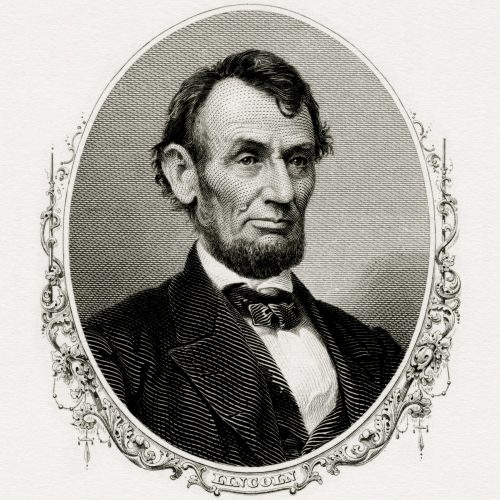
Abraham Lincoln Early Life
Abraham Lincoln’s ancestry on his father’s side has been traced to Samuel Lincoln, a weaver who emigrated from Hingham, England, to Hingham, Massachusetts, in 1637. The president’s forebears were pioneers who moved west with the expanding frontier from Massachusetts to Berks County, Pennsylvania, and then to Virginia. Abraham’s father, Thomas Lincoln, was born in Rockingham County in backcountry Virginia in 1778. In 1781 Thomas Lincoln’s father, who was also named Abraham, took his family to Hughes Station on the Green River, 32 km (20 mi) east of Louisville, Kentucky. In 1786 a Native American killed the first Abraham Lincoln while he was at work clearing land for a farm in the forest.
Thomas Lincoln continued to live in Kentucky. He saw it develop from a frontier wilderness into a rapidly growing state. But like his ancestors he preferred the rugged life on the frontier. In a brief autobiography written for a political campaign, Lincoln said that his father “even in childhood was a wandering labor boy, and grew up literally without education. He never did more in the way of writing than to bunglingly sign his own name.”
Despite Thomas Lincoln’s apparent shiftlessness, he became a skilled carpenter, and he never lacked the basic necessities of life. At one time he owned title to two farms. He always possessed one or more horses. He paid his taxes, and, like his neighbors, he accepted jury duty and militia duty when called.
On June 12, 1806, Thomas Lincoln married Nancy Hanks. Little is known about Abe Lincoln’s mother except that she came from a very poor Virginia family. She was completely illiterate and signed her name with an X. After their marriage the Lincolns moved from a farm on Mill Creek in Hardin County, Kentucky, to nearby Elizabethtown. There Thomas Lincoln earned his living as a carpenter and handyman. In 1807 a daughter, Sarah, was born.
In December 1808 the Lincolns moved to a 141-hectare (348-acre) farm on the south fork of Nolin Creek near what is now Hodgenville, Kentucky. On February 12, 1809, in a log cabin that Thomas Lincoln had built, a son, Abraham, was born. Later the Lincolns had a second son who died in infancy.
When Abraham Lincoln was two, the family moved to another farm on nearby Knob Creek. Life was lonely and hard. There was little time for play. Most of the day was spent hunting, farming, fishing, and doing chores. Land titles in Kentucky were confused and often subject to dispute. Thomas Lincoln lost his title to the Mill Creek farm, and his claims to both the Nolin Creek and Knob Creek tracts were challenged in court. In 1816, therefore, the Lincolns decided to move to Indiana, where the land was surveyed and sold by the federal government.
In the winter of 1816 the Lincolns took their meager possessions, ferried across the Ohio River, and settled near Pigeon Creek, close to what is now Gentryville, Indiana. Because it was winter, Thomas Lincoln immediately built a crude, three-sided shelter that served as home until he could build a log cabin. A fire at the open end of the shelter kept the family warm. At this time southern Indiana was a heavily forested wilderness. Lincoln described it as a “wild region, with many bears and other wild animals in the woods.” Later some of Nancy Hanks’s relatives moved near the site the Lincolns had chosen, and a thriving frontier community gradually developed.
In 1818 an epidemic of the milk sick broke out. This was not actually a disease. It was caused by drinking poisoned milk from cows that had eaten the wild snakeroot plant. One of the first victims of the milk sick was Nancy Hanks Lincoln. She died October 5, 1818. The next year, Thomas Lincoln journeyed to Elizabethtown, Kentucky, and married Sarah Bush Johnston, a widow with three children. Abe Lincoln was very much attached to his kind stepmother, and he later referred to her as “my angel mother.”
One of the most important jobs on a frontier farm was clearing the forest. Young Abe Lincoln quickly became skilled with an axe. In his autobiographical sketch written in the third person, Lincoln stated that “the clearing away of surplus wood was the great task ahead. Abraham, though very young, was large for his age, and had an axe put in his hands at once. From that till within his twenty-third year, he was almost constantly handling that most useful instrument.” One of his chores with an axe was to make fence rails by splitting poles. Later, as a presidential candidate, Lincoln was known as the Railsplitter.
Lincoln’s Education
When his father could spare him from chores, Lincoln attended an ABC school. Such schools were held in log cabins, and often the teachers were barely more educated than their pupils. According to Lincoln, “no qualification was ever required of a teacher beyond readin’, writin’, and cipherin’, to the Rule of Three.” Including a few weeks at a similar school in Kentucky, Lincoln had less than one full year of formal education in his entire life.
Abe’s stepmother encouraged his quest for knowledge. At an early age he could read, write, and do simple arithmetic. Books were scarce on the Indiana frontier, but besides the family Bible, which Lincoln knew well, he was able to read the classical authors Aesop, John Bunyan, and Daniel Defoe, as well as William Grimshaw’s History of the United States (1820) and Mason Locke Weems’s Life and Memorable Actions of George Washington (about 1800). This biography of George Washington made a lasting impression on Lincoln, and he made the ideals of Washington and the founding fathers of the United States his own.
By the time Lincoln was 19 years old, he had reached his full height of 1.93 m (6 ft 4 in). He was lean and muscular, with long arms and big hands that gave him an awkward appearance. Although he had remarkable strength, he never liked farm work. He preferred instead the easy congeniality that he found at the general store in nearby Gentryville. A neighbor recalled “Abe was awful lazy, he would laugh and talk and crack jokes and tell stories all the time.”
The Pigeon Creek farm was near the Ohio River, and Lincoln often earned money ferrying passengers and baggage to riverboats waiting in midstream. In 1828, when he was 19, he was hired by the local merchant James Gentry to take a cargo-laden flatboat down the Mississippi River to New Orleans.
Move to Illinois
In 1830 another epidemic of milk sick was rumored to be breaking out in Indiana. Already the Hanks family had moved west to Illinois, and their enthusiastic letters describing their new home rekindled the pioneering spirit in Thomas Lincoln. In March 1830 the Lincoln family set out for the Illinois country. They settled at the junction of woodland and prairie on the north bank of the Sangamon River, 16 km (10 mi) west of what is now Decatur, Illinois. Lincoln helped his father build a log cabin and fence in 4 hectares (10 acres) to grow corn. Then he hired out to neighbors, helping them to split rails. That year, Lincoln attended a political rally and was persuaded to speak on behalf of a local candidate. It was his first political speech. A witness recalled that Lincoln “was frightened but got warmed up and made the best speech of the day.”
In 1831 Lincoln made a second trip to New Orleans. He was hired, along with his stepbrother and a cousin, by Denton Offutt, a Kentucky trader and speculator, to build a flatboat and take it down the Mississippi with a load of cargo. The pay was 50 cents a day plus a fee of $60. According to legend, Lincoln saw his first slave auction in New Orleans and said, “If I ever get a chance to hit that thing, I’ll hit it hard.”
New Salem
Denton Offutt was impressed with Lincoln’s abilities. When they returned to Illinois, he hired Lincoln as a clerk in a general store in New Salem, a small community near the growing town of Springfield, Illinois. The pay was $15 a month, plus the use of the store as sleeping quarters.
Although he was a newcomer in New Salem, Lincoln soon became one of its most popular citizens. He won the respect and fellowship of the local ruffians by besting their strong man, Jack Armstrong, in a wrestling match. And he soon earned the friendship of the more peaceable citizens of the community by his good humor, intelligence, and integrity. As in all small towns of the day, the general store was an informal meeting place. Customers who came to buy at Offutt’s store would usually linger to exchange anecdotes and jokes with his clerk. Lincoln, an avid newspaper reader, enjoyed the popular frontier pastime of discussing politics. Because he could read and write, Lincoln was often called on to draw up legal papers for the less literate citizens of New Salem.
Clerking in a store gave Lincoln time to read all the books, newspapers, and political tracts that came his way. Always endeavoring to improve his education, he studied books on grammar and acquired a lifelong taste for the poetry of English poet and playwright William Shakespeare and Scottish poet Robert Burns. Novels, however, held little interest for him, and he later admitted that he never was able to finish one in his entire life. Lincoln also joined the local debating society. A member had this reaction to Lincoln’s first debate: “A perceptible smile at once lit up the face of the audience, for all anticipated the relation of some humorous story. But he opened up discussion in splendid style, to the infinite astonishment of his friends. . . . He pursued the question with reason and argument so pithy and forcible that all were amazed.”
Lincoln’s Early Political Career
In the spring of 1832, Lincoln decided to run for a seat in the Illinois house of representatives. This was a logical step for Lincoln to take, for on the frontier a young man with ability and ambition could rise rapidly in politics.
A month after Lincoln announced his candidacy, Offutt’s general store went bankrupt and Lincoln found himself without a job. But almost immediately, Governor John Reynolds of Illinois called for volunteers to put down a rebellion of the Native American Sauk (or Sac) and Fox peoples led by Chief Black Hawk. Lincoln enlisted at once and, because of his popularity, was elected captain of his company. When his term expired, he reenlisted as a private. In all, he served three months, but saw no actual fighting. However, Lincoln took great pride in this brief military career.
First Campaign
When Lincoln returned to New Salem in 1832, election day was two weeks away. It was a presidential election year, and political parties had formed around the contending candidates. Followers of Andrew Jackson, who was seeking a second term as president, called themselves Democrats. Followers of U.S. Senator Henry Clay of Kentucky called themselves National Republicans and later Whigs. Lincoln supported Clay, who had long been his political idol. He remained a faithful Whig until the party disintegrated over the question of slavery in the 1850s.
Lincoln’s program, as published in the Sangamon, Illinois, Journal, called for the construction of canals and roads, better schools, and a low interest rate to stimulate local economic growth. In his brief campaign, Lincoln spoke from tree stumps in village squares, visited farmers in their homes and fields, and shook hands and exchanged stories with as many people as he could meet. Nevertheless, he was defeated. There were 13 county candidates running for four legislative seats. Lincoln finished eighth. In his own precinct, however, he got 277 out of 300 votes even though the precinct voted overwhelmingly to support the Democrat, Jackson, for the presidency.
Postmaster
After his defeat, Lincoln opened a general store in New Salem with William F. Berry as his partner. But Berry misused the profits, and in a few months the venture failed. Berry died in 1835, leaving Lincoln responsible for debts amounting to $1100. It took him several years to pay them off.
After the general store failed, Lincoln was appointed postmaster of New Salem. The appointment came from Jackson’s Democratic administration. Lincoln’s Whig views were well known, but, as Lincoln explained it, the postmaster’s job was “too insignificant to make his politics an objection.” As postmaster, Lincoln earned $60 a year plus a percentage of the receipts on postage. He ran an informal post office, often doing favors for friends, such as undercharging them for mailing letters. The job gave him time to read, and he made a habit of reading all the newspapers that came through the office. To augment his income, he became the deputy surveyor of Sangamon County.
Illinois Legislator
In 1834 Lincoln again ran for representative to the Illinois legislature. By then he was known throughout the county, and many Democrats gave him their votes. He was elected in 1834 and reelected in 1836, 1838, and 1840. As a member of the Whig minority he became the protégé of the Whig floor leader, Representative John T. Stuart of Springfield. When Stuart ran for a seat in the Congress of the United States in 1836, Lincoln replaced him as floor leader. Stuart also encouraged Lincoln to study law, which Lincoln did between legislative sessions.
Lincoln’s main achievement as a state legislator was the transfer of the state capital from Vandalia to Springfield. In this effort he acted as the leader of Sangamon County’s delegation of seven representatives and two state senators, a group called the Long Nine because they were all tall men. Lincoln devised a strategy whereby the Sangamon delegation supported the projects of other legislators in return for their support of Springfield as the capital city. In American politics this kind of aid is called logrolling, a term derived from frontier families’ tradition of helping each other to build log cabins.
Lincoln’s other votes in the state legislature reflected his Whig background. He supported the business interests in the state and defended the pro-business national platform of Henry Clay. Lincoln’s experience in the Illinois legislature sharpened his political skills. He was adept at logrolling, skilled in debate, and expert in the art of political maneuver.
In 1837 Lincoln took his first public stand on slavery when the Illinois legislature voted to condemn the activities of the abolition societies that wanted an immediate end to slavery by any means. Lincoln and a colleague declared that slavery was “founded on both injustice and bad politics, but the promulgation of abolitionist doctrine tends rather to increase than abate its evil.” Lincoln was against slavery, but he favored lawful means of achieving its destruction. Throughout his political career, Lincoln avoided extreme abolitionist groups.
Early Law Practice
Meanwhile, Lincoln continued his study of law, and in 1836 he became a licensed attorney. The following year he became a junior partner in John T. Stuart’s law firm and moved from New Salem to Springfield. Lincoln was extremely poor and arrived in Springfield on a borrowed horse with all his belongings in two saddlebags. A Springfield storekeeper, Joshua Fry Speed, whom Lincoln later called “my most intimate friend,” gave Lincoln free lodging.
Courtship and Marriage
According to a now discredited legend, while in New Salem, Lincoln was said to have been in love with Ann Rutledge, the beautiful young daughter of a local innkeeper. When she died in 1835, Lincoln was said to be “plunged in despair.” The frequent lapses into melancholy that marked his adult years were said to be a result of this tragic death. But Lincoln in his later years never referred to Ann Rutledge, and authorities are unanimous in agreeing that the Lincoln-Rutledge romance is a myth.
Indeed, less than 18 months after Ann’s death, Lincoln proposed marriage to Mary Owens, a Kentucky girl who also lived in New Salem. Theirs was not an ardent love affair, but having made his proposal, Lincoln felt he could not honorably break it off. Much to his relief, Mary turned him down. Later she explained, “I thought Mr. Lincoln was deficient in those little links which make up the chain of a woman’s happiness.”
In 1840, Lincoln met a cultured, high-strung Kentucky woman named Mary Todd, who was staying with a married sister in Springfield. After a long courtship, they were married on November 4, 1842. A week later, Lincoln wrote a fellow lawyer, “Nothing new here, except my marrying, which to me, is a matter of profound wonder.”
Late in 1843 the Lincolns moved from their simple rented quarters to a modest frame house in Springfield that Lincoln bought for $1500. Of their four boys, only the eldest, Robert Todd Lincoln, reached adulthood. He was born in 1843 and died in 1926. Edward Baker Lincoln was born in 1846 and died at the age of four. William Wallace, called Willie, was born in 1850 and died in the White House, the presidential mansion, shortly before his 12th birthday. Lincoln’s favorite son, Thomas, whom he affectionately called Tad, was born in 1853, grew up in the White House, and died at the age of 18.
In contrast with the sweet, loving Ann Rutledge of legend, Mary Todd Lincoln has unfairly been pictured as a shrew who made Lincoln’s life miserable. Certainly she was spoiled, haughty, and temperamental. The death of her children caused her much anguish, and after Willie’s death she was often hysterical. Lincoln was devoted to her, however, and there is no evidence that theirs was not a happy marriage. On those occasions when she became upset, Lincoln treated her with patience and understanding. He, for his part, was careless in his personal habits and subject to extreme depression. What he and his wife had in common was ambition. Mary aided her husband’s political career immeasurably.
Frontier Lawyer
At the time of his marriage, Lincoln was earning $1200 to $1500 a year from his law practice, a good income for the time and place. When the law firm of Stuart and Lincoln dissolved in 1841, Stephen T. Logan, an able and experienced lawyer, took Lincoln in as junior partner. In 1844 the firm of Logan and Lincoln also dissolved, and Lincoln formed a lifelong partnership with a young lawyer named William H. Herndon.
Lawsuits on the Illinois frontier usually dealt with such trivial matters as crop damage caused by wandering livestock, ownership of hogs and horses, small debts, libel, and assault and battery. The Springfield courts were in session only a small part of the year. For three months each spring and fall, lawyers and judges rode the circuit, holding court at rural county seats. Lincoln rode the eighth judicial circuit, the largest in the state, covering 15 counties and about 12,900 sq km (about 8000 sq mi).
The local sessions of the circuit court were major events on the frontier. The particulars of each case were well known to the townspeople and were subject to heated debate. Courtroom conduct was informal, and more often than not a case was won on a lawyer’s speaking ability rather than the legal merits of his case. The judge and the lawyers were treated as celebrities, and Lincoln, because of his storytelling abilities and skill as a lawyer, was popular on the circuit. Ever the politician, he used this opportunity to meet new people and advance his political career.
Lincoln still had political ambitions, but he now looked beyond the statehouse to the U.S. Congress. In 1843 he wrote a fellow politician, “Now if you should hear any one say that Lincoln don’t want to go to Congress, I wish you as a personal friend of mine, would tell him you have reason to believe he is mistaken. The truth is, I would like to go very much.”
The Whigs were a minority party in Illinois, and there was competition among the Whig politicians over the nomination for U.S. representative for the Seventh Congressional District, where Whigs were in the majority. Lincoln sought the nomination in 1842 and 1844 and received it in 1846. He went on to defeat the Democratic candidate, the Methodist preacher Peter Cartwright, in the election of November 1846.
United States Congressman
Congressman-elect Lincoln was a popular, masterful politician in Illinois. Having succeeded in the rough-hewn Illinois legislature, he was confident that he would make his mark in Congress. Once in Washington, D.C., however, Lincoln became one of many unknown freshman congressmen. The inner councils of government were closed to him, as was the Washington social life that Mary Lincoln was looking forward to. However, Lincoln never lost confidence in himself. He wrote Herndon, “As you are all so anxious for me to distinguish myself, I have concluded to do so before long.” The Lincolns, with their two sons, lived quietly in a modest boardinghouse. Lincoln had a small body of friends with whom he could relax and discuss politics. Among them was Alexander H. Stephens, the Whig congressman from Georgia, who later became vice president of the Confederate States of America.
Spot Resolutions
James K. Polk, a Democrat, was president while Lincoln was in Congress. Lincoln joined other Whigs in attacking Polk for starting the Mexican War. Congress had declared war against Mexico in May 1846 upon Polk’s contention that Mexicans had fired on American soldiers in U.S. territory.
In December 1847 Lincoln challenged the truth of this contention. He introduced a resolution questioning whether the spot on which the firing took place was actually in U.S. territory. In another resolution he claimed that the American troops were on that spot in violation of the orders of their commanding officer, General Zachary Taylor. The next month, Lincoln supported a Whig resolution declaring that the Mexican War had been “unnecessarily and unconstitutionally . . . begun by the President.”
Lincoln’s “spot resolutions” made little impression either on Congress or on the president, but they caused an uproar in Illinois, where the war was approved of by most voters. Lincoln was denounced as a traitor, and opposition newspapers gleefully called him Spotty Lincoln. However, despite his opinion of the war, once war was declared, Lincoln voted for all appropriations in support of it.
Actions on Slavery
The extension of slavery into the territories was an important question during Lincoln’s term in Congress. He supported the Wilmot Proviso, which proposed that slavery be prohibited in any territory acquired from Mexico. Lincoln also put forward a program for the abolition of slavery in Washington, D.C. Although Lincoln’s proposal never came up before Congress, it exemplified his opposition to slavery and the moderate means by which he wanted to achieve abolition. The proposal called for the emancipation of children born into slavery after January 1, 1850. These children would be placed in apprenticeship programs to learn a trade. The emancipation of other slaves would be voluntary, and the slaveholders would be compensated for their loss. Finally, the voters of Washington would have to approve the plan before it went into effect. Lincoln believed that Congress did not have the power to abolish slavery in the individual states. But where Congress did have the power, as in Washington, and where the electorate was agreeable, Lincoln thought it should abolish slavery.
Whig Politics
In the presidential election of 1848, Lincoln decided to back the popular war hero Zachary Taylor, rather than his idol Henry Clay, for the Whig nomination. Lincoln’s reasons were wholly practical. “Mr. Clay’s chance for an election is just no chance at all,” he wrote. “In my judgment we can elect nobody but General Taylor.” Lincoln campaigned for Taylor in Massachusetts and Illinois. Taylor won the election, but much to Lincoln’s disappointment, the Democratic presidential candidate, Senator Lewis Cass of Michigan, carried Illinois.
Lincoln wanted to run for a second term in Congress, but it was traditional that the Whig candidate from the Seventh Congressional District in Illinois serve only one term. Further, Lincoln’s antiwar position made him unpopular at home, and his former law partner Stephen Logan, running on Lincoln’s record, was defeated. Lincoln discovered that the incoming Whig administration had little use for his services. He was offered nothing better than the governorship of far-off Oregon Territory. Lincoln rejected the appointment, and, thoroughly dejected and believing that his political career was over, returned to Springfield to renew his practice of law.
Return to Law Practice
Lincoln’s law partner, William Herndon, had kept the firm going while Lincoln was in Congress. Now the two men built up their practice until it was one of the largest in Illinois. As senior partner, Lincoln made frequent appearances before the federal court in Chicago and the state supreme court in Springfield. He also continued to ride the circuit for six months each year. From the fall term of 1849 to the fall term of 1860 he missed only two sessions on the circuit, a record no other lawyer matched.
Riding the circuit was an important, if unspectacular, stage in Lincoln’s development from partisan politician to statesman. The long solitary journeys between county seats, first by horse or buggy and then by train, gave him opportunity for quiet thought. He reread Shakespeare, and for mental discipline he studied Euclidean mathematics. Politics, national affairs, and abstract ideas occupied his mind. Lincoln also enjoyed the companionship of the other lawyers and of circuit judge David Davis, whom he later appointed to the Supreme Court of the United States. The migratory life of the circuit lawyer also enabled Lincoln to renew old acquaintances and make new ones.
Because he did not always have enough time to prepare an adequate case in the circuit courts, Lincoln often had to depend on his natural shrewdness and oratorical ability to sway a jury. His most celebrated circuit case was his defense of Duff Armstrong, the son of his New Salem friend Jack Armstrong, on a murder charge. When a witness testified that bright moonlight had enabled him to see Duff commit the murder, Lincoln produced an almanac and proved that the moon had not been shining brightly at the time. In summing up the case, Lincoln described with great emotion his friendship with the boy’s father. The jury voted for acquittal.
Lincoln soon became one of the most respected lawyers in the state. The briefs he presented before the more formal state and federal courts were carefully documented and marked by unassailable logic. Lincoln argued many important cases. He often represented the interests of the growing corporations in Illinois. In Illinois Central Railroad v. County of McLean he successfully pleaded that a county could not tax a railroad. In another important case, Hurd v. Rock Island Bridge Company, he argued that a railroad had the right to build a bridge across a stream used for navigation. Despite his prominence as a lawyer, however, Lincoln was careless about his dress, and he sometimes carried important papers inside his battered stovepipe hat.
Antislavery Leader
Lincoln was losing interest in politics when, in 1854, Congress passed the Kansas-Nebraska Act. The act aroused Lincoln, in his words, “as he had never been before.” The act created the territories of Kansas and Nebraska, and stated that each territory could be admitted as a state “with or without slavery, as their constitution may prescribe at the time of their admission.” The author of the act, Senator Stephen A. Douglas, the leading Democrat of Illinois, called this program popular sovereignty because it allowed the voters in these territories to decide for themselves whether slavery would be allowed. The Kansas-Nebraska Act repealed the old dividing line between free and slave states as set by the Missouri Compromise of 1820.
With the passage of the Kansas-Nebraska Act, a new Lincoln emerged into the world of politics. Although he was as ambitious for political office as ever, he was now, for the first time in his career, devoted to a cause. He became a forceful spokesman for the antislavery forces.
Early Contest with Douglas
In 1854 Lincoln campaigned for the election to Congress of Richard Yates, an antislavery Whig, on a platform of opposition to the Kansas-Nebraska Act. However, Lincoln was after bigger game. His target was none other than Douglas himself, whose nickname was “The Little Giant.”
In October 1854, Douglas came to Springfield to defend the Kansas-Nebraska Act. After Douglas spoke, Lincoln mounted the speaker’s platform and announced that he would answer Douglas’s speech the next night. For days, Lincoln had haunted the state library, read congressional documents, and organized his arguments against slavery. The next night, in his shirtsleeves and without a collar or tie, Lincoln spoke. Attacking the Kansas-Nebraska Act itself, he said: “The Missouri Compromise forbade slavery to go north of 36°30′. Our government breaks down that restriction and opens the door for slavery to enter where it could not go. This is practically legislating for slavery, recognizing it, extending it.”
Douglas had spoken of slavery only as a political issue. The morality of the institution did not concern him. To Lincoln, however, slavery was both a political and a moral issue. “It is said,” Lincoln continued, “that the slaveholder has the same political right to take his Negroes to Kansas that a freeman has to take his hogs or his horses. This would be true if Negroes were property in the same sense that hogs and horses are. But is this the case? It is notoriously not so.”
To Lincoln, slavery was incompatible with American democracy. “When the white man governs himself,” he said, “that is self-government; but when he governs himself, and also governs another man—that is despotism. If the Negro is a man, why then my ancient faith teaches me that ‘all men are created equal,’ and that there can be no moral right in connection with one man’s making a slave of another.”
Lincoln avoided abolitionist doctrine, taking the view that slavery was a national problem, not merely a Southern one. “I think,” he went on, “I would not hold one in slavery, at any rate, yet the point is not clear enough for me to denounce people upon ….It does seem to me that some system of gradual emancipation might be adopted, but for their tardiness in this, I will not undertake to judge our brethren of the South.” Lincoln repeated this speech in Peoria, Illinois, 12 days later. It has become known as his Peoria speech.
Despite his new role as a spokesman for the antislavery forces in Illinois, Lincoln declined to join the Republican Party, then being formed on an abolition platform. The Whig Party was in rapid decline, but Lincoln remained with it until its death. In 1855 he was the Whig candidate for the U.S. Senate, the upper chamber of Congress. U.S. senators were then elected by the state legislatures. Lincoln led for seven ballots. Then, seeing that he could not win, he threw his support to an anti-Douglas Democrat, Lyman Trumbull, who was elected.
Election of 1856
In 1856 Lincoln publicly identified himself as a Republican, and in May he attended the Republican state convention at Bloomington. The moderate antislavery resolutions of this convention were acceptable to Lincoln. He signified his approval of the new party by giving the main address at the convention. This speech, considered by many to be his most compelling, has been lost. At the Republican national convention, John C. Frémont was nominated for president. The Illinois delegation proposed Lincoln for vice president, but, although he received 110 convention votes, the nomination went to William C. Dayton of New Jersey. Lincoln campaigned for the Republican ticket in Illinois and in Michigan, but Frémont lost Illinois, as well as the election, to his Democratic opponent, James Buchanan.
Candidate for United States Senate
Agitation over the slavery issue increased in 1856 and 1857. In the Dred Scott Case the U.S. Supreme Court ruled that Congress could not prohibit slavery in the territories. In Kansas proslavery and antislavery partisans were engaged in a bloody civil war for control of the territorial government. Northern abolitionists demanded the immediate destruction of slavery, while Southern apologists insisted that their “peculiar institution” was beneficial to both slaveowner and slave.
In 1858 Senator Douglas came up for reelection. The Republican Party nominated Lincoln to oppose him. In his acceptance speech before the Republican state convention in Springfield, Lincoln said, “A house divided against itself cannot stand. I believe this government cannot endure permanently half slave and half free. I do not expect the Union to be dissolved; I do not expect the house to fall; but I do expect it will cease to be divided. It will become all one thing, or all the other.” This was Lincoln’s most extreme statement against slavery. Although he returned to his more moderate position as expressed in the Peoria speech, his opponents used the militant words of the House Divided speech against him.
Lincoln-Douglas Debates
Both Lincoln and Douglas were excellent speakers. When Douglas was told that Lincoln was his opponent, he said, “I shall have my hands full. He is the strong man of the party—full of wit, facts, dates—and the best stump speaker, with his droll ways and dry jokes, in the West.”
The campaign opened in Chicago. Douglas defended popular sovereignty and attacked Lincoln for his “house divided” speech. He accused Lincoln of trying to divide the nation. Lincoln replied by calling for national unity. Recalling the Declaration of Independence, the document on which the United States was founded, he said, “Let us discard all this quibbling about this man and the other man—this race and that race and the other race, being inferior, and therefore they must be placed in an inferior position. Let us discard all these things, and unite as one people throughout the land, until we shall once more stand up declaring that all men are created equal.”
In July, Lincoln challenged Douglas to a series of face-to-face debates. Douglas accepted. It was arranged that seven three-hour debates would be held in seven different cities between August and October. In the debates, both candidates respected each other and kept to the issues. The crux of the discussion was the morality of slavery.
The debates captivated Illinois. About 10,000 people listened to the first debate under a blazing hot sun at Ottawa. Over 15,000 listened in drizzling rain at Freeport. Even in the small towns where the candidates spoke alone, crowds of as many as 6000 were common. The newspapers carried the arguments of each candidate throughout the nation.
Freeport Doctrine
In the second debate, at Freeport, Lincoln asked Douglas whether the people of a territory could lawfully exclude slavery prior to the formation of a state constitution. Douglas replied that slavery could be excluded from a territory, despite the Dred Scott decision, if the people refused to enact the necessary local laws for its protection. This opinion, known as the Freeport Doctrine, cost Douglas much of his support among Southern Democrats who were thinking of him as a presidential candidate in 1860.
In the last debate, at Alton, Lincoln said, “The sentiment that contemplates the institution of slavery in this country as a wrong is the sentiment of the Republican Party. On the other hand, I have said there is a sentiment which treats it as not being wrong….That class will include all men who positively assert that it is right, and all who like Judge Douglas treat it as indifferent and do not say it is either right or wrong.”
Lincoln believed he had a good chance of defeating Douglas. Indeed, the Republicans won a majority of the popular votes, but the lame-duck legislature, which was Democratic, reelected Douglas by a vote of 54 to 46. Lincoln was not too disappointed about the results. He wrote in a letter to a friend, “I am glad I made the late race. It gave me a hearing on the great and durable question of the age, which I could have had in no other way; and though I now sink out of view, and shall be forgotten, I believe I have made some remarks which will tell for the cause of civil liberty long after I am gone.”
Election of 1860
The Lincoln-Douglas debates brought Lincoln national recognition. He accepted invitations to speak in Ohio, Indiana, Kansas, Iowa, Wisconsin, and at the Cooper Union college in New York City.
Cooper Union Speech
On February 27, 1860, at Cooper Union, Lincoln addressed a crowd of 1500 New Yorkers who had braved a snowstorm to hear him speak. The speech was sponsored by the Young Men’s Republican Union, a group opposed to the radical antislavery views of U.S. Senator William H. Seward of New York. Seward was then the leading candidate for the Republican presidential nomination. Lincoln made a careful speech, moderate in tone and conciliatory to the South. He denied that the Republican Party was a Northern party alone, and he repudiated the violent abolitionist John Brown for his attempt to start a slave rebellion. He also denied that the Republican Party intended to interfere with the existing system in the South. “Wrong as we think slavery is,” he said, “we can yet afford to leave it alone where it is.”
It was one of his most stirring speeches, and was met with much applause and cheering. A reporter wrote, “No man ever before made such an impression on his first appeal to a New York audience.” As a result of this speech, Lincoln became a leading contender for the Republican presidential nomination.
Presidential Nomination
In 1860 the Illinois Republican state convention met and named Lincoln as its choice for president. In May the Republican national convention met in Chicago. The chief contenders for the presidential nomination were Seward, Lincoln, Governor Salmon P. Chase of Ohio, Senator Simon Cameron of Pennsylvania, and former congressman Edward Bates of Missouri. Because of their strong positions against slavery and the South, Seward and Chase did not have the support of the moderates. As a member of the American, or “Know-Nothing,” Party in earlier years, Bates had offended foreign-born Americans. Cameron was involved with political scandals in his home state. Only Lincoln was acceptable to all factions of the party.
On the first ballot, Seward led with 173-1/2 votes. Lincoln had 102, Cameron had 50-1/2, Chase had 49, and Bates had 35. On the second ballot, Cameron withdrew, and most of the Pennsylvania delegation switched to Lincoln. Seward now had 184-1/2 votes, Lincoln 181, Chase 42-1/2, and Bates 35. On the third ballot, four Ohio delegates changed their votes to Lincoln. This started a stampede on his behalf, and when his nomination was secure, the convention voted to make him their unanimous choice for president.
To balance the ticket politically and geographically, the convention chose a former Democrat, Senator Hannibal Hamlin of Maine, as its vice presidential candidate. The party’s policies, or platform, included a moderate antislavery position designed to appease the South: slavery was not to be extended, but would not be abolished where it existed. Also included were a high tariff (tax on imports) to appeal to the industrial North, and the promise of free land for settlers to satisfy the West. California and Oregon voters were promised a railroad to the Pacific Coast, and support for river and harbor projects carried on the Whig tradition of internal improvements.
Opposing Candidates
At the Democrats’ convention, held in Charleston, South Carolina, the party was split into Northern and Southern factions over the slavery question. The convention nominated Stephen Douglas for president, and this so incensed the Southern delegates that many of them walked out. Later they held a separate convention and nominated John C. Breckinridge of Kentucky. A fourth party, the Constitutional Union Party, nominated John Bell of Tennessee on a brief platform calling only for the preservation of the Union.
Election Returns
Following the custom of the day, Lincoln remained in Springfield while other Republicans campaigned on his behalf. With the Democratic Party split, his victory was virtually assured. He received 180 electoral votes, a majority. Breckinridge, who carried the entire Deep South, was second with 72. Bell received 39 and Douglas 12. However, Lincoln won only 40 percent of the popular vote. Of the total votes cast, he won 1,865,593, Douglas 1,382,713, Breckinridge 848,356, and Bell 592,906. Lincoln failed to win a single electoral vote in ten Southern states.
First Year in Office
Even before election day, Southern militants were threatening to secede from the Union if Lincoln was elected. In December, with the Republican victory final, South Carolina seceded. By February, Mississippi, Florida, Alabama, Georgia, Louisiana, and Texas had followed. These states joined together to form the Confederate States of America, also known as the Confederacy. President Buchanan did nothing to stop the secessionist movement, and President-elect Lincoln was not yet in a position to intercede. Lincoln remained silent on the issue, believing that, in time, Union sentiment would reassert itself in the South and the secession of the seven states would come to an end.
On February 11, 1861, Lincoln bade farewell to his neighbors in Springfield and set out for Washington, D.C. He now had a beard, which he had grown at the suggestion of a young girl during the campaign. Alluding to the troubled days ahead, he told his friends, “Today I leave you; I go to assume a task more difficult than that which devolved upon General Washington. Unless the great God who assisted him, shall be with and aid me, I must fail. But if the same omniscient mind, and almighty arm that directed and protected him, shall guide and support me, I shall not fail, I shall succeed. Let us all pray that the God of our fathers may not forsake us now.”
On the way to Washington, Lincoln made many short speeches, but he did not commit himself to a specific policy regarding the South. Because of a rumor of an assassination plot against him in Baltimore, he was secretly spirited through that city and into Washington by night. The opposition press ridiculed this undignified entry of the president-elect into the capital.
On March 4, 1861, Lincoln was sworn in as the 16th president of the United States. Ironically, he received the oath of office from Chief Justice of the Supreme Court Roger B. Taney, whose decision in the Dred Scott Case was a direct cause of the crisis Lincoln now faced.
Lincoln’s inaugural address was aimed at allaying Southern fears. His opening words were, “I have no purpose, directly or indirectly, to interfere with the institution of slavery in the states where it exists. I believe I have no lawful right to do so, and I have no inclination to do so.” But he flatly rejected the right of any state to secede from the Union, and he announced that he would “hold, occupy, and possess” the property and places belonging to the federal government. Such a threat was necessary because the rebellious states had already seized federal forts, arsenals and customhouses within their boundaries. Even with this threat, Lincoln’s tone was moderate. “The government will not assail you,” he addressed the South. “You can have no conflict, without being yourselves the aggressors. You have no oath registered in Heaven to destroy the government, while I shall have the most solemn one to ‘preserve, protect and defend’ it.”
Lincoln’s Cabinet
To his Cabinet, Lincoln appointed his rivals for the Republican presidential nomination and other leading Republicans. He made Seward secretary of state, Chase secretary of the treasury, Cameron secretary of war, and Bates attorney general. Gideon Welles of Connecticut became secretary of the navy, and Caleb B. Smith of Indiana became secretary of the interior. Montgomery Blair of Maryland was named postmaster general.
After one month in office, Lincoln still had not decided on a policy of action against the secessionist states. Seward, therefore, decided to supply the president with one. In a memo entitled “Some Thoughts for the President’s Consideration,” Seward suggested that the administration should provoke a war with a foreign nation so as to unite the country in a wave of patriotism. Seward also suggested that he, rather than Lincoln, might be better equipped to formulate the administration’s policy. Lincoln tactfully put his presumptuous Secretary of State in his place. Seward knew he had met his match. “Executive force and vigor are rare qualities,” he wrote his wife. “The President is the best of us.” In time, Seward was to become Lincoln’s most trusted aide.
Lincoln also had to contend with Chase’s presidential ambitions and Cameron’s inefficiency. He kept Chase in the Cabinet for four years and then appointed him chief justice of the Supreme Court. But in January 1862 he replaced Cameron with Edwin M. Stanton, who had been Buchanan’s attorney general. With the exception of Cameron, Lincoln’s Cabinet appointments were good. An inefficient administrator himself, he was able to delegate less important administrative tasks to his Cabinet while he worked on more important issues.
Fort Sumter
Lincoln feared that taking direct action against the Confederacy would lead to the secession of Virginia, North Carolina, Tennessee, and Arkansas. But events at Fort Sumter forced him to act. Fort Sumter was located at the entrance to the harbor of Charleston and was occupied by a small detachment of federal troops commanded by Major Robert Anderson. The South demanded the evacuation of the fort because it was in Confederate territory. Because Major Anderson was short on supplies and could not get any in Charleston, a direct confrontation was unavoidable. Early in April, Lincoln decided to send supplies to the fort by sea. Hoping that the ships would be able to land at the fort peacefully, he informed the governor of South Carolina of his intention. The governor notified Confederate President Jefferson Davis.
The Civil War Begins
Davis and his cabinet instructed Confederate General Pierre Gustave Toutant Beauregard to demand the fort’s surrender. Anderson refused this ultimatum, and at 4:30 am on April 12, 1861, Beauregard’s guns opened fire on Fort Sumter. Lincoln’s relief party was unable to land supplies, and two days later Anderson surrendered the fort.
Lincoln reacted promptly. Using the language and authority of a militia act of 1795, he declared that in seven states the federal laws were being opposed “by combinations too powerful to be suppressed by the ordinary course of judicial proceedings.” To quell this insurrection he asked the loyal states to provide 75,000 militia for three months’ service. He also called a special session of Congress to convene on July 4. The Civil War had begun.
The North immediately rallied around its president. His old opponent, Stephen Douglas, called at the White House and agreed to tour Illinois to rally public support. Lincoln’s call for arms, however, caused Virginia, North Carolina, Tennessee, and Arkansas to join their sister slave states in the Confederacy. The border states, Kentucky, Missouri, and Maryland, remained in the Union, although many of their people sympathized with and fought for the Confederacy.
Emergency Measures
Lincoln now took decisive measures to win the war. No American president had ever faced such a crisis, and Lincoln had to find for himself the necessary powers by which he could pursue the war and uphold his oath to “preserve, protect and defend” the Constitution of the United States. Recognizing the problem, Lincoln said, “It became necessary for me to choose whether, using only the existing means, agencies, and processes which Congress had provided, I should let the Government fall at once into ruin or whether, availing myself of the broader powers conferred by the Constitution in cases of insurrection, I would make an effort to save it.” Lincoln found the necessary powers in the constitutional clause making him “Commander in Chief of the Army and Navy of the United States, and of the Militia of the several states.” He told some visitors to the White House, “As commander in chief in time of war, I suppose I have a right to take any measure which may subdue the enemy.”
Using this power, Lincoln took a number of vital steps before Congress convened. Besides summoning the militia, he ordered a blockade of the Confederacy’s ports, expanded the regular army beyond its legal limit, directed government expenditures in advance of congressional appropriations, and suspended the legal right of habeas corpus. The suspension of this constitutional guarantee, by which a person could not be imprisoned indefinitely without being charged with some specific crime, aroused much opposition throughout the country. Although Lincoln himself made no concentrated effort to suppress political opposition, which at times was extremely vocal, the repeal of habeas corpus enabled overzealous civil and military authorities to imprison thousands of people who were vocal in their opposition to the war against the South.
During the war, in the case Ex parte Merryman, Chief Justice Taney ordered Lincoln to grant a writ of habeas corpus to a Southern agitator who had been arbitrarily jailed by military authorities in Maryland. Lincoln ignored the order. After the war, in the case Ex parte Milligan, in an opinion written by David Davis, the Supreme Court ruled that a president could not suspend habeas corpus without the consent of Congress.
Lincoln and the Union
By his executive orders, Lincoln showed that he was going to be a strong president. But his executive leadership went far beyond the mere administration of the war. By word and deed he became, to many people in the North, a symbol of the Union. Without this strong belief in the Union, the war could not have been won. Despite the superior manpower and resources of the North, the Confederacy had one great advantage. This was the same advantage George Washington had had against the British in the American Revolution. It is far more expensive and time consuming to invade an area than it is to defend it. The North had to carry the battle to the South and defeat the rebel army. This meant that progress in the war was slow at first, and Lincoln used all the persuasive powers at his command to prevent the North from becoming disillusioned.
Lincoln never lost sight of his responsibility to preserve the Union. Even the crusade against slavery remained a secondary purpose of the war. “What I do about slavery and the colored race,” he wrote to newspaper publisher Horace Greeley, “I do because I believe it helps to save the Union.” By this sentiment, Lincoln was able to sustain the spirit of the North through numerous defeats and failures in the bloodiest war the world had yet known. Lincoln never recognized the Confederacy as an independent nation. He considered the Southern states only to be in rebellion against the federal government.
Beyond preservation of the Union lay an even more profound issue, the future of democracy throughout the world. The United States had long been a symbol of hope to democrats the world over, and Lincoln realized that the future of representative government might depend on the outcome of the war. “This is essentially a people’s contest,” Lincoln told Congress. It was the destiny of the Union “to demonstrate to the world that those who can fairly carry out an election can also suppress a rebellion; and ballots are the rightful successors to bullets…”
Wartime President
Lincoln had little military training or experience, but was often called upon to make decisions that would ordinarily be made by professional military people. Although the advice he got on military matters was often conflicting, most of his decisions were good. Political considerations played an important part in shaping Lincoln’s military strategy.
During the spring and summer of 1861 many people in the North called for military action against the South. The North expected a brief struggle and an easy victory. But the first Union offensive put an end to this optimism. In July, Brigadier General Irvin McDowell, leading the federal Army of the Potomac, was defeated in Virginia in the first Battle of Bull Run, or First Manassas, as it is called in the South. For the first time the North realized that it faced a long, hard war. After this defeat, Lincoln removed McDowell and placed Major General George B. McClellan in command of the Army of the Potomac. McClellan soon restored the army’s morale and whipped it into a superb fighting force.
Despite his strong distaste for war, Lincoln was not afraid to wage total war to achieve total victory. Finding a general who was both competent and willing to carry the fight to the Confederacy was his greatest military problem. He had to appoint many politicians to important field commands and, while some made excellent soldiers, others blundered tragically. McClellan was a capable professional soldier but proved overly cautious after his strong start. When Lincoln finally settled on General Ulysses S. Grant as his overall commander in 1864, he never wavered in giving Grant his complete support, although victory came slowly and the casualties were appallingly high.
The Jacobins
Early in the war a group of radical Republicans, called the Jacobins, began to oppose Lincoln’s policies. The Jacobins called for immediate action against the South, freeing of the slaves, and punitive measures against Southern leaders. Some of them thought the war should be fought as a holy crusade to destroy the evil, slaveholding South. Others wanted merely to extend Republican influence into the South by taking political power away from the white man and giving it to the freed black population. They confidently expected that blacks would thereafter vote Republican.
The Jacobins also believed that Lincoln had usurped congressional power in his conduct of the war. They controlled the joint Congressional Committee on the Conduct of the War, led by the radical Senator Benjamin F. Wade of Ohio, and used it to try to dictate the direction of the war. The Jacobins were especially opposed to McClellan, who was a conservative Democrat. Despite continuous pressure, Lincoln supported the general. He told McClellan, “…you must not fight till you are ready.”
The Trent Affair
In the winter of 1861 the Union became involved with Britain in an incident, known as the Trent Affair, that almost led to war. The Confederacy had sent James Murray Mason and John Slidell to Britain and France to win support for the Southern cause. After slipping through the Northern blockade to Cuba, they boarded the British ship Trent. On its first day at sea the ship was stopped and searched by a Union naval captain, Charles Wilkes, and the two Southerners were taken off the ship as prisoners. Wilkes’s act was a violation of the international law over which the United States had gone to war with Britain in 1812. Britain demanded an apology and the release of the two prisoners. Wilkes was a hero in the North, and many Union partisans were demanding war against Britain. Lincoln patiently let the agitators have their say. Then he released the Southern envoys, and Britain agreed to accept Lincoln’s assurance that Wilkes had acted without authority. In this way, Lincoln averted what might have been a fatal conflict with Britain.
Second Year in Office
In the spring of 1862, McClellan began the so-called Peninsular Campaign. He advanced by way of the peninsula between the James and York rivers in Virginia, with the Confederate capital of Richmond, Virginia, as his goal. Fearing an attack on Washington by Confederate forces led by General Thomas J. “Stonewall” Jackson, Lincoln diverted 40,000 of McClellan’s troops for the defense of the capital. But the Army of the Potomac was still larger than its adversary. McClellan advanced on Confederate troops protecting Richmond, and his army fought well in the resulting Seven Days’ Battle. McClellan, however, was unwilling to commit his troops for a decisive offense, and he ordered a retreat even though he had suffered fewer casualties than his opponent. In August the Confederates led by General Robert E. Lee defeated Major General John Pope’s Army of Virginia in the second Battle of Bull Run. Finally, in September, the Union won a minor victory at the Battle of Antietam in Maryland. Lincoln chose this opportunity to issue his Emancipation Proclamation.
Emancipation Proclamation
Lincoln had given much thought to the problem of slavery, and he was under continual pressure from the Jacobins and the abolitionists to free the slaves. On April 16, 1862, he signed a bill that abolished slavery in Washington, D.C., with compensation to the slaveholders and voluntary colonization in tropical lands for the slaves. This bill was similar to the one Lincoln proposed in Congress years earlier.
As much as Lincoln abhorred slavery, the political situation prevented him from freeing the slaves elsewhere. The slaveholding border state of Kentucky was key to Union policy. Because of its strategic location on the Ohio River, which would have made an easily defended border for the South, it had to be kept in the Union. And, in his inaugural address, Lincoln had promised not to interfere with slavery. To do so would have meant the loss of Maryland, Missouri, and Kentucky to the Confederacy. Consequently, in 1861, when Major General John C. Frémont freed the slaves in his military district in Missouri, and in May 1862, when Major General David Hunter freed the slaves in his southern military district, Lincoln rescinded their orders. His patience was rewarded, for the border states remained loyal.
By July 1862, through a combination of military pressure, arrest of dissenters, and respect for neutrals, the border states appeared to be safely in the Union. At this time Lincoln informed the Cabinet of his decision to emancipate (free) the slaves. On Seward’s advice, he withheld the proclamation until it could be coupled with the announcement of a Union military victory.
On September 22, 1862, immediately after Antietam, Lincoln issued his preliminary Proclamation of Emancipation. In this document, Lincoln announced that on January 1, 1863, all slaves residing in a rebellious state would “be then, thenceforward, and forever free…” With this 100-day warning, Lincoln gave the rebellious states an opportunity to rejoin the Union with slavery intact. Lincoln did not have the power to free the slaves except as a necessity of war. The proclamation was a military decree, directed only at those states at war with the Union.
The Emancipation Proclamation was formally issued on January 1, 1863. It did not affect border states in the Union or areas in the rebellious states under federal control. For these states, Lincoln encouraged voluntary, compensated emancipation. To assure the legality of emancipation, Lincoln pressed for the passage of a constitutional amendment that would bar slavery from the United States forever. Later, acceptance of the 13th Amendment to the Constitution became a condition whereby Southern states were readmitted to the Union.
Effects of Emancipation
The Emancipation Proclamation hastened the defeat of the Confederacy because it deprived the South of much-needed labor. About 3.5 million black slaves, out of a total population of 9.5 million, had grown the food and fiber needed by the Confederate Army. They had also dug trenches, built fortifications and served as teamsters for the army. In the proclamation, Lincoln invited the blacks to join the Union Army. Almost 186,000 former slaves did so. Most of them served behind the lines, thus freeing regular soldiers for active duty. Those who saw action fought bravely.
The Emancipation Proclamation also isolated the Confederacy from potential allies in Europe. As the North suffered defeat after defeat, France and Britain threatened to recognize the Confederate government and give it aid. The cause of Union doubtless meant nothing to the people of these countries, but the cause of freedom did. Freeing the slaves brought them and their governments over to the Northern side.
A Succession of Defeats
From the high point of Antietam, the political and military situation worsened. In the autumn elections the Republicans lost control of five states, including Illinois. The North was becoming tired of the war.
When McClellan refused to take the offensive after Antietam, Lincoln replaced him with Major General Ambrose E. Burnside. In December 1862, Burnside was defeated by Lee at Fredericksburg, Virginia. Union casualties exceeded 12,000, and the cry went up for new political and military leadership. The war also went badly in the West. Major General Don C. Buell was sent to take eastern Tennessee, where Union sentiment was strong. Like McClellan, however, he was too cautious and the Confederate army of General Braxton Bragg, eluded him. Lincoln then replaced him with Major General William S. Rosecrans. In December, “Old Rosey” repulsed Bragg at Murfreesboro, Tennessee, but the battle losses were so great that his army was out of action for months.
Cabinet Crisis
In December 1862, Lincoln faced a crisis in his Cabinet. Secretary of the Treasury Chase had sought the support of the Jacobins to strengthen his chances for the Republican presidential nomination of 1864. These radical Republicans, looking for an opportunity to discredit Lincoln, turned against Secretary of State Seward, a former radical who now agreed with the president on most matters. They demanded that Seward be removed from the Cabinet and replaced as secretary of state by Chase. Lincoln needed Seward in the Cabinet, but he also needed Chase and the support of the radical wing of the party. It took all of Lincoln’s great political skill to remain in control of his Cabinet and party.
Seward, unwilling to embarrass the president, resigned at once. Lincoln then called a meeting in which the other Cabinet members and the Jacobin senators were present. Confronted with his fellow Cabinet members, Chase could not attack Seward and Lincoln as he had done in private with the senators. Chase offered to resign. Lincoln refused to accept either his or Seward’s resignation, and the two men returned to their posts. Chase and his allies now knew that in Lincoln they faced a skilled and resolute politician.
Growth of the Union
The Civil War stimulated industry and agriculture in the North and West. The Union grew at a rapid rate. Between 1861 and 1865, 800,000 Europeans immigrated to the North, and 300,000 emigrants traveled west to settle in California and Oregon. To promote settlement, Lincoln signed three important acts in 1862. The Homestead Act offered settlers 65 hectares (160 acres) of Western land each (see Homestead Laws). The settler had only to reside on and use the land for five years and pay a nominal fee to the government. The Morrill Act gave the states free land to establish agricultural and mechanical colleges. The Pacific Railway Act incorporated the Union Pacific and Central Pacific railroads for the construction of a transcontinental railroad, which had long been a national goal to speed the development of the West. During Lincoln’s administration, Kansas, Nevada, and West Virginia (the part of Virginia loyal to the Union) were granted statehood.
Third Year in Office
After Fredericksburg, Lincoln replaced Burnside with Major General Joseph Hooker, who was promptly defeated at the Battle of Chancellorsville in Virginia. The soldiers fought bravely, but once again their generals failed them. Now Lee turned his army north to invade Pennsylvania. Lincoln replaced Hooker with Major General George G. Meade.
The two armies met at the Battle of Gettysburg in Pennsylvania during the first days of July 1863. Meade chose to stay on the defensive, and for three days his Army of the Potomac repulsed Lee’s assaults. On July 5, Lee retreated. His army had been beaten badly. Meade’s troops had also suffered heavy casualties, and he let Lee get away. On the day Lee withdrew, Lincoln received word that General Grant had captured Vicksburg, Mississippi, the key Confederate fort on the Mississippi River (see Vicksburg, Campaign of). In November, Grant won a resounding victory at the Battle of Chattanooga, in Tennessee. Here at last was a general who would fight.
The Draft
In 1862 the Confederacy issued a draft (conscription) call for all men between the ages of 18 and 45. In March 1863 the North passed a conscription act of its own. By its terms all men between the ages of 20 and 45 were liable to military service. However, any man who was called for the draft could avoid it by hiring a substitute or paying $300 to the government.
Prior to the draft the Union depended on the states to fill assigned quotas with volunteers. By offering sizable bounties, this system had worked well. Because of the bounty and a desire “to see this thing through,” many volunteers reenlisted for the duration of the war. These veterans formed the nucleus of the Union Army. Out of an army of 1.8 million, only 46,347 were draftees. Another 73,607 were substitutes for men who had been called for the draft. This was only 6 percent of the Union forces. In the South, the draft system provided 20 percent of the forces: 120,000 draftees and 70,000 substitutes.
Many groups rightfully denounced the conscription act as a rich man’s law. Indeed, many wealthy men were able to bribe poorer men to take their place in the army. Violent opposition from workingmen and immigrants flared in many places. Draft riots broke out for five days in New York City, and troops returning from Gettysburg had to be called in to quell the disturbance. Although Lincoln was upset by these riots, he dared not suspend the draft.
Reconstruction
Lincoln gave frequent consideration to the problem of reconstructing the governments of the rebel states and restoring them to their rightful place in the Union. Whenever Union armies gained control in a rebellious area, he encouraged the local people to form a government loyal to the Union. On December 8, 1863, Lincoln offered his Proclamation of Amnesty and Reconstruction to the Southern people. This pronouncement is often called Lincoln’s 10 percent plan of Reconstruction after one of its provisions.
In this document, Lincoln offered a full pardon, or amnesty, to any Southerner, with the exception of certain leaders, who would take an oath to support “the Constitution of the United States and the Union of the States thereunder.” Furthermore, those who took the oath in each state could vote to form a new state government. Lincoln promised to recognize the new government if two conditions were met: the new government accepted the elimination of slavery as required by the Emancipation Proclamation of January 1863; and the number of those voting for the new government was at least 10 percent of those who had voted in the 1860 presidential election.
Lincoln was convinced that Reconstruction, or restoration, as he preferred to call it, was for the president to carry out. Congressional leaders thought otherwise. The Jacobins had a plan of reconstruction all their own, expressed in the Wade-Davis bill of July 1864. It was designed to punish the South for past transgressions and to make it subservient to the Republican Party of the North. The bill limited voting on new state constitutions to those who had never joined the rebel cause, required a loyalty oath by the majority of a state’s citizens, and permanently deprived former rebel leaders of the right to vote. Lincoln killed the bill by using his pocket veto, and as long as he lived this plan made little headway.
Financing the War
The Union was faced with the problem of raising huge sums of money to fight the war. New federal taxes were levied on legal documents, inheritances, and personal income, and the tariff was raised. The federal government also began printing paper money, which people called greenbacks because of the color of the ink. By 1863, $450 million worth of greenbacks were in use. The greenbacks’ value was based only on the government’s declaration of value. By contrast, the national bank notes that were also in circulation could be exchanged for their face value in gold. The value of a greenback varied and was usually lower than that of gold. At one point, $1.00 in gold was worth $2.85 in greenbacks. The increase in the money supply also caused prices to rise.
Bonds were another way to raise money. In February 1863, Lincoln signed the National Banking Act to make it easier to sell government bonds. The act also provided for a system of federally chartered, privately owned national banks that could issue notes (the national bank notes) backed by government bonds. The credit extended by the national banks increased the money supply while the conditions imposed by their charters created a safe, uniform national currency. Each bank was required by its charter to maintain adequate cash reserves, redeem notes issued by any other national bank, and stay within credit limits set by a federal official, the comptroller of the currency.
As revised the next year, this act was the basis of the American banking system until the Federal Reserve System began in 1913. It ended the era when state-chartered banks issued their own currency, which had been the system since President Andrew Jackson closed the government’s central bank, the Second Bank of the United States, in 1836. However, instead of returning to a central bank, the nation now had private banks that were centrally regulated from Washington.
On November 19, 1863, Lincoln was called upon to deliver a “few appropriate remarks” at the ceremony dedicating a military cemetery at the Gettysburg battle site. The distinguished orator Edward Everett made the main address. It lasted two hours. Then Lincoln spoke. Although his speech was brief, it was a masterpiece. In it he rededicated the war effort to the principles of democracy. (For the text of this great speech, see Gettysburg Address).
Fourth Year in Office
Besides the terrible burden of war, Lincoln endured many personal trials while in the White House. The strain of war was almost too much for Mrs. Lincoln. Four of her brothers were killed fighting for the Confederacy. A final blow, the death of her son Willie in 1862, left her mentally ill and morbidly preoccupied with death. She refused to allow her eldest son, Robert, to enter the army. He remained a civilian until the closing days of the war, when Lincoln secured him a relatively safe position on General Grant’s staff.
Although weary and saddened by Willie’s death and the terrible toll of the war, Lincoln continued to devote full time to his duties. His amazing physical strength enabled him to work long hours, but in spite of his many duties he found time to talk with the many visitors who called at the White House. Nothing was too small to escape his attention. He made a special effort to review death sentences by military courts-martial. He often sent urgent notes to his military commander about particular cases, and wherever possible he urged leniency. “Let him fight instead of being shot,” read one such note. And to Stanton he wrote, “Injustice has probably been done in this case, Sec. of War please examine it.”
Final Military Strategy
In March 1864, Lincoln promoted Grant to lieutenant general and commander in chief of all Union armies. Grant gave Major General William Tecumseh Sherman full command in the West while he himself came east to lead Meade’s Army of the Potomac against Lee’s veterans. Grant’s overall strategy was bold. Instead of going after key Southern cities, he decided to attack principal Southern armies. Grant’s objective was Lee, while Sherman was “to go for Joe Johnston,” the commander of the Confederate Army of Tennessee. In so doing, Sherman was to strike toward Atlanta, Georgia, and then march across Georgia to the sea, destroying the resources of the Confederacy as he went. The strategy was similar to the modern concept of total war, and a man with less determination than Lincoln would have shied away from such a commitment to destruction.
Presidential Nominations
Democrats and radical Republicans were dissatisfied with Lincoln’s policies. The radicals first favored Chase and then Frémont for the 1864 presidential election. A splinter group did, in fact, nominate Frémont for president. But the moderate Republicans remained faithful to their leader, and, because the radicals could not get support for their candidate, Lincoln was unanimously nominated for president by the official Republican convention. Senator Andrew Johnson, a Democrat from Tennessee and the only congressman from a secessionist state to remain loyal to the Union, was nominated for vice president. The platform called for a constitutional amendment abolishing slavery.
The Democrats nominated General McClellan as their presidential candidate. He was immensely popular with the soldiers of the Army of the Potomac, and many people believed that Lincoln had been unjustified in relieving him of his command after Antietam. The Democratic platform called for an immediate end to the war, which was characterized as “four years of failure.” However, McClellan, who favored continuing the war, disavowed his party’s platform.
Election of 1864
In the spring and summer of 1864, Lincoln did not think he would win the election. Grant’s offensive was stalled at Petersburg, Virginia, and Sherman had not yet delivered a decisive blow against Johnston. In July, Washington itself was briefly threatened by a Confederate force under General Jubal Early. The Jacobins, as always, were a continual source of trouble for Lincoln. In August, U.S. Senator Benjamin F. Wade and U.S. Representative Henry W. Davis published a manifesto bitterly denouncing Lincoln’s lenient Reconstruction policy.
Finally, in September the political and military situation took a turn for the better. Moderate Republicans prevailed on Frémont to withdraw from the race, and the party united behind Lincoln. Sherman took Atlanta and forced the Confederates to retreat north to Tennessee. Major General Philip Sheridan, on orders from Grant, destroyed the Shenandoah Valley, the breadbasket of Lee’s army. Victory seemed near at last.
Under these conditions, Lincoln won an easy victory. He had 212 electoral votes to McClellan’s 21. The Democrats carried only Kentucky, Delaware, and New Jersey. Lincoln polled 2,206,938 popular votes to McClellan’s 1,803,787. Even the soldier vote went to Lincoln, or “Father Abraham,” as he was called.
Hampton Roads Conference
In December, Major General George H. Thomas’s army smashed the Confederate Army of Tennessee at the Battle of Nashville. In December, Sherman took Savannah, Georgia, and began his march north to join Grant’s army, which was ready for a final breakthrough at Petersburg. In February 1865, Lincoln and Seward met with Lincoln’s old friend, Confederate Vice President Stephens, and two other Southern representatives at Hampton Roads, Virginia, to discuss peace terms. Lincoln refused to recognize the Confederacy as an independent nation, and he insisted on the restoration of the Union without slavery. He offered pardons to all former Confederates and promised to recommend compensation of slave owners for their losses. But even these terms were unacceptable to the South (see Hampton Roads Conference).
Second Term as President
At his Second Inaugural Address on March 4, 1865, Lincoln made a speech that stands among the greatest pronouncements in history, a worthy addition to the Classic Literature Library. At the threshold of victory, Lincoln spoke only of peace and of ending the nation’s sectional differences. His closing lines are among the most eloquent in the English language:
“With malice toward none, with charity for all; with firmness in the right, as God gives us to see the right, let us strive on to finish the work we are in; to bind up the nation’s wounds; to care for him who shall have borne the battle, and for his widow, and his orphan—to do all which may achieve and cherish a just, and a lasting peace, among ourselves, and with all nations.”
Surrender at Appomattox Court House
In the closing days of March, Sherman and Grant met with Lincoln to discuss terms of surrender. Lincoln told his generals that he hoped to get the troops of both sides back to their farms, stores, and families as speedily as possible. In early April, Grant took Petersburg and the Union army entered Richmond. Lincoln made a short trip to the fallen Confederate capital, and he was cheered wildly by freed slaves and Union soldiers. A Union general asked Lincoln how the conquered people of Richmond should be treated, and Lincoln answered, “If I were in your place, I’d let ’em up easy, let ’em up easy.” On April 9, 1865, just as Lincoln returned to Washington, Lee surrendered his army to Grant at Appomattox Court House, a village in Virginia. The war was all but over.
Two days later, Lincoln addressed a celebrating crowd gathered outside the White House. Again he called for national unity and goodwill toward the defeated South. He appealed to his audience to “join in doing the acts necessary to restoring the practical relations between these states and the Union.”
Assassination of Lincoln
Standing in that crowd listening to Lincoln speak was an angry, half-crazed actor with pro-Southern sympathies, John Wilkes Booth. Booth had planned for some time to kidnap Lincoln and take him to Richmond. However, when Richmond fell, Booth decided on murder. He planned to assassinate Lincoln on Good Friday, April 14, 1865.
On that day, Lincoln and his wife, along with General and Mrs. Grant, were to attend a performance of a comic melodrama, Our American Cousin, at Ford’s Theatre in Washington. Early that day, Lincoln held a Cabinet meeting at which Secretary of the Treasury McCulloch noted that he had never seen the president “so cheerful and happy.” Lincoln told his Cabinet about a dream he had had the previous night, which he interpreted to mean that a final victory for Sherman was near. In this happy mood he did not mention another recent dream in which he had followed a crowd of people into the East Room of the White House. There he saw his corpse laid out, and he heard people say, “Lincoln is dead.”
That night the Lincolns went to the theater as scheduled. General and Mrs. Grant had been called away, and Miss Clara Harris and her fiancé, Major Henry R. Rathbone, occupied their places in the president’s box. At about 10:30 pm, Booth made his way into the box. Choosing a moment when all attention was fixed on the stage, he put a pistol to Lincoln’s head and fired once. The President slumped in his seat, unconscious. Booth leaped to the stage, shouting “Sic semper tyrannis,” the Virginia state motto, meaning “Thus ever to tyrants.” He made his escape, but was killed while resisting arrest 12 days later. The same day Lincoln was shot, an accomplice of Booth made an attack on Seward, but the secretary lived.
The stricken president was taken to a lodging house across the street from the theater. Mrs. Lincoln, friends, and Cabinet members waited through the night while doctors worked to save Lincoln’s life. At 7:20 am on Saturday, April 15, 1865, Lincoln died. As they covered his face with a sheet, Secretary Stanton said, “Now he belongs to the ages.” A few hours later, Vice President Andrew Johnson was sworn in as president.
Lincoln’s body lay in state in the East Room of the White House. On April 19, Lincoln was given a military funeral in Washington. Two days later his coffin was placed on a special train that carried his body back to Springfield. On May 4 the train reached the end of its journey, and Lincoln was buried in Oak Ridge Cemetery, near his home in Springfield.
Of all the American presidents, Lincoln is probably the one about whom the most has been written. Many critical evaluations of his life have been published, but they have not diminished his stature, and he remains one of the foremost products of American democracy and an eloquent spokesman for its ideals.

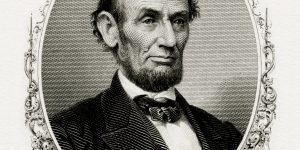
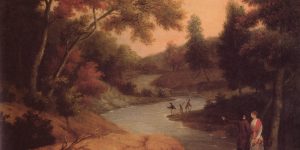
Had Lincoln lived to complete his second term, I believe that the so-called reconstruction of the South would have reunited the North and South without such animosity that exists to this day, in some areas of the South against the North.
Lincoln will continue to be our second-best president, second only to George Washington. He may very well be our best president considering his unparalleled intellect.